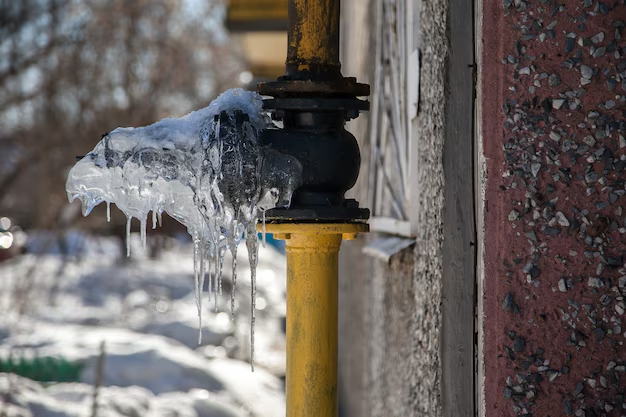
March in Souderton has its own particular cruelty.
Forty-eight degrees on Tuesday. Back down to nineteen on Thursday. Then a warm front rolls in from the southwest, and suddenly it feels like April for four days straight before winter remembers it was not finished yet.
Most homeowners think about that pattern in terms of what to wear or whether to put the snow shovel away. What they are not thinking about is what that same pattern is doing inside the walls of their house. Inside the crawl space under the back bedroom addition. Underneath the concrete, where the water line comes in from the street.
Because that freeze-thaw cycle, the one that defines late winter across Montgomery and Bucks County every single year, is doing something to your plumbing whether you notice it or not. And spring is when you find out what.
We have been working in homes across Souderton, Lansdale, Hatfield, Quakertown, Chalfont, Skippack, and Coopersburg for over twenty years. The calls we get in March and April follow a pattern so consistent you could set a calendar by it. Homeowners who made it through winter without incident discover in the thaw that they did not actually make it through winter without incident. The incident was just quiet about it.
Here is everything you need to know.
Do Pipes Burst When They Freeze or When They Thaw?
Almost everyone gets this wrong. And honestly, it makes sense that they do; the intuitive assumption is that freezing is the dangerous part. But that is not quite how it works.
When water freezes inside a pipe, it expands.
That expansion puts pressure on the pipe wall, and the pipe can crack or split under that stress. But here is the thing: while everything is still frozen, the ice is holding the system together. Water is not moving. The crack is there, but nothing is leaking through it yet.
The thaw is when things go wrong in a way you can actually see.
Temperature rises. Ice melts. Pressure returns to the system, and water starts moving again, right through the crack that formed six weeks ago when it was nine degrees and you were worried about your car starting, not your pipes. That is when the ceiling stain appears. That is when the basement gets wet. That is when you notice the water pressure has dropped and cannot figure out why.
The damage happened in January. Spring just presents the bill.
👉 If you are unsure whether what you are seeing right now is urgent, our guide on when to call a plumber now versus when you can wait covers exactly that.
What Causes Pipes to Burst in Montgomery County Homes
Not every pipe carries the same risk. After two decades of repairs in homes across this region, the locations where we consistently find damage are predictable enough that we could almost draw you a map.
Crawl spaces are at the top of the list. A significant portion of the older housing stock across Lansdale, Souderton, and parts of Quakertown has supply lines running through unheated crawl spaces with minimal insulation. Some of those spaces have gaps in the foundation where cold air moves freely. During an extended freeze, those pipes can ice up completely, and the homeowner has no idea until March.
Exterior walls are next. Any pipe running through an outside wall without adequate insulation on the cold side is a candidate. In homes built in the 1950s and 60s, and there are a lot of them across Montgomery County, the insulation has often settled or was never sufficient to begin with.
Garages are a consistent surprise for homeowners. We see it regularly in properties throughout Skippack and rural Chalfont, where a supply line was run through an attached or detached garage during a renovation at some point in the past. Nobody insulated it properly because the garage felt warm enough at the time.
And outdoor faucets. Every spring we get calls about hose bibs that cracked over winter and went unnoticed because nobody tried to use them until April.
How Do You Know If a Pipe Burst Inside Your Home
The tricky part is that a cracked pipe inside a wall does not announce itself the way a Hollywood burst pipe does, with water spraying dramatically through drywall. Real pipe failures are usually quiet and slow.
A water stain on the ceiling or wall that was not there in November. This one seems obvious but homeowners explain it away constantly. They assume it is a roof leak or condensation from an upstairs bathroom. If the stain is new and appeared after a cold period, look at the plumbing first.
A water bill that went up noticeably between January and March. Even a small crack in a supply line can lose forty to sixty gallons a day without creating any visible damage inside the house. The bill usually catches it before the homeowner does.
Low water pressure appears suddenly or gradually after a cold snap. If two showers that used to run fine together now cannot keep up, something has changed in the system.
The sound of running water when every fixture in the house is off. This is the one we tell homeowners to take seriously immediately. If the house is quiet and you can hear water moving somewhere inside it, stop what you are doing and find the source.
Soft spots in drywall or flooring that feel different underfoot. Water that has been sitting inside a wall cavity or subfloor since January has had months to work on the surrounding materials.
How to Tell If a Pipe Burst Underground
This one gets missed more often than anything else. A lot of homes in the rural stretches of our service area, out toward Coopersburg, rural Quakertown, and the less developed parts of Bucks County, have supply lines running underground between the main and the house. When those lines crack, the evidence is outside, not inside.
A section of your yard that stays consistently wet or muddy when everything around it is dry. A patch of grass that is growing noticeably greener and faster than the surrounding lawn. A depression or soft spot in the yard where soil is slowly washing away around a broken line. And inside the house, a significant and unexplained drop in water pressure with nothing wrong at any of the fixtures.
Underground burst pipe repair costs more than an interior repair. Excavation, pipe replacement, and restoring the yard afterward add up. The earlier it is caught, the more contained the job stays.
Burst Water Pipe Outside House: What to Check Before the Outdoor Season
Before you connect a single garden hose or turn on the irrigation system this spring, walk the exterior of your home and check every outdoor plumbing connection individually.
Turn each hose bib on and watch not just the spigot but the wall behind it. A frost-free faucet that cracked over winter will often show water weeping from the siding or foundation around the faucet body rather than from the spout itself. That is the crack telling you it needs to be replaced before you use it. Our faucet and fixture installation team handles outdoor hose bib replacements across all our service areas, same day in most cases.
Check the area around your irrigation system shutoff and any exposed supply lines on the exterior of the house. Discoloration on the foundation, damp soil that should be dry, or visible cracks in pipe sections are all worth a closer look before outdoor water use begins.
What to Do When a Pipe Bursts, The First Ten Minutes
If you come home to active water damage, the sequence of what you do first matters more than most people realize.
Shut off the main water supply. In most homes across Souderton and Lansdale, it is in the basement near where the water line enters the foundation. If you do not know where yours is right now, go find it today. It takes two minutes and you will only regret not doing it once.
Once the water is off, document everything before you touch it. Photos and video of the damage before any cleanup give you the documentation an insurance claim requires. A house flooded from a burst pipe is often a covered loss under homeowners’ insurance, depending on the cause, but insurers need to see the original damage.
Do not run fans through a wet wall before the source has been found and repaired. Moving air through a structure that still has trapped moisture accelerates mold growth. In Pennsylvania’s humidity that window between water damage and mold is shorter than most people expect.
How Much Does It Cost to Fix a Burst Pipe
Straight answer because this is what everyone actually needs to know.
An accessible burst pipe repair on a supply line in a basement or utility space runs between $200 and $500 in most cases for the repair itself. If drywall, insulation, or subfloor has been affected by water damage, restoration costs are separate and can range considerably depending on how long the water was present and how far it spread.
Underground pipe repairs are a different conversation. Excavation, pipe section replacement, and restoring the excavated area can run from $1,500 to $5,000 or more depending on depth and length of the damaged section.
The consistent pattern we see in homes across this region is that pipe burst repair cost is almost always lower when the problem is caught early. A crack found in March during a spring inspection costs a fraction of what the same crack costs in June after three months of water has worked its way into the framing and subfloor.
Do Frozen Pipes Always Burst
No. A pipe can freeze completely, thaw, and show no damage if the pressure during the freeze did not exceed what the material and connections could handle.
PEX piping, common in newer construction throughout Chalfont and Hatfield, has flexibility that copper and older galvanized pipe do not. It survives freezes that would crack a copper line in the same conditions. Copper is more brittle. Older galvanized pipe, still present in a meaningful number of homes built before the 1970s across Montgomery County, is the most vulnerable of all and fails at lower pressure thresholds.
What we see consistently, though, is that a pipe that has frozen and survived is weaker for the experience. The stress accumulates. Homes that have had the same pipes for forty or fifty years sometimes experience their first burst failure after a winter that was not even particularly severe, because the material finally reached a threshold that years of previous freezes built toward.
Pipe Burst Cleanup: What the Repair Does Not Cover
The plumbing repair fixes the pipe. Everything the water did after it left the pipe is a separate problem.
Standing water needs to come out immediately. Moisture that has soaked into drywall, insulation, and framing within the first 24 to 48 hours is in the window where mold can take hold. Pennsylvania’s humidity makes that window really short.
A plumber and a water damage restoration company are two different trades. The plumber stops the water. Restoration handles the structure. We work alongside restoration companies regularly on burst pipe jobs across Souderton, Lansdale, and the surrounding area, and can help you understand who handles what when both are needed at the same time.
How to Repair a Burst Pipe: When It Is a Call Right Now vs When It Can Wait
A confirmed burst pipe with active water movement is not a situation that waits until morning. Shut the main off and call the same day.
A new water stain, unexplained low pressure, or a wet spot in the yard that appeared recently, those need attention soon, but are generally safe to call during business hours.
The line we tell homeowners to use: if you cannot stop the water by turning off a fixture shutoff valve, shut the main and call immediately.
Royal Penguin Plumbing handles burst pipe repair and spring plumbing inspections across Souderton, Lansdale, Hatfield, Quakertown, Chalfont, Skippack, and Coopersburg. We know what Pennsylvania winters do to homes in this region because we have been working in them for over twenty years. If something looks wrong after this winter, call us and we will tell you straight what it is.
Call us at (215)720-2721 for burst pipe repair services or to schedule a spring plumbing inspection.