The toilet in your upstairs bathroom starts running at night. You jiggle the handle, and it stops, then starts again an hour later. Or you have plunged the same bowl twice this month, or water keeps pooling around the base. Sooner or later, every homeowner asks how long do toilets last and whether theirs is done.
The short answer to how long do toilets last is that the porcelain bowl and tank can go for decades, and many sources plan around 25 to 30 years, while the parts inside the tank wear out much sooner. Age alone does not decide when to replace a toilet. The symptoms, the repair history, and the real cause do.
Royal Penguin Plumbing is a family owned plumbing company in Souderton, Pennsylvania, serving Bucks County and Montgomery County. Plumbers often find that a toilet blamed for a leak only needed a new seal. Below, we tackle how long do toilets last in real homes and the six signs that replacement makes sense.
How Long Do Toilets Last on Average?
There is no single answer to how long do toilets last. Estimates differ because they measure different things. A replacement cycle is how often homeowners swap toilets. Physical lifespan is how long the fixture keeps working with care.
A 2019 report commissioned by Plumbing Manufacturers International assumed a 30-year replacement cycle for residential tank-style toilets. It also notes that some utilities use 25 years for rebates and that homeowners usually replace a toilet only when it breaks or during a remodel. So when people ask how long do toilets last, a fair planning range for the average toilet lifespan is roughly 25 to 30 years, with plenty running longer. Quoted toilet life expectancy figures of 10 to 15 years reflect how often people replace, not how long porcelain survives.
The parts age at very different rates:
- Porcelain bowl and tank. No moving parts. Usually fails from impact, freezing, or stress, not age.
- Internal tank components. The flapper, fill valve, flush valve, and handle often need repair long before the porcelain does.
- Seat and lid. Easy to replace anytime.
- Wax ring or sealing gasket. Replaced whenever the toilet comes up.
- Closet flange. The ring on the drainpipe that anchors the toilet. It can last decades or corrode and crack.
- Water supply connection. The shutoff valve and supply line age on their own schedule.
Why do some toilets work for 30 or 40 years? The porcelain was never damaged, worn parts were replaced on time, the flange and floor are solid, and parts are available. So how long do toilets last when everything goes right? Longer than most people expect.
What Affects How Long a Toilet Lasts?
How long do toilets last in one house compared with the next? Several things decide it:
- Quality and construction. Good glazing and solid internals last longer, though price is not a perfect guide.
- Daily use. A guest bath ages slowly. A busy family bathroom cycles the valves constantly.
- Water quality. Mineral buildup crusts the rim holes, fill valve, and flapper seat.
- Maintenance. Replacing a tired flapper early protects the fill valve.
- Installation. A toilet on a damaged flange or uneven floor loosens and stresses the base.
- Parts availability. A discontinued model with no parts can end a sound toilet’s life early.
6 Signs It’s Time to Replace Your Toilet
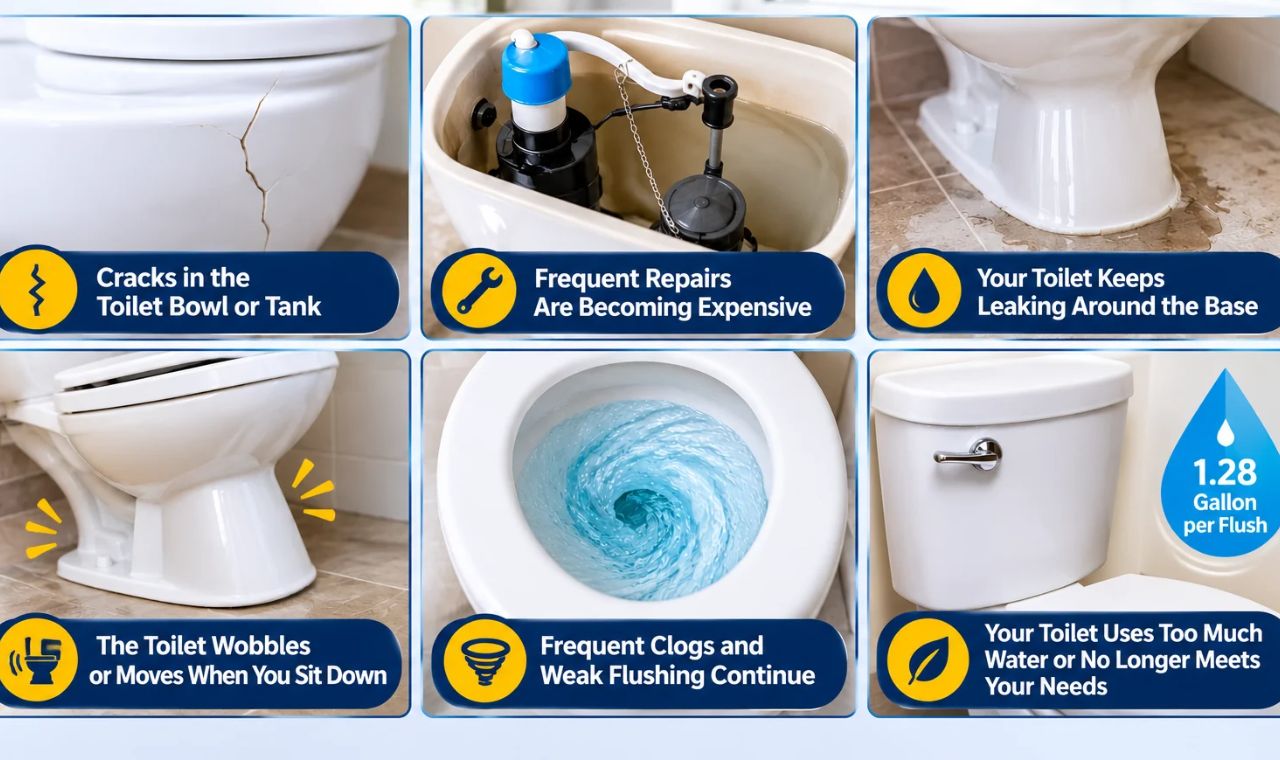
Whatever the answer to how long do toilets last for yours, these six signs point toward replacement or deserve a serious look.
Cracks in the Toilet Bowl or Tank
Fine hairline marks in the glaze, called crazing, are usually cosmetic. A true crack runs through the porcelain, may catch a fingernail, and can seep water. A sweating tank can mimic one, so dry it and watch where moisture returns.
A confirmed cracked toilet bowl or tank generally calls for replacement. Porcelain carries real weight, so cracks tend to spread, and patching rarely holds. The answer to how long do toilets last stops mattering once the porcelain cracks through.
Frequent Repairs Are Becoming Expensive
A flapper, fill valve, or handle is ordinary maintenance. A running toilet can also waste water quietly, so learn how to identify a silent toilet leak before you spend money.
Repairs become a problem when they stack up. Replace the flapper, then the fill valve, then find a pitted flush valve seat, and you are chasing wear across the whole tank. If you are weighing how long do toilets last against what you keep spending, add up parts and visits and compare that with a new toilet. When the same complaint keeps returning, replacement is the practical call.
Jerry Amaratos called Royal Penguin when his mother’s toilet would not stop running. His Google review praises the technician for being professional and patient while explaining the options.
Your Toilet Keeps Leaking Around the Base
Leaks often occur when homeowners start wondering how long do toilets last. Causes include a failed wax ring, loose mounting bolts, a damaged closet flange, a cracked base, or subfloor damage.
A leaking toilet base does not always mean a damaged toilet. A new seal or flange repair often fixes it, and some leaks only look like base leaks, such as a loose supply line or a sweating tank. Replace the toilet when the base is cracked, or leaks return after a proper reseal.
Call a plumber for toilet leak diagnosis if water returns after tightening, you smell sewer odor, the floor feels soft, or a ceiling below is stained.
The Toilet Wobbles or Moves When You Sit Down
A toilet should not move at all. A wobbling toilet breaks its seal and lets water and odor escape. Common causes are loose or broken bolts, a damaged closet flange, an uneven floor, or a soft subfloor.
A wobble says little about how long do toilets last and more about what is underneath. Do not just crank the bolts, because overtightening can crack the base. Most fixes sit in the flange, seal, shims, or floor, so a wobble does not automatically mean a new toilet.
Frequent Clogs and Weak Flushing Continue
Aging designs can struggle. Mineral deposits can block the rim holes and bowl jet, some older bowls have restrictive trapways, and a low tank water level weakens the flush. A weak toilet flush that survives cleaning may just be a poor performer.
First decide whether the toilet or the drain is at fault. Frequent toilet clogs alongside slow sinks, gurgling from a tub or floor drain, or backups at the lowest drain in the house point to the drain or sewer line. A new toilet will not clear a blocked main line, so the question of how long do toilets last comes second to finding the cause. If yours is overflowing now, read what to do when your toilet starts overflowing. A drain camera inspection is the reliable way to find the cause.
Your Toilet Uses Too Much Water, or No Longer Meets Your Needs
The PMI report notes that toilets installed before the early 1990s commonly used 3.5 gallons or more per flush, while WaterSense labeled models use 1.28 gallons or less. A water-efficient toilet or high-efficiency toilet can do the job with far less water.
We will not promise a savings figure, because it depends on your current toilet, household size, and water rates. Replacing a working toilet for these reasons is a planned upgrade, not an emergency, and it makes how long do toilets last a smaller worry.
What Is a Closet Flange and Why Does It Matter?
The closet flange, also called a toilet flange, is the ring that connects the toilet to the drainpipe and anchors it to the floor. The closet bolts pass through it, and the wax ring or sealing gasket sits on top to seal the connection.
Oatey’s repair guide explains that a cracked, rusted, broken, too low, or too high flange can cause leaks, sewer odors, and a rocking toilet, and can damage the floor over time. Watch for rocking despite snug bolts, staining, odor, or a flange below the finished floor after new flooring. A bad flange explains many cases where how long do toilets last seems shorter than it should.
How long do toilets last when the flange is sound? Often decades. Many flange problems are repairable. Oatey describes repair rings for minor damage, spacers for a low flange, and full replacement for one that is badly damaged or corroded. Closet flange repair always means a fresh wax ring. A damaged flange is a reason to fix the flange, not an automatic reason to buy a new toilet.
When Should You Repair a Toilet Instead of Replacing It?
Most toilet problems come down to one failed part, so how long do toilets last depends on repairs as much as age. This table shows how common situations usually play out:
| Problem | Repairable? | Replace when |
| Worn flapper | Yes | Other tank parts are failing too |
| Faulty fill valve | Yes | The tank keeps having problems |
| Loose handle | Yes | Rarely |
| Damaged wax ring | Yes | Leaks return after a proper reseal |
| Broken mounting bolts | Yes | The base is cracked |
| Damaged closet flange | Yes | The toilet is cracked too |
| Cracked porcelain | No | Almost always |
| Repeated flushing problems | Sometimes | The drain is clear, and the toilet still underperforms |
| Recurring leaks | Sometimes | The fixture, not the seal or flange, is the cause |
Problems with replaceable parts are repairs. Porcelain damage, or a toilet that keeps failing in new ways, leans toward replacement. How long do toilets last after a repair? Often for years, when the repair fixes the real cause. How often should toilets be replaced? Only when cost, reliability, or condition says so. If the source is unclear, a professional diagnosis keeps you from buying a toilet that was never the problem.
How to Choose the Right Replacement Toilet
Because how long do toilets last is measured in decades, buy for the long run. MaP Testing, an independent performance program, offers shopping tips for choosing a toilet. The main decisions:
- One piece or two pieces. Two piece toilets are common and often cost less. One-piece models can be easier to clean.
- Round or elongated bowl. Round saves space. Elongated suits many adults, but check door and vanity clearance.
- Standard or comfort height. Taller bowls are easier to sit on and stand up from.
- Flush performance and efficiency. MaP scores show how much waste a toilet clears in one flush, though participation is voluntary. A WaterSense label signals lower water use.
Measure the rough-in, the distance from the wall to the center of the closet bolts. Many North American homes use 12 inches, though 10 and 14 exist, and the wrong rough-in will not fit. Also inspect the shutoff valve and supply line, the flange and floor, the old toilet’s footprint, and any shelf above the tank. We do not recommend a brand.
What Happens During Professional Toilet Replacement?
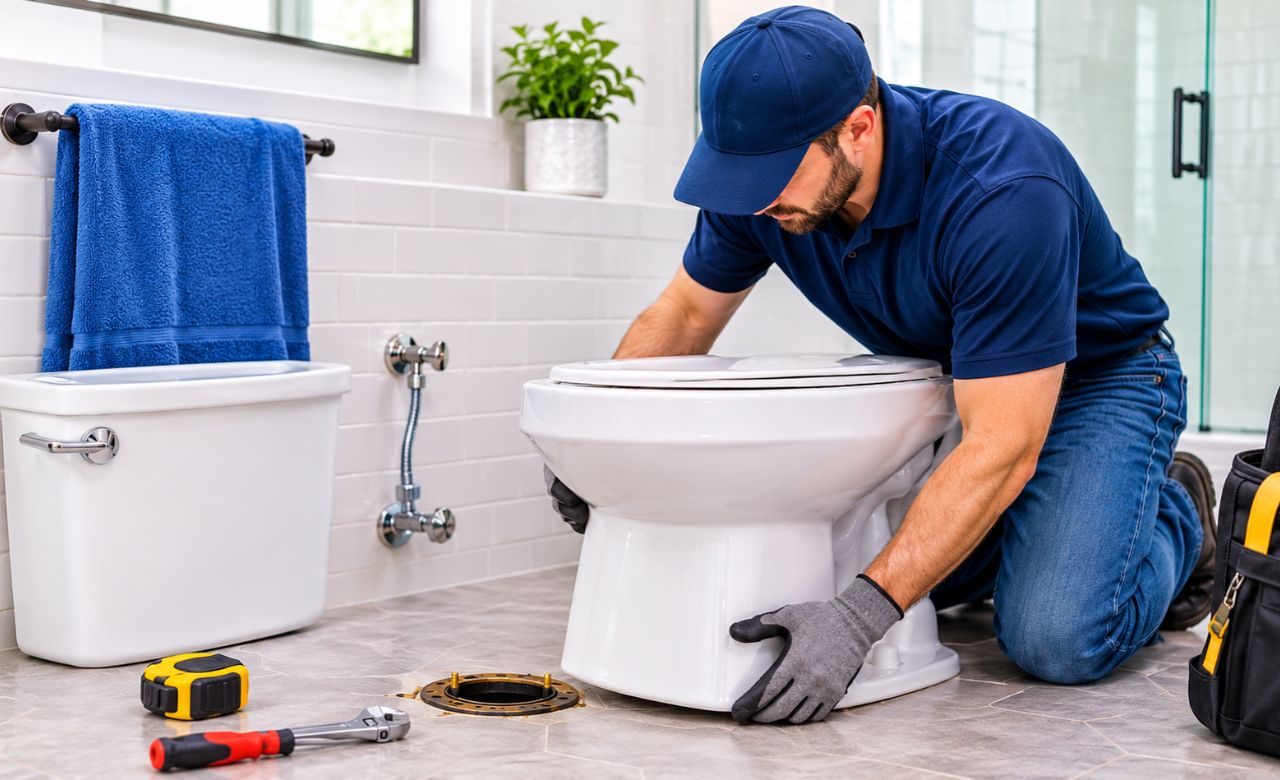
A careful toilet installation follows a set order:
- Inspect the existing toilet and plumbing.
- Shut off the water supply.
- Remove the old toilet.
- Inspect the closet flange and surrounding floor.
- Check the drain connection.
- Install a new wax ring or compatible seal.
- Position and secure the replacement toilet.
- Reconnect the water supply.
- Test the flush and inspect for leaks.
Steps 4 and 5 are where professional work earns its keep. A bad flange, soft floor, or drain problem stays hidden until the old toilet comes out, and a new toilet on a bad flange will rock and leak too. Proper installation is a big part of how long do toilets last. Our page on professional toilet replacement services covers the details. Toilet replacement cost varies with the model and what is found underneath.
How to Extend the Life of Your Toilet
If you want the answer to how long toilets last to be a long one, build a few habits:
- Check the flapper, chain, and fill valve now and then.
- Fix running water promptly.
- Flush only toilet paper and human waste, not wipes.
- Clean mineral deposits from the rim holes with a mild cleaner.
- Skip harsh chemical drain cleaners.
- Check for moisture around the base.
- Avoid extra weight on the bowl or tank.
- Ask for an inspection when a problem keeps returning.
When Should You Call a Professional Plumber?
Call a plumber when:
- A leak keeps returning
- The porcelain is cracked
- The toilet keeps moving
- You suspect a damaged closet flange
- Clogs return, or several drains are slow
- You suspect subfloor damage
- You have questions about toilet replacement or installation
A toilet replacement plumber can tell you how long toilets last in your home, based on what they find. Royal Penguin Plumbing handles toilet repair, toilet installation services, drain cleaning, and leak related plumbing and can tell a worn part from a failed seal, a bad flange, or a failing fixture.
Get Help With Toilet Repair and Replacement From Royal Penguin Plumbing
Royal Penguin Plumbing is a family owned residential plumbing provider based in Souderton, Pennsylvania. We serve homeowners in Bucks County, Montgomery County, and nearby communities. Our toilet work includes diagnosing leaks, replacing worn parts, installing new toilets, and checking the drain when clogs point beyond the fixture. We also handle drain cleaning and leak related plumbing. We help you work out how long do toilets last in your own bathroom, with clear communication and a professional diagnosis before work begins. Call (215) 720-2721 or visit royalpenguinplumbing.com to talk through your toilet.
The Bottom Line
Knowing how long do toilets last helps you recognize when repairs are no longer the best option. Cracks, repeated breakdowns, leaks around the base, wobbling, frequent clogs, and excessive water use can all signal that replacement deserves consideration. However, not every problem requires a new toilet. A professional inspection can identify whether the issue involves the toilet, closet flange, seal, or drain connection. If replacement makes more sense, proper installation helps prevent leaks and future problems. Royal Penguin Plumbing can help homeowners choose the right solution and keep their bathroom plumbing working reliably.
Frequently Asked Questions
Q. How long do toilets usually last before needing replacement?
The porcelain can last for decades, and many industry sources plan around 25 to 30 years. Internal parts wear out sooner and are usually repairable. On how long do toilets last, condition and repair history matter more than age alone.
Q. Should a 20 year old toilet be replaced?
Not automatically. Twenty years is well within how long do toilets last when cared for. If it flushes well, does not leak, and has no cracks, it may have years left.
Q. Is it cheaper to repair or replace a toilet?
A single worn part is almost always cheaper to repair. When repairs stack up, or the porcelain is cracked, replacement makes more sense.
Q. Can a damaged closet flange cause a toilet to leak?
Yes, and it is a common reason people ask how long do toilets last. A cracked, corroded, or poorly positioned closet flange can break the seal and cause leaks, odors, and a rocking toilet. It can often be repaired without replacing the toilet.
Q. Does Royal Penguin Plumbing offer toilet replacement services?
Yes. Royal Penguin Plumbing provides toilet repair, toilet replacement services, and installation, plus drain cleaning and leak related work. We serve Bucks County, Montgomery County, and nearby Pennsylvania communities from Souderton.