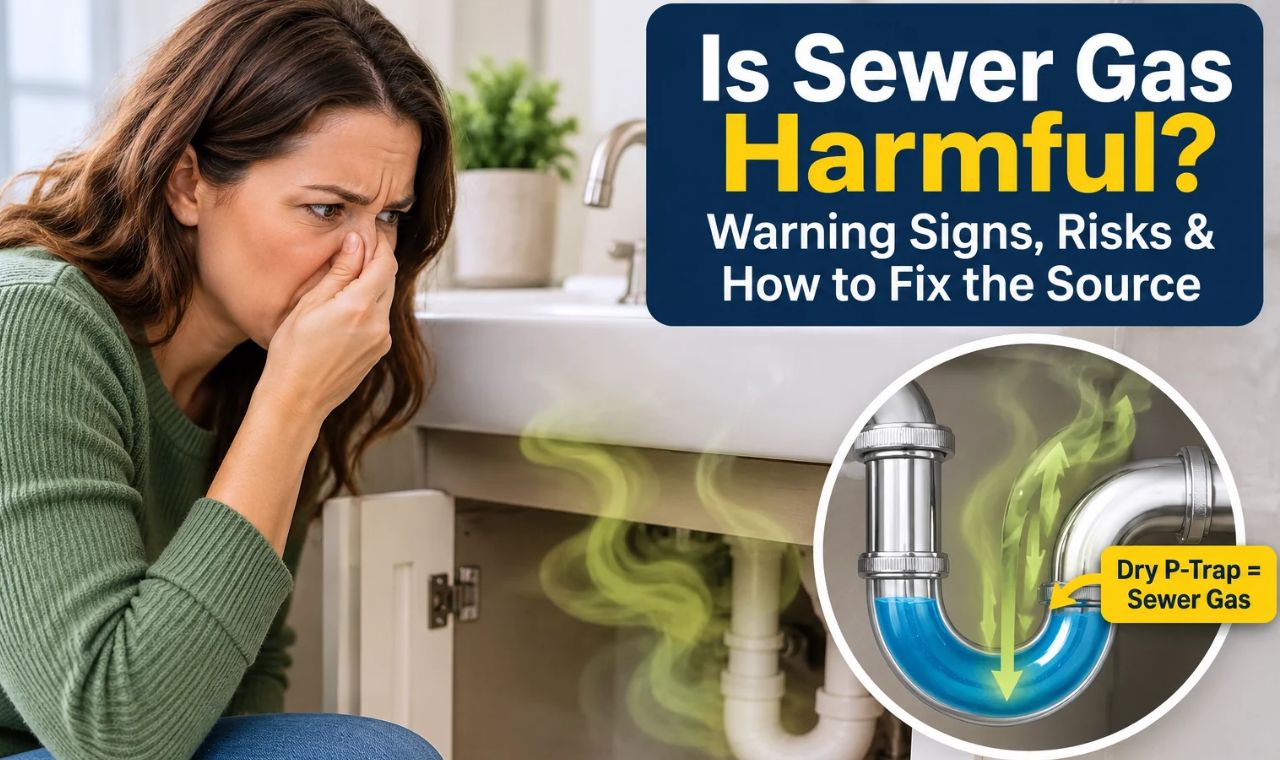
A rotten egg smell coming from a bathroom, basement, or floor drain can be more than an unpleasant household odor. It may indicate that sewer gas is escaping from your plumbing system and entering your home. So, is sewer gas harmful? Yes, it can be. Depending on its composition, concentration, and exposure time, sewer gas can cause irritation, headaches, nausea, dizziness, and more serious health effects.
However, smelling sewer gas doesn’t automatically mean you’ve been exposed to a dangerous concentration. A dry drain trap or loose toilet seal can create an odor without indicating an immediate poisoning risk. The important thing is to identify where the smell is coming from and correct the plumbing problem.
This guide explains how to recognize sewer gas, understand its potential risks, respond safely, and determine when professional sewer repair is necessary.
What Is Sewer Gas and Where Does It Come From?
Sewer gas is a mixture of gases produced when organic waste breaks down inside sewer systems, septic tanks, and wastewater pipes. It can travel through household plumbing when something prevents the system from containing and venting those gases properly.
The exact mixture depends on the waste, temperature, and conditions inside the sewer system. Common components include:
- Hydrogen sulfide (H₂S): A colorless gas responsible for the familiar rotten egg smell. It can irritate the eyes and respiratory system and become highly toxic at elevated concentrations.
- Methane (CH₄): A colorless, odorless gas produced during decomposition. It is flammable and can create an explosion hazard if it accumulates in sufficient concentrations.
- Ammonia (NH₃): A gas with a sharp, pungent odor that can irritate the eyes, throat, and respiratory tract.
- Carbon dioxide (CO₂): A naturally occurring gas that can displace oxygen when it accumulates in confined spaces.
A properly functioning plumbing system keeps these gases inside the drain and sewer network. Water-filled traps beneath sinks, showers, toilets, and floor drains create barriers that prevent sewer gases from moving back into living areas.
Plumbing vent pipes carry gases outdoors, usually through a pipe extending above the roof. When a trap dries out, a pipe cracks, or a vent becomes obstructed, that protection can fail.
The research on sewer gas and indoor air contamination explains how gases and other contaminants from sewer systems can enter indoor spaces through plumbing fixtures when protective seals are missing or damaged.
Is Sewer Gas Harmful to Humans?
Yes, sewer gas can be harmful, but the level of risk depends on which gases are present, their concentration, and how long someone breathes them.
Hydrogen sulfide is a particular concern because it can affect the respiratory and nervous systems. At relatively low exposure levels, it may cause:
- Eye, nose, and throat irritation
- Headaches
- Nausea
- Dizziness
- Coughing or breathing discomfort
- Fatigue and general discomfort
Higher concentrations can cause much more serious effects, including breathing difficulties, loss of consciousness, and potentially life-threatening poisoning.
One reason hydrogen sulfide deserves attention is that its smell isn’t a reliable safety indicator. People can detect its rotten egg odor at low concentrations, but at dangerous concentrations, their sense of smell can become impaired. The odor may seem to disappear even though the exposure hasn’t stopped.
The Illinois Department of Public Health’s hydrogen sulfide guidance explains this problem and describes the possible health effects of exposure.
Does smelling sewer gas mean you’re being poisoned?
Not necessarily. A noticeable odor can occur at concentrations below those associated with serious health effects. A dry P-trap, for example, may allow enough gas into a bathroom to create an unpleasant smell without indicating a dangerous exposure.
Still, a persistent sewer odor indoors isn’t normal. It deserves investigation because the same plumbing defect that allows a small amount of gas inside could continue releasing it.
Children and pets also deserve consideration. Children may spend time closer to floor-level drains, while pets can enter small spaces where odors are strongest. Neither should be allowed to remain in an area with a strong or persistent sewer smell.
What Are the Warning Signs of Sewer Gas in Your Home?
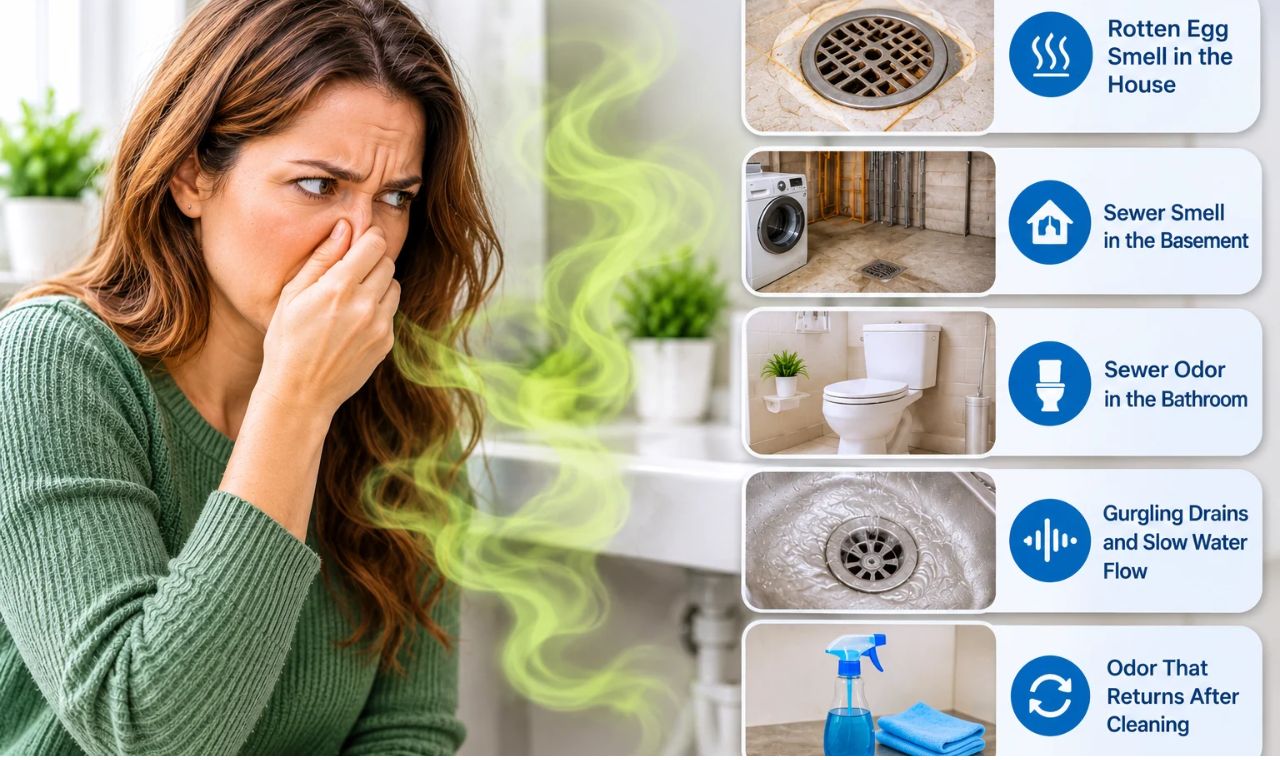
A sewer gas problem doesn’t always affect the entire house. Sometimes the odor is concentrated around one drain or plumbing fixture. In other cases, it appears in several rooms because of a larger vent or drain line problem.
Watch for these common warning signs.
A Rotten Egg Smell in the House
The most recognizable warning sign is a sulfur-like odor similar to rotten eggs. It may be strongest near bathrooms, laundry areas, basements, or utility rooms.
Hydrogen sulfide is responsible for this characteristic smell. If the odor repeatedly returns after cleaning or airing out the room, the source may be inside the plumbing system.
Sewer Smell in the Basement
Basements often contain floor drains, laundry connections, and utility sinks that homeowners rarely use.
If the water inside a floor drain’s trap evaporates, sewer gases can move directly into the basement. The smell may become more noticeable during dry weather or after a property has been vacant.
Sewer Odor in the Bathroom
A bathroom that smells like sewage even after thorough cleaning may have a plumbing problem rather than a hygiene issue.
Pay attention to the area around the toilet base, shower drain, bathtub drain, and sink. A failed toilet wax ring or dry shower trap can allow sewer odors to escape.
Gurgling Drains and Slow Water Flow
Gurgling sounds often indicate that air isn’t moving through the drainage system as it should.
Blocked plumbing vents, partial drain obstructions, or damaged pipes can interfere with normal airflow. If multiple fixtures gurgle or drain slowly, the issue may involve a shared drain or main sewer line.
Odor That Returns After Cleaning
Drain cleaners and household disinfectants may remove residue and unpleasant smells from surfaces, but they won’t repair a broken pipe or restore a failed toilet seal.
If the smell returns shortly after cleaning, investigate the plumbing rather than repeatedly masking the odor.
How to Distinguish Sewer Gas From Other Household Smells
Not every unpleasant smell comes from the sewer.
| Household odor | Possible source |
| Rotten eggs or sulfur | Hydrogen sulfide or another sulfur-containing gas |
| Sharp ammonia smell | Cleaning products, urine, or ammonia-containing substances |
| Musty, damp smell | Moisture problems or mold growth |
| Stale drain smell | Organic buildup inside a drain |
| Burning plastic or electrical smell | Overheating electrical components |
Natural gas is also odorized to smell similar to rotten eggs. If you cannot confidently identify the source, don’t assume the smell is coming from a drain. Leave the building and contact the appropriate emergency service or gas utility if a gas leak is possible.
Can Sewer Gas Make You Sick or Cause Long-Term Health Problems?
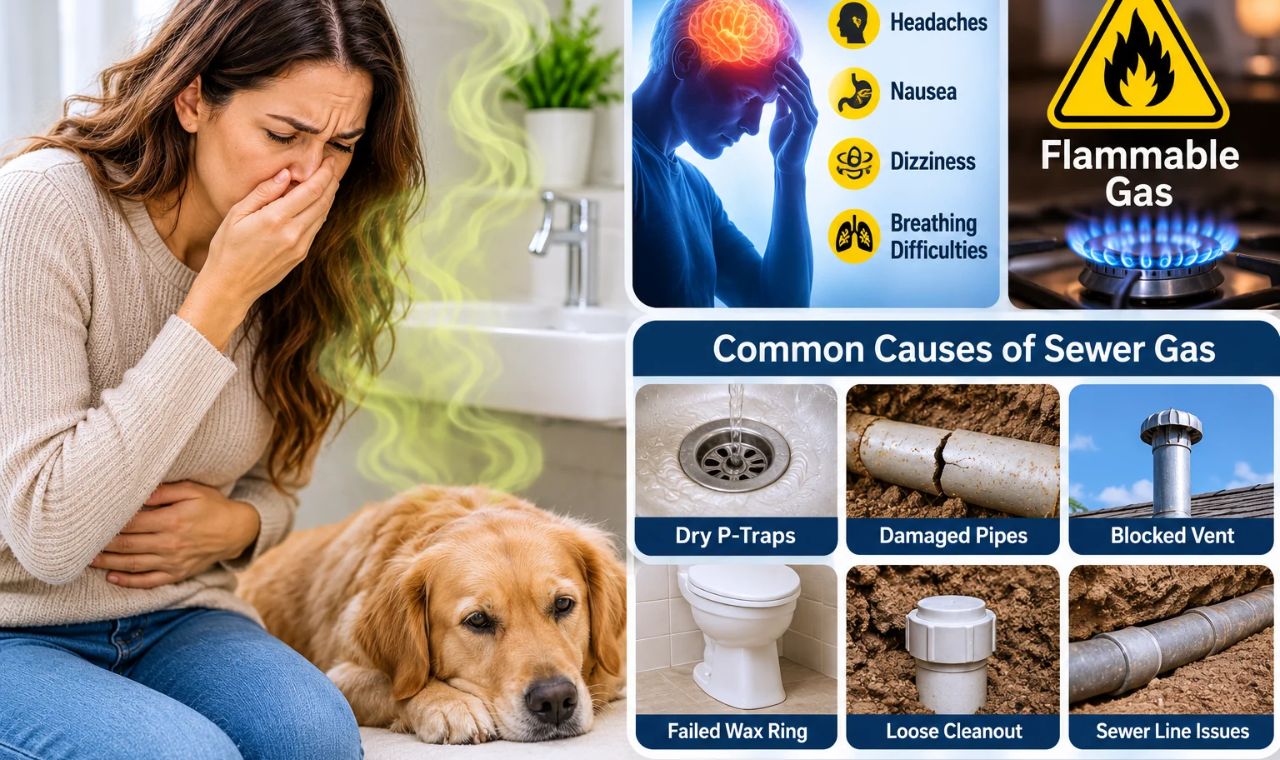
Yes. Exposure to certain sewer gas components can cause short-term symptoms, and prolonged or repeated exposure deserves attention.
The effects depend on the concentration of the gas and the duration of exposure. Someone who briefly notices a faint odor near a dry floor drain is in a different situation from someone exposed to a high concentration in an enclosed space.
Hydrogen sulfide exposure can cause irritation, headaches, nausea, and dizziness. Higher concentrations can interfere with normal breathing and affect the nervous system.
Methane creates a different concern. It isn’t poisonous in the same way as hydrogen sulfide, but high concentrations can displace oxygen. This can lead to oxygen deprivation, particularly in confined spaces.
Ammonia can irritate the eyes and respiratory tract, especially at elevated concentrations.
Can children, older adults, and pets be affected?
Yes. Children, older adults, and people with existing respiratory sensitivities may need additional protection from poor indoor air quality. Pets should also be moved away from areas where sewer odors are present.
There isn’t one universal symptom pattern that confirms sewer gas exposure. Headaches or nausea can have many causes, so don’t attempt to diagnose poisoning based on symptoms alone.
If anyone experiences confusion, fainting, severe dizziness, or breathing difficulties near a suspected gas leak, leave immediately and contact emergency services. Don’t return to investigate the source.
Can Sewer Gas Explode or Cause a Fire?
Sewer gas can create a fire or explosion hazard because some of its components are flammable.
Methane is the main concern in this regard. Hydrogen sulfide is also flammable. However, an ordinary household sewer smell doesn’t automatically mean enough gas has accumulated to create an explosion risk.
A dangerous concentration is more likely to develop in enclosed or poorly ventilated spaces where gas can accumulate. This is particularly relevant to sewer systems, septic tanks, and other confined spaces.
Homeowners should never use matches, candles, lighters, or other ignition sources to investigate an unexplained sewer odor.
If a strong smell develops suddenly, leave the area. Don’t operate electrical switches or appliances if a gas accumulation is suspected. Contact emergency services from a safe location.
What Causes Sewer Gas to Enter Your House?
A home’s plumbing system is designed to prevent sewer gases from reaching occupied rooms. Several plumbing failures can break that protection.
Dry P-Traps and Unused Floor Drains
A P-trap is the curved section of pipe beneath a sink or drain. It holds a small amount of water that blocks sewer gases from passing through.
When a drain isn’t used for weeks or months, the water can evaporate. This commonly happens in:
- Basement floor drains
- Guest bathrooms
- Laundry room drains
- Utility sinks
- Drains in vacant properties
If the odor comes from one unused drain and there are no signs of a larger plumbing problem, slowly pouring water into that drain may restore the water barrier.
If the smell continues, the trap may be damaged, or another problem may be present.
Damaged Drain Pipes and Sewer Lines
Cracked, corroded, or disconnected pipes can allow sewer gases to escape before reaching the plumbing vents.
Older homes may have aging cast-iron drain lines that have deteriorated over time. Underground sewer pipes can also develop cracks because of soil movement, corrosion, root intrusion, or physical damage.
A damaged sewer line may produce several symptoms together, including recurring odors, slow drains, sewage backups, and damp areas around the property.
Failed Toilet Wax Rings
The wax ring sits between the toilet and the drain connection in the floor. It creates a seal that prevents wastewater and sewer gases from escaping.
If the ring deteriorates, becomes displaced, or was installed incorrectly, sewer odors may collect around the toilet base.
A toilet that rocks slightly, develops moisture around its base, or smells like sewage despite regular cleaning should be inspected.
Blocked Plumbing Vent Pipes
Plumbing vent pipes allow sewer gases to escape above the roof while maintaining proper air pressure inside the drainage system.
Leaves, bird nests, debris, or other obstructions can restrict airflow.
When a vent becomes blocked, homeowners may notice gurgling toilets, slow drainage, unusual odors, or water moving inside nearby traps.
Don’t climb onto the roof to investigate a suspected blockage. A qualified plumber can inspect the vent safely.
Loose Cleanout Caps and Drain Connections
A sewer cleanout provides access to the drainage system for maintenance. Its cap should fit securely.
A missing, damaged, or loose cap can create an opening through which sewer odors escape. Similar problems can occur around poorly sealed drain connections and plumbing joints.
Damaged Sewer Vents and Hidden Leaks
A cracked vent pipe can release gases inside a wall, attic, or other concealed area. Unlike a leaking water pipe, a vent pipe may release odors without leaving obvious moisture behind.
This can make the problem difficult to locate without professional testing.
Underground Sewer Line Problems
A damaged underground sewer line can cause persistent odors around the basement, foundation, or outdoor areas.
Tree roots, aging pipe joints, ground movement, and blockages can all contribute to sewer line deterioration. In some situations, gases can also enter through damaged connections or openings around the foundation.
If several drains smell unpleasant or the odor keeps returning, a professional sewer line inspection can help determine whether the problem extends beyond an individual fixture.
What Should You Do If You Smell Sewer Gas in Your Home?
Your response should depend on how strong the odor is and whether anyone is experiencing symptoms.
A faint smell coming from one unused floor drain is different from a sudden, overwhelming odor throughout the basement.
If the Smell Is Strong or Anyone Feels Unwell
Take these precautions immediately:
- Leave the affected area and get everyone, including pets, to fresh air.
- If the odor is widespread or someone experiences dizziness, confusion, fainting, or breathing difficulties, contact emergency services.
- Don’t use matches, lighters, candles, or electrical equipment to investigate the smell.
- Don’t enter crawl spaces, manholes, sewer lines, or other confined areas to look for the source.
- Don’t return until emergency responders or qualified professionals determine that it is safe.
Don’t rely on opening windows or switching on fans to make a suspected gas accumulation safe. Ventilation doesn’t eliminate the plumbing defect responsible for the odor.
If the Odor Is Mild and Comes From One Unused Drain
If there is no strong odor or associated illness, you can make a few basic observations from a safe location.
- Identify whether the smell is coming from a particular sink, shower, or floor drain.
- Check whether the fixture has been unused for an extended period.
- Pour water into an unused drain to restore its trap seal, provided there are no signs of a serious gas leak.
- Observe whether the odor disappears or returns.
If the smell continues, arrange a plumbing inspection. Don’t keep pouring chemicals into the drain or attempting repairs without understanding the cause.
For recurring drainage problems, professional drain cleaning and clog removal may help identify blockages that are contributing to the problem.
How Do Plumbers Find and Fix Sewer Gas Problems?
Finding the source matters more than masking the odor. A plumber will generally start by examining the affected fixtures and tracing possible openings between the drainage system and living areas.
The repair depends on what the inspection reveals.
Inspecting Drains and P-Traps
The plumber checks whether drain traps contain water and whether the fittings are properly connected.
If a trap has dried out, restoring the water barrier may resolve the odor. If the trap is cracked, disconnected, or incorrectly installed, it may need repair or replacement.
Checking Toilet Seals
A plumber examines the toilet base, mounting, and connection to the drain.
If the wax ring has failed, the toilet may need to be removed so the damaged seal can be replaced. The plumber can also check the flange for cracks or other problems that could prevent a proper seal.
Inspecting Plumbing Vent Pipes
The plumber checks whether vent pipes are obstructed, cracked, or disconnected.
Clearing a blockage or repairing a damaged section can restore proper ventilation. This may also resolve gurgling sounds and drainage problems associated with restricted airflow.
Using Smoke Testing to Locate Hidden Leaks
When the source isn’t visible, a plumber may use smoke testing.
This process introduces specialized, non-toxic test smoke into the plumbing drainage system under controlled conditions. Smoke escaping from a damaged joint, loose fitting, or cracked pipe can help identify the location of a leak.
It is particularly useful when odors appear inside walls or ceilings and ordinary visual inspection doesn’t reveal the problem.
Performing a Sewer Camera Inspection
If the plumber suspects underground pipe damage, a sewer camera inspection can provide a closer look inside the drain line.
A small waterproof camera is guided through an accessible section of the sewer pipe. The footage can reveal:
- Cracks and damaged joints
- Tree root intrusion
- Corrosion and pipe deterioration
- Blockages and accumulated debris
- Sections where the pipe has shifted or collapsed
The findings help determine whether the pipe needs cleaning, localized repair, or replacement.
Completing the Necessary Sewer Repair
Once the problem is identified, the plumber recommends a repair that addresses the actual defect.
Depending on the condition of the plumbing system, this may involve replacing a damaged pipe section, reconnecting loose fittings, repairing a vent, replacing a toilet seal, or addressing a compromised sewer line.
For more extensive problems, homeowners can review Royal Penguin Plumbing’s sewer repair services to learn about its sewer-related service offering.
The InterNACHI explanation of sewer gases in homes also discusses common plumbing failures, including dry traps and damaged drain or vent pipes.
When Do You Need Emergency Sewer Service?
Some sewer problems can wait for a scheduled inspection. Others require immediate attention because they create health, sanitation, or property damage concerns.
Contact emergency services first if there is a strong suspected gas accumulation or anyone develops serious symptoms. A plumber should not be asked to enter an unsafe environment to investigate it.
For plumbing assistance, contact a qualified professional promptly if you notice:
- Sewage backing up through toilets, showers, or floor drains.
- Wastewater leaking into the basement or living areas.
- A sudden, strong sewer odor that doesn’t go away.
- Multiple drains becoming slow or gurgling simultaneously.
- Suspected damage to the main sewer line.
- Recurring sewer odors accompanied by signs of pipe failure.
A sewer backup is particularly concerning because contaminated wastewater can damage flooring, walls, and personal belongings.
If you need urgent plumbing assistance, Royal Penguin Plumbing’s emergency plumbing repair service provides information about its emergency plumbing services.
Don’t wait for a complete blockage if several warning signs appear together. Early professional diagnosis can help prevent a smaller plumbing defect from developing into a more disruptive repair.
How Can You Prevent Sewer Gas Problems?
Regular attention to household drains and plumbing connections can reduce the chances of sewer gas entering your home.
Here are some practical habits worth following.
Use infrequently used drains. Run water through guest bathroom sinks, showers, and basement floor drains periodically. This helps prevent the water inside their traps from evaporating.
Check floor drains. Pay particular attention to drains in laundry rooms, basements, garages, and utility spaces. These are easy to overlook because they don’t receive water regularly.
Watch for toilet movement. A toilet that rocks or shifts may have a loose mounting connection or damaged seal. Have it inspected rather than repeatedly tightening the bolts.
Pay attention to drainage changes. Gurgling, recurring slow drains, and repeated backups may indicate a blockage or venting issue that needs attention.
Keep plumbing vents unobstructed. Have roof vent pipes inspected when there are signs of restricted airflow. Leave rooftop inspection and cleaning to qualified professionals.
Arrange inspections for older sewer lines. Aging pipes may develop corrosion, cracks, and root intrusion. A professional inspection can help identify deterioration before a major failure occurs.
Address recurring odors early. Avoid relying on air fresheners, drain chemicals, or ventilation as permanent solutions. They don’t repair damaged plumbing or restore failed seals.
How Royal Penguin Plumbing Helps With Sewer Problems?
- Royal Penguin Plumbing is a residential plumbing service provider based in Souderton, Pennsylvania, serving homeowners in Bucks County, Montgomery County, and nearby communities.
- Its plumbing services include drain cleaning, sewer-related repairs, leak detection, toilet repair, and emergency plumbing assistance. The company also handles general residential plumbing needs.
- When a plumbing problem develops, homeowners need to understand what is causing it and what repair options are available. Clear explanations and transparent communication help make those decisions easier.
- Royal Penguin Plumbing focuses on dependable service and professional workmanship, helping homeowners understand the issue before proceeding with necessary repairs.
- For a recurring sewer odor, drainage issue, or suspected damaged pipe, contacting a plumbing professional is a sensible first step toward finding the source.
Find and Fix the Source Before Sewer Odors Return
Sewer gas odors are worth investigating, even when they seem mild. A dry drain trap may be a simple fix, but recurring smells can indicate damaged pipes, failed toilet seals, or blocked plumbing vents. Pay attention to warning signs, protect your household when strong odors develop, and avoid investigating suspected gas accumulations yourself. Homeowners in Bucks and Montgomery Counties can contact Royal Penguin Plumbing in Souderton for help understanding sewer and drainage problems and determining the appropriate repair.
Frequently Asked Questions
Q. Is sewer gas harmful if you smell it in your house?
Yes, sewer gas can be harmful depending on its concentration and exposure time. A noticeable smell doesn’t automatically mean poisoning, but persistent sewer odors should be investigated.
Q. What are the first signs of sewer gas exposure?
Early symptoms can include headaches, nausea, dizziness, eye irritation, and throat discomfort. Severe dizziness, confusion, fainting, or breathing difficulties require immediate emergency assistance.
Q. Can sewer gas make you sick while sleeping?
Prolonged exposure to elevated concentrations may cause health problems, even while someone is sleeping. Address recurring bedroom or bathroom sewer odors rather than assuming they’ll disappear overnight.
Q. How do you get rid of sewer gas in a house?
Identify and repair the source, such as a dry P-trap, damaged toilet seal, blocked vent, or broken sewer pipe. Ventilation alone won’t correct the underlying plumbing defect.
Q. Does Royal Penguin Plumbing help with sewer repair and sewer odor problems?
Royal Penguin Plumbing offers sewer-related plumbing services, drain cleaning, and plumbing repairs in its Pennsylvania service area. Homeowners can contact the company to discuss their symptoms and appropriate repair options.