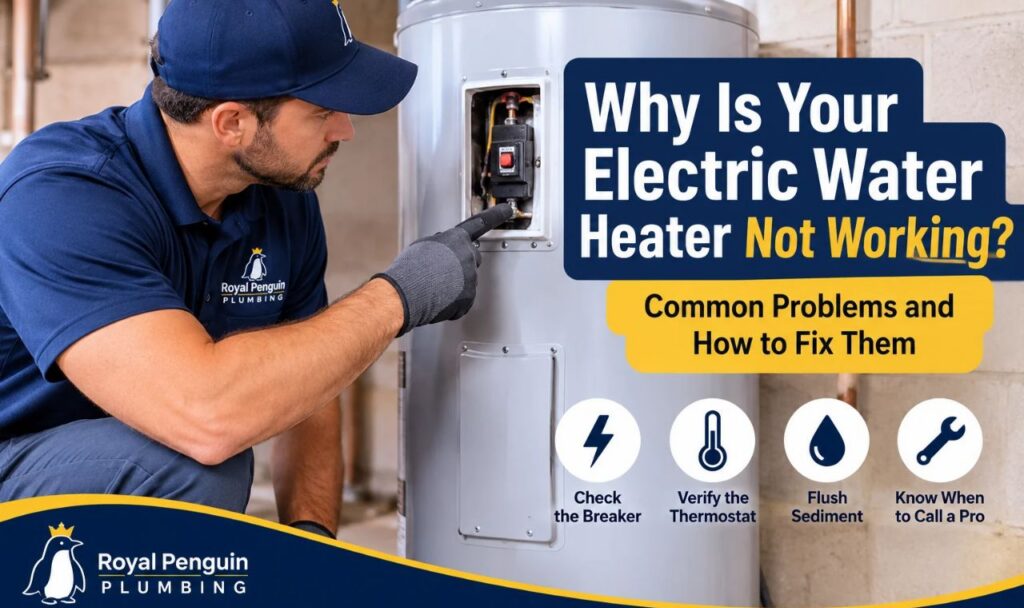
You turn on the shower expecting hot water, but all you get is a stream of cold water. Maybe the kitchen faucet has the same problem, or your water heater used to provide enough hot water for everyone in the house but now runs out halfway through a shower. Either way, something isn’t working as it should.
An electric water heater can stop heating for several reasons. Sometimes, the problem is as simple as a tripped circuit breaker. In other cases, a damaged heating element, faulty thermostat, electrical connection, or heavy sediment buildup may be responsible.
The important thing is to identify what might be happening without putting yourself at risk. Some basic checks are safe for homeowners, but electrical components and internal tank repairs require professional attention.
In this guide, we’ll explain why your electric water heater not working may be a problem, what different symptoms can tell you, which checks you can perform safely, and when to contact a professional for repair.
How Does an Electric Water Heater Work?
Before troubleshooting, it helps to understand how a standard electric water heater operates.
Unlike a gas water heater, which uses a burner to heat water, an electric model uses heating elements installed inside the storage tank. Most conventional residential electric water heaters have two elements: an upper element and a lower element.
Here’s how the main components work together:
- Heating elements: These electrical components heat the water inside the tank. The upper element heats the water near the top, while the lower element heats the water below it.
- Thermostats: These controls monitor water temperature and tell the heating elements when to turn on or off.
- Circuit breaker: This supplies electricity to the water heater and protects the electrical circuit from excessive current.
- High-temperature limit switch: This safety device shuts off power to the heating elements if the water becomes excessively hot.
- Storage tank: This holds the heated water until your household needs it.
In a typical two-element system, both elements don’t operate at full power simultaneously. The upper element generally heats water first. Once the upper section reaches its target temperature, the thermostat switches power to the lower element.
When one of these components stops working, the heater may produce no hot water, provide only a limited supply, or take much longer than usual to recover.
8 Common Reasons Your Electric Water Heater Is Not Working
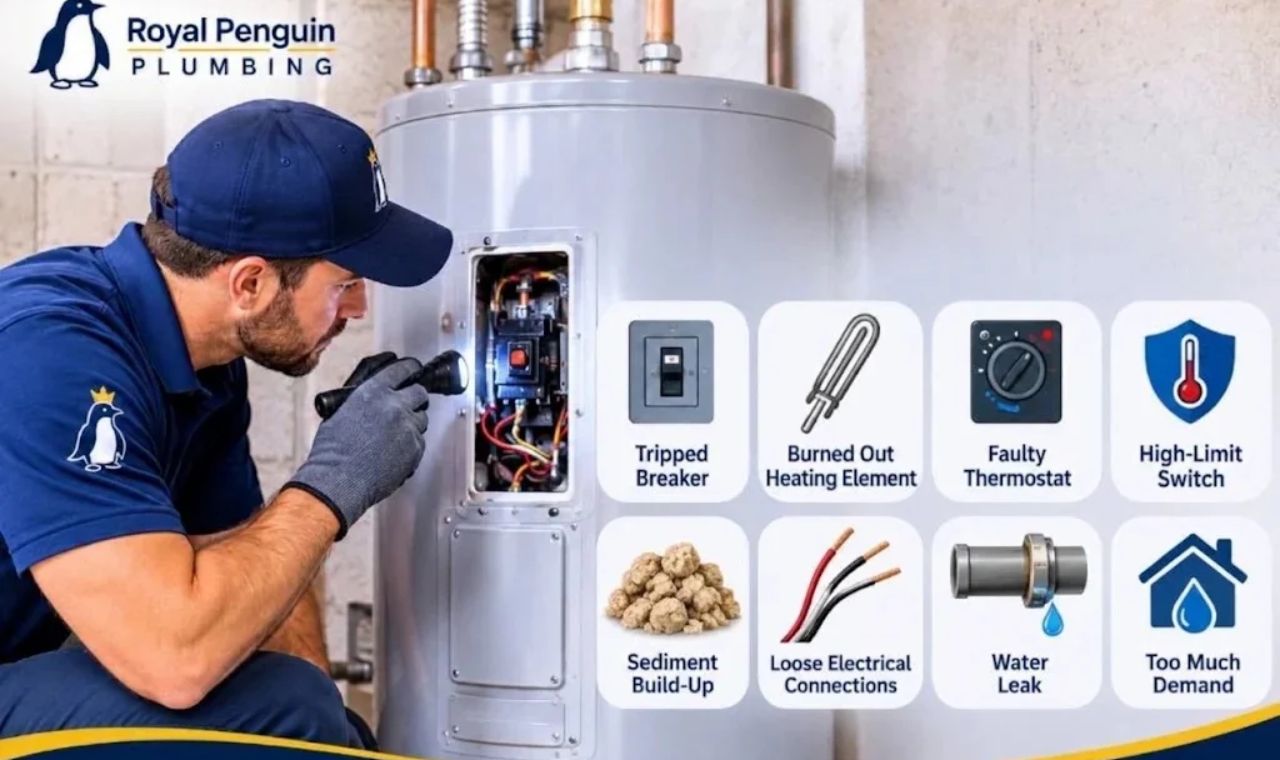
An electric water heater can stop working for several reasons, ranging from electrical problems to worn-out components and sediment buildup. Understanding the symptoms can help you identify the possible cause and decide when professional repair is necessary.
1. The Circuit Breaker Has Tripped
A tripped circuit breaker is one of the first things to check when your electric water heater stops producing hot water. Electric water heaters require considerable power, and an overload or electrical fault can cause the breaker to shut off the supply. Without electricity, the heating elements cannot warm the water.
Common signs include:
- No hot water anywhere in the house.
- The water heater appears inactive.
- The circuit breaker is in the OFF or tripped position.
- Hot water stopped working suddenly.
What you can do: Check the dedicated breaker. If it has tripped and there are no signs of damage, moisture, or burning, you can reset it once. If it trips again, leave it off and contact a qualified professional to inspect the electrical system.
2. A Heating Element Has Burned Out
A damaged heating element can prevent your electric water heater from producing enough hot water. Most conventional electric water heaters have two heating elements that warm different sections of the tank. Over time, mineral deposits, corrosion, and normal wear can cause either element to fail.
- When the upper heating element fails: The heater may produce little or no hot water because the upper section cannot heat properly.
- When the lower heating element fails: You may initially have hot water, but the supply can run out quickly because the lower section remains cold.
Other warning signs include:
- Water takes longer to heat.
- Hot water runs out after one shower.
- Water temperature changes unexpectedly.
- The heater struggles to meet household demand.
Replacing a heating element requires electrical testing and draining the tank. A professional plumber can identify the damaged element and install a compatible replacement safely.
3. The Thermostat Is Malfunctioning
Your water heater’s thermostat controls when the heating elements turn on and off. If it stops reading the water temperature correctly or fails to communicate with the heating elements, the system may produce lukewarm water or stop heating altogether. A faulty thermostat can also cause dangerously high water temperatures if it fails to shut off the heating cycle.
Look for these symptoms:
- Water temperature fluctuates unexpectedly.
- Hot water remains consistently lukewarm.
- Water becomes unusually hot.
- The heater struggles to maintain a steady temperature.
Most electric storage water heaters have upper and lower thermostats that work together to regulate heating. If either develops a problem, the entire system can be affected. A professional can test the controls and determine whether the thermostat, heating element, or wiring needs repair. Avoid opening electrical access panels yourself.
4. The High-Temperature Limit Switch Has Tripped
Electric water heaters include a safety feature called the high-temperature limit switch, also known as the Energy Cut Off (ECO). It interrupts power to the heating elements when water temperatures become dangerously high. If this switch trips, your water heater may stop producing hot water completely.
Common causes include:
- A malfunctioning thermostat.
- A heating element that fails to shut off.
- Excessively high water temperature.
- An electrical control problem.
Some models have a manual reset button behind the upper access panel. However, resetting the switch may only restore temporary operation without correcting the underlying fault. If the thermostat or heating element is defective, the problem can return. Have a qualified professional investigate why the switch tripped and follow the manufacturer’s safety instructions before restarting the system.
5. Sediment Has Built Up Inside the Tank
Minerals naturally present in household water can settle at the bottom of your water heater’s storage tank. Over time, these deposits may accumulate around the lower heating element, reducing heating efficiency and making the system work harder to maintain the desired temperature. Homes with hard water may experience this problem more frequently.
Signs of sediment buildup include:
- Popping, rumbling, or crackling noises.
- Longer water heating times.
- Reduced hot water availability.
- Changes in water temperature.
- Lower heating efficiency.
Professional tank maintenance can help remove accumulated sediment and identify whether the heating elements have been affected. Regular maintenance may also help prevent further buildup. Avoid flushing an older or leaking water heater without understanding the manufacturer’s instructions, as hot water, pressure, and electrical connections can create safety risks.
6. Loose or Damaged Electrical Connections
An electric water heater relies on secure electrical connections to supply power to its heating elements and thermostats. Over time, wiring can become loose, damaged, or corroded. Overheating, improper installation, and component failure can also contribute to electrical problems. When connections are affected, the heater may operate inconsistently or stop working altogether.
Possible warning signs include:
- Intermittent water heating.
- Repeated circuit breaker trips.
- Burning smells near the heater.
- Discolored or visibly damaged wiring.
- Unusual buzzing or electrical noises.
Never ignore these warning signs. If you notice smoke, sparks, or a burning smell, stop using the heater and switch off its breaker only if it is safe to do so. Contact a qualified professional to inspect the system. Never touch exposed wires or attempt electrical repairs yourself.
7. The Water Heater Is Leaking
A leaking water heater may struggle to maintain its temperature, especially when water continuously escapes and cold water enters the tank. Leaks can develop around plumbing connections, valves, fittings, or the storage tank itself. Identifying the source is important because some leaks are repairable, while a corroded tank may require replacement.
Common signs include:
- Water pooling around the tank.
- Moisture near pipe connections.
- Rust or corrosion on the tank.
- Dripping from a valve or fitting.
- Reduced hot water availability.
A leaking connection may need a repair, but water coming directly from the tank can indicate internal damage. If water reaches electrical components, stay away from the heater and surrounding standing water. Have the electrical supply isolated safely and contact a professional plumber to inspect the leak.
8. The Water Heater Cannot Keep Up With Household Demand
Sometimes, your water heater isn’t broken. It may simply be too small for your household’s hot water requirements. If several people shower, run the dishwasher, or use the washing machine within a short period, the tank may run out of hot water before completing another heating cycle.
Common contributing factors include:
- A growing household.
- Increased hot water usage.
- More frequent appliance use.
- Colder incoming water during winter.
- Reduced heating capacity due to an aging unit.
If hot water returns after allowing the tank time to recover, household demand may be the issue. However, repeatedly running out of hot water can also indicate a failing heating element or sediment buildup. A plumber can assess your usage, inspect the existing system, and determine whether a repair or a larger-capacity water heater would better meet your needs.
What Should You Check When Your Electric Water Heater Stops Working?
Before arranging a repair appointment, there are a few basic observations you can make.
These checks can help you explain the problem to a plumber without opening the appliance or handling electrical components.
Step 1: Check Whether Every Faucet Has Cold Water
Turn on the hot water at two or three different fixtures.
If every faucet produces cold water, the problem may involve the water heater or its electrical supply.
If only one faucet or shower has the problem, the issue could be a local plumbing connection, mixing valve, or fixture cartridge rather than the water heater itself.
This simple check helps narrow down the source of the problem.
Step 2: Inspect the Circuit Breaker
Locate the electrical panel and identify the breaker connected to the water heater.
If it appears tripped, you can reset it once if there are no signs of an electrical fault or damage.
However, if it trips again, leave it off and contact a qualified professional. Repeatedly resetting a breaker can create a safety risk.
Step 3: Look for Visible Leaks
Inspect the area around the water heater without touching electrical components.
Look for:
- Water beneath the tank.
- Dripping pipe connections.
- Moisture around the pressure relief valve.
- Rust or corrosion on visible surfaces.
If you find a leak, avoid assuming that tightening a fitting will solve it. A professional should identify the source before repairs begin.
Step 4: Listen for Unusual Sounds
Pay attention to noises coming from the tank.
A small amount of operating noise may be normal, but persistent popping, rumbling, or crackling can indicate sediment accumulation or another internal problem.
Make a note of when the noise occurs and whether it started recently.
Step 5: Check the Water Temperature
If the water is still warm but not hot enough, the issue may be related to a thermostat, heating element, mixing valve, or household demand.
The U.S. Department of Energy identifies 120°F as a common recommended residential water heater setting for balancing everyday needs, energy use, and scald prevention.
You can read its guidance in the Department of Energy’s residential water heater recommendations.
Do not increase the thermostat setting simply to compensate for a malfunction. Excessively hot water can cause serious burns.
When Should You Stop Troubleshooting and Call a Plumber?
Basic observations are useful, but some water heater problems should not be handled as DIY projects.
Electric water heaters combine water, high-voltage electrical connections, and pressurized components. Incorrect repairs can cause electric shock, burns, equipment damage, or flooding.
Contact a professional if you notice any of the following:
- Repeated breaker trips: This may indicate a shorted heating element, damaged wiring, or another electrical fault.
- Burning smells or sparks: These are warning signs of a potentially serious electrical problem.
- Water leaking from the tank: Internal tank corrosion may require replacement.
- Repeated high-limit switch trips: The underlying overheating problem needs to be diagnosed.
- No improvement after basic checks: A failed heating element, thermostat, or electrical component may need testing.
- Water that becomes dangerously hot: This could indicate a thermostat or safety control failure.
You should also arrange an inspection if the heater produces inconsistent temperatures or takes much longer than usual to recover.
If you need emergency water heater service because of active flooding, electrical hazards, or a significant leak, prioritize safety and contact a qualified professional promptly.
How Do Plumbers Repair an Electric Water Heater?
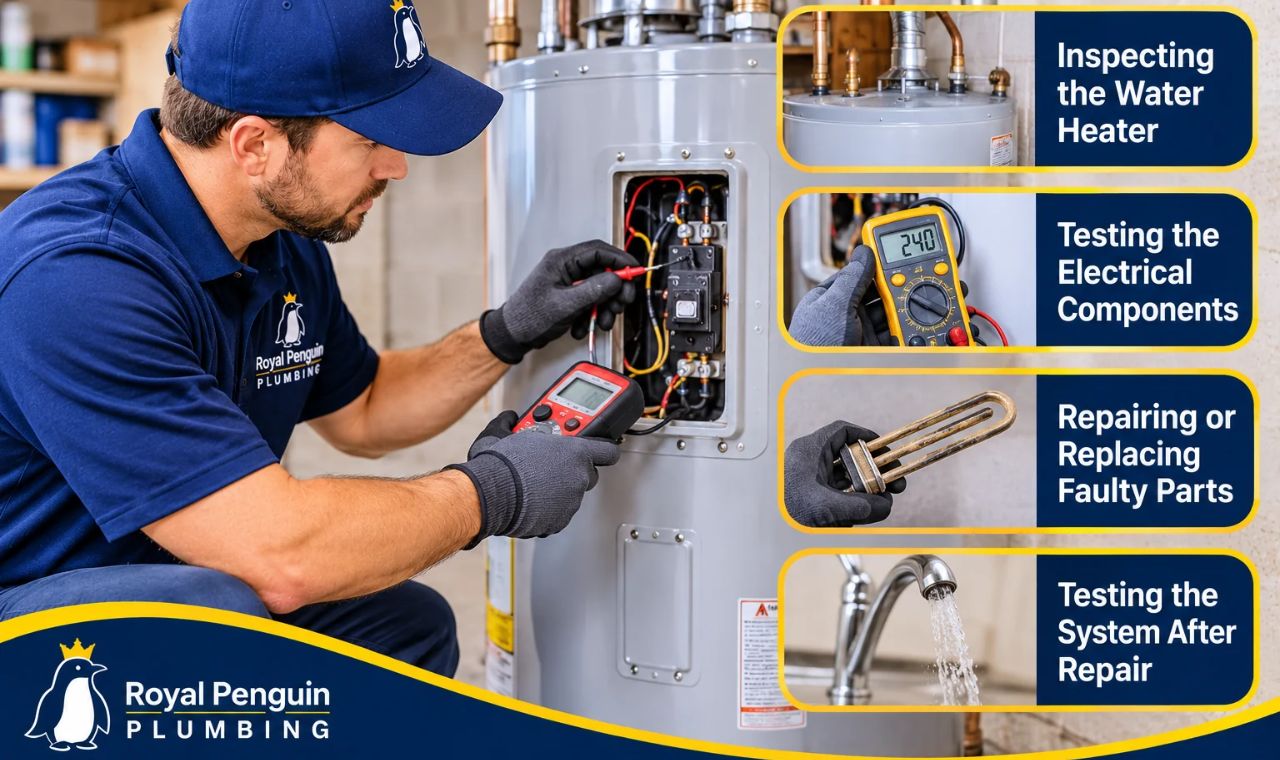
Professional diagnosis starts with understanding the symptoms and checking the condition of the system.
Rather than immediately replacing parts, a plumber should identify the actual cause of the malfunction.
Here is what the repair process may involve.
Inspecting the Water Heater
The plumber checks the tank, visible connections, shutoff valves, electrical access areas, and surrounding plumbing.
This helps identify visible damage, leaks, corrosion, and installation problems.
Testing the Electrical Components
Depending on the symptoms, the professional may test the heating elements, thermostats, safety controls, wiring, and electrical supply.
These tests help determine whether the problem involves a failed component or an issue with the home’s electrical system.
Repairing or Replacing Faulty Parts
Once the cause is identified, the plumber can explain the available repair options.
Depending on the condition of the unit, the work may include:
- Replacing a damaged heating element.
- Installing a compatible thermostat.
- Addressing a faulty safety control.
- Repairing leaking plumbing connections.
- Arranging qualified electrical repairs.
- Flushing accumulated sediment when appropriate.
The repair should follow the manufacturer’s specifications and applicable local requirements.
Testing the System After Repair
After completing the work, the professional should verify that the water heater operates correctly.
This includes checking for leaks, confirming proper heating operation, and ensuring the safety controls are functioning as intended.
A proper final inspection helps reduce the chance of the same problem returning shortly after the repair.
Should You Repair or Replace Your Electric Water Heater?
Not every malfunction means you need a new water heater.
A unit with a failed heating element or thermostat may be a reasonable repair candidate, particularly if the tank itself remains in good condition.
However, replacement may make more sense when the tank has developed internal corrosion, continues leaking, or requires repeated expensive repairs.
Consider these factors before making a decision:
Age of the unit: Older water heaters may be closer to the end of their useful service life. Check the manufacturer’s guidance and have the unit assessed.
Condition of the tank: A leaking or severely corroded tank generally cannot be restored through a simple component replacement.
Repair costs: Compare the cost of the necessary repair with the price of a replacement, including installation.
Household hot water needs: A replacement may be an opportunity to choose a more suitable tank capacity.
Energy performance: A newer model may offer improved energy performance, depending on its specifications and your household’s usage.
For a closer look at your options, read our guide to tank vs. tankless water heaters.
A professional can explain whether repairing your existing system or installing a replacement is the more practical long-term choice.
How Can You Prevent Future Electric Water Heater Problems?
Routine attention can help you catch developing problems before they interrupt your hot water supply.
Here are some useful maintenance practices:
- Schedule periodic inspections: Have a professional check the tank, connections, safety controls, and overall operation.
- Address unusual noises early: Popping and rumbling may indicate sediment buildup that needs attention.
- Watch for leaks: Check around the tank and visible plumbing connections occasionally.
- Avoid excessive thermostat settings: Follow the manufacturer’s recommendations and consider scald prevention.
- Understand your water quality: Hard water can contribute to mineral buildup inside the tank.
- Follow maintenance instructions: Flushing intervals and procedures vary by model, water conditions, and tank age.
- Pay attention to changing performance: Longer heating times and reduced hot water supply may indicate a developing fault.
One important precaution: Never restore electrical power to an electric water heater unless its tank is completely filled with water. Energizing an exposed heating element without water can cause it to burn out.
For maintenance that involves draining the tank, inspecting electrical components, or replacing internal parts, follow the manufacturer’s instructions and use a qualified professional when necessary.
Reliable Water Heater Service in Pennsylvania From Royal Penguin Plumbing
A water heater that stops working can disrupt your entire household, especially when you depend on it for showers, laundry, cleaning, and everyday tasks.
Royal Penguin Plumbing provides residential plumbing services to homeowners throughout Bucks and Montgomery counties, Pennsylvania. Our family-owned business focuses on dependable workmanship, clear communication, and practical plumbing solutions.
Whether you’re dealing with a leaking water heater, inconsistent temperatures, or a system that no longer provides enough hot water, our team can help you understand the problem and discuss appropriate repair options.
We provide water heater repair, replacement, and installation services for residential systems.
Restore Your Hot Water and Keep Your Plumbing Working Properly
An electric water heater may need a simple repair rather than replacement. Problems like faulty thermostats, damaged heating elements, or sediment buildup can affect its performance. Avoid DIY electrical repairs and contact a professional when the cause isn’t clear.
Royal Penguin Plumbing helps homeowners in Bucks and Montgomery counties with water heater problems. If your electric water heater isn’t working properly, visit our water heater services page or call (215) 720-2721 to discuss your plumbing concerns and arrange an appointment.
Frequently Asked Questions
Q. Why is my electric water heater not working, but the breaker isn’t tripped?
A failed heating element, faulty thermostat, tripped high-temperature limit switch, or damaged wiring may be responsible. A professional can test the components to identify the actual problem.
Q. Why does my electric water heater have power but no hot water?
The heater may have a failed upper heating element, malfunctioning thermostat, or activated safety cutoff. Having these components inspected can help restore normal operation.
Q. How long does an electric water heater take to heat water?
Recovery time depends on tank capacity, heating element wattage, and incoming water temperature. Many conventional units need around one to two hours for a full recovery, although partial hot water may be available sooner.
Q. Can I reset my electric water heater myself?
You can reset a tripped circuit breaker once if there are no signs of electrical damage. However, resetting the internal high-temperature limit switch involves accessing electrical components and should be handled according to the manufacturer’s safety instructions by a qualified person.
Q. When should I call for emergency water heater service?
Call for professional help if the tank is actively leaking, water is flooding the area, you notice burning smells or sparks, or electrical components are exposed to water. Avoid touching the appliance or standing water near electrical hazards.