
Your kitchen sink starts draining slowly after dinner. Or water collects around your feet halfway through a shower. Someone tells you to pour in baking soda and vinegar, and it sounds perfect. It’s cheap, it’s already in the pantry, and all that foaming looks like serious work.
So, does baking soda and vinegar clean drains? In a limited way, yes. It can freshen a drain opening and loosen light residue near the surface. What it can’t do reliably is clear a real blockage made of packed hair, hardened grease, or debris sitting deeper in the pipe. The fizzing feels like proof of progress, but it only shows two ingredients reacting with each other. It says very little about whether your clog is moving.
Does Baking Soda and Vinegar Really Clean Drains?
Think of it as a light freshener, not a clog remover. If you have a thin film of soap near the opening or a faint musty smell, the mixture can help. The foam spreads around the drain, and the water that follows carries some loose material along.
Once the problem is a wad of hair, a layer of hardened grease, or food packed into a trap, the picture changes, those are physical obstructions. A short burst of foam doesn’t break them apart or pull them out.
Here’s a pattern plumbers see all the time. A homeowner tries the mixture and runs hot water afterward, and the sink drains a bit faster. They credit the fizz. Usually the credit belongs to the water flushing loose debris along or a partial clog shifting for a moment. A day or two later, the drain is slow again because the real blockage never left.
What Happens When You Mix Baking Soda and Vinegar Down a Drain?
Baking soda is sodium bicarbonate, a mild alkaline powder. White vinegar is mostly water with a small amount of acetic acid. When they meet, the acid and the base react and produce carbon dioxide gas, water, and a little sodium acetate, which is a mild salt. The gas is what you see as foam and hear as fizzing.
The reaction lasts a minute or two and then stops once one of the ingredients runs out. What’s left is mostly slightly salty water with very little cleaning strength.
Many people picture the gas pushing against a clog like a tiny plunger. A drain isn’t a sealed container, though. Poison Control explains that drains aren’t airtight, so the carbon dioxide escapes and generally doesn’t build enough pressure to release a clog. Their article on why baking soda and vinegar may not clear tough clogs also says the mixture is unlikely to be strong enough to melt away grease blockages.
What Types of Drain Problems Can Baking Soda and Vinegar Help With?
Mild Drain Odors
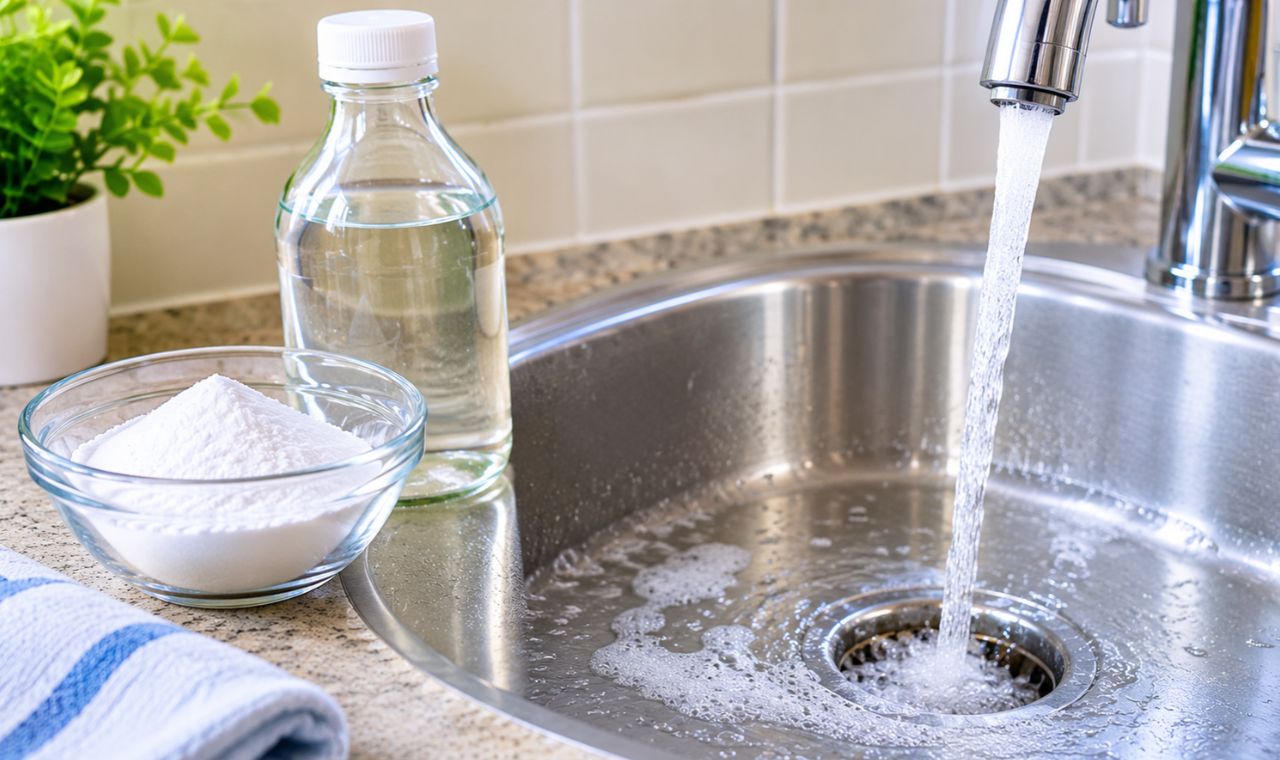
A drain that smells a bit stale may simply have residue near the opening, and the mixture can freshen that area. Odors have other causes too. Food or hair trapped in the trap can rot, a seldom used drain can dry out and let sewer gas rise, and a venting problem can pull gases into the room.
If the smell comes back within a day or two, stop treating it as a cleaning problem. Something is trapped, dry, or poorly vented, and no amount of fizzing will fix that.
Light Soap Residue and Surface Buildup
There’s a big difference between a thin film near the drain opening and thick buildup coating the pipe walls. The mixture can reach the first. It won’t reliably remove the second, because the foam doesn’t travel far and doesn’t stay in contact with the deposit long enough to matter.
Occasional Drain Maintenance
Basic upkeep is worth doing, and a periodic rinse with baking soda and vinegar won’t hurt most drains. Just don’t expect it to guarantee that clogs stay away. The habits that really protect your pipes are cleaning strainers and pulling out visible debris, which we cover below.
What Baking Soda and Vinegar Cannot Remove From Your Pipes?
Independent testing backs this up. When Which? tried a mix of bicarbonate of soda, salt, and vinegar on both a hairball and a greasy food blockage, it fizzed and did little else. The clogs stayed put after two attempts and a ten minute wait, and it took a lot of plunging to dislodge them. That was a lab setup with a test pipe, not a home, but it matches what plumbers find in real houses. Different blockages need different methods, so here is how each type behaves.
Hair Clogs
Hair tangles around the drain stopper and the first few inches of pipe, then binds with soap residue into a dense mat. Liquid flows around it or soaks into it without loosening it. Pulling the hair out physically works far better than pouring anything over it.
Grease and Cooking Oil
Grease goes down the drain as a liquid, then cools and sticks to the inside of the pipe. It collects food particles and coffee grounds, and the passage narrows a little more with every wash. Pouring more liquid on top doesn’t strip that coating away.
If your kitchen drain keeps slowing down, grease is the first suspect. A plumber offering kitchen plumbing services can clear it with proper equipment and check whether the trap or the drain line needs attention.
Food Debris
Kitchen drains collect rice, pasta, vegetable peels, and other scraps. They settle in the trap, around the garbage disposal connection, or at pipe bends. Once enough builds up, water drains slowly or not at all. This is a packing problem, and a bubbling mixture doesn’t move packed material.
Soap Scum and Mineral Buildup
Soap leaves a waxy film, and hard water adds mineral deposits. Together, they slowly shrink the opening of a drain, usually over months. A reaction that lasts a couple of minutes isn’t a dependable answer for deposits that took that long to form.
Deep Pipe or Sewer Blockages
A clog in the branch line or the main sewer line sits well beyond the drain opening. One plumbing professional quoted in expert opinions on the baking soda and vinegar drain trick explained that by the time the reaction travels down the pipe, it has already stopped. That fits what we see. Household mixtures simply can’t reach or clear a deep obstruction.
How to Use Baking Soda and Vinegar on a Drain
If you have a mildly slow or smelly drain and want to try it, here is a sensible way to do it. Think of it as a cleanup step, not a guaranteed fix.
- Remove any visible debris around the drain opening.
- Take out the strainer or stopper if it comes out, and clean it.
- Pour about half a cup of baking soda into the drain.
- Slowly add about a cup of white vinegar.
- Let the fizzing settle, which takes a few minutes.
- Flush with warm or hot tap water, as long as your fixture and pipes can handle it.
- Check whether the water now flows normally.
If the drain is still slow, don’t keep repeating the process. A second or third round won’t succeed where the first one failed. The mixture has no leftover strength once the reaction finishes, so waiting overnight doesn’t help either.
Important Safety Advice
Never mix vinegar with bleach, a chemical drain cleaner, or any cleaning product you can’t identify. Some combinations release toxic fumes. If you have already poured a chemical drain cleaner into the drain, do not add vinegar, baking soda, another cleaner, or anything else on top of it. Don’t plunge that drain either, because the liquid can splash back onto your skin and eyes.
A word on boiling water. It gets recommended for everything, but extremely hot water isn’t right for every setup. It can crack porcelain fixtures and may stress PVC pipes, seals, and older plumbing. Hot tap water is the safer choice for a rinse.
Does Baking Soda and Vinegar Work Better Than Chemical Drain Cleaners?
Neither is a sure thing, and they differ in what they can do and what they risk. Homemade mixtures are mild, which is their strength and their weakness. They’re gentle on your skin and, used alone, a low risk for most plumbing, but they don’t have much power against a true clog.
Chemical drain cleaners are designed to be strong. Many contain corrosive acids or alkalis meant to eat through grease and hair. That strength brings real hazards. They can burn skin and eyes, give off fumes, and splash back out of a drain that’s fully blocked. Pipe material and plumbing condition matter too, because a product that suits one setup may not suit another. Always follow the label exactly. If you’re weighing this choice for a bathroom, our page on chemical drain cleaner safety explains the concerns in more detail.
I wouldn’t treat a chemical cleaner as the automatic next step when baking soda and vinegar fail. A blockage that resists a mild mixture often needs to be removed, not dissolved. Mechanical clearing or a professional visit is usually the better call.
What Should You Use Instead When Baking Soda and Vinegar Fail?

Clean the Drain Stopper or Strainer
Hair and gunk gather on the stopper, the strainer, and just below them. Lifting out the stopper and wiping it clean often solves a slow tub or bathroom sink on the spot. Wear gloves and expect it to be unpleasant. Removing the material beats adding anything else on top of it.
Try a Plunger
A plunger works through water movement. Use a cup plunger for sinks and tubs, and make sure there’s enough water to cover the cup. Block the overflow opening with a wet cloth if there is one, press for a firm seal, and push and pull steadily for about 20 to 30 seconds. Check the drain and repeat a few times. If nothing changes after several rounds, stop and move on. Never plunge a drain that contains chemical cleaner.
Use a Drain Snake for Hair Clogs
A small hand drain snake can hook hair and debris within reach of the opening. Feed it in gently, turn it, and pull the material out. Don’t force it. Delicate fixtures and unfamiliar pipe layouts are easy to damage, and a snake pushed hard against a bend can scratch the pipe or jam itself.
Schedule Professional Drain Cleaning
When household methods fall short, a plumber’s equipment can reach what you can’t. Alison Schlicher, a Royal Penguin customer, praised Jimmy for clearing her clogged drain, communicating clearly, working professionally, and leaving the area clean. That last part matters more than people expect.
A professional visit also helps if the same drain keeps clogging. Repeated clearing without finding the cause just resets the clock. If you’re searching for a plumbing contractor near me, ask whether they diagnose first and explain their options. Looking up the best plumbers or a master plumber near me is fine, but how they communicate counts for a lot. You can read about our professional drain cleaning service for what a visit involves.
Why Does Your Drain Keep Clogging Even After Cleaning?
A clog that returns is telling you something. Common reasons include:
- Grease coating the inside of kitchen pipes
- Hair collecting in bathroom drains
- Soap residue trapping other debris
- Food particles building up in traps
- Pipe slope or layout problems that slow drainage
- Damaged or deteriorating pipes
- Tree roots or other sewer line obstructions
- A blockage that was only partly removed last time
That last one is more common than people think. Clearing a hole through a clog isn’t the same as removing it, and the remainder soon grows back.
Don’t assume a recurring clog means sewer damage, though. Most are local and fixable. Curtis Denlinger’s experience shows why diagnosis matters. He called Royal Penguin about a clogged and leaking sink. The team arrived on schedule, found the problem quickly, cleared the clog, and repaired the drain pipe before lunch. The blockage was one issue, and the damaged pipe was another.
Signs You Need a Professional Drain Cleaning Service
Call a plumber if you notice any of these:
- Water barely drains or stops completely.
- The clog keeps coming back after cleaning.
- Several drains are slow at the same time.
- Water backs up into another sink, tub, or floor drain.
- Nearby fixtures gurgle when water runs.
- A sewage smell lingers inside the home.
- A toilet or lower level drain backs up when another fixture is used.
These symptoms point to a deeper blockage or a shared drain line problem, not a single stubborn clog near one fixture. When more than one drain acts up, a household mixture is not going to reach the cause.
How to Prevent Drain Clogs Without Cleaning Products
Prevention is mostly habit. These steps are realistic and cheap:
- Use strainers in kitchen and bathroom sinks.
- Keep hair out of shower and tub drains.
- Wipe grease from cookware before washing it.
- Don’t pour cooking oil or grease down the drain.
- Keep coffee grounds and extra food scraps out of the sink.
- Clean accessible stoppers regularly.
- Deal with slow draining early, before it turns into a full blockage.
- Avoid leaning on chemical cleaners over and over.
- Arrange professional drain cleaning if buildup keeps returning.
The Short Answer
Does baking soda and vinegar clean drains? It can freshen one and help with light residue, but it won’t clear a real clog. Clean the stopper, try a plunger, and call a plumber if the drain stays slow.
How Royal Penguin Plumbing Helps Drain Problems
Royal Penguin Plumbing is a residential plumbing company based in Souderton, Pennsylvania. We serve homeowners across Bucks County, Montgomery County, and nearby communities. Our drain cleaning and clog removal service covers slow drains, blocked sinks, shower drainage problems, grease buildup, hair clogs, and more serious obstructions. We start by finding out what’s actually wrong, then use suitable tools and explain your repair options in plain language. We show up when we say we will, communicate clearly, and treat your home with respect. We can’t promise every clog clears in one visit, but we’ll be honest about what we find. If your drain stays blocked, keeps clogging, or starts affecting more than one fixture, give Royal Penguin Plumbing a call.
Conclusion
Baking soda and vinegar can help freshen drains and loosen minor residue, but they are not a reliable fix for stubborn clogs caused by hair, grease, or deep pipe buildup. The fizz may look impressive, but it does not necessarily mean the blockage is clearing. If your drain keeps slowing down or backs up again, it is better to address the underlying problem than repeat the same home remedy. Royal Penguin Plumbing can help identify the cause and restore proper drainage before a minor clog turns into a bigger plumbing issue.
Frequently Asked Questions
Q. Does baking soda and vinegar clean drains?
It can freshen a drain and loosen light residue near the opening. It isn’t dependable for real blockages like packed hair, hardened grease, or deeper clogs.
Q. How long should baking soda and vinegar sit in a drain?
A few minutes is plenty, since the reaction ends quickly. Waiting longer doesn’t make it stronger once the fizzing has stopped.
Q. Can baking soda and vinegar dissolve hair or grease in pipes?
Not reliably. Hair needs to be physically removed, and thick grease coats pipe walls in a way a short reaction can’t strip off.
Q. What should I use if baking soda and vinegar do not unclog my drain?
Start by removing visible debris and cleaning the stopper. Then try a suitable plunger or a careful drain snake, and call a plumber if the blockage remains or affects other fixtures.
Q. Does Royal Penguin Plumbing offer professional drain cleaning in Bucks and Montgomery County?
Yes. We’re based in Souderton and provide drain cleaning and clog removal for homeowners in Bucks County, Montgomery County, and nearby areas.