
You step into the shower, and a few minutes later water is pooling around your ankles. It rises, lingers, and drains so slowly that you finish rinsing in a gray puddle. The bottle of chemical drain cleaner under the bathroom sink starts to look like the quick fix.
Here is the direct answer. Chemical drain cleaner can be used on a shower drain in some situations, but it is rarely the safest first choice, and it is never a guaranteed fix. Whether a product is safe depends on its formula, your pipe material, the condition of your plumbing, and the manufacturer’s instructions. A clog that keeps returning usually needs a plumber, not another bottle.
Below, you will learn how these products work, what they can do to a clogged shower drain and the pipes beneath it, and which safer options deserve a try first.
What Happens When You Pour Chemical Drain Cleaner Into a Shower Drain?
Chemical drain cleaners are not all the same, and they do not all work the same way. Most drain cleaning products, including any shower drain cleaner on the shelf, fall into one of a few groups.
Caustic cleaners contain lye, also called sodium hydroxide. They are made to break down grease and soften organic material such as hair, and the reaction gives off heat. Bleach based gels are thickened so they sink through standing water and cling to the clog. In its product instructions, Drano describes its Max Gel as a thick bleach formula. Acid based cleaners are usually harsher and carry stronger warnings. Some target mineral deposits, while others do not.
Each type reacts differently with what is in your drain. Strong alkaline products can break down hair over time. Soap scum is a mix of soap residue and minerals, so a cleaner may thin it without removing it. Mineral scale from hard water often ignores products built for hair and grease.
One more point matters. A cleaner only works on what it touches. If hair is packed tightly or the clog sits deep, the product may flow past it.
Is Chemical Drain Cleaner Safe for Shower Drains?

It can be when the label says the product suits your pipes, your plumbing is sound, and you follow every instruction. It is not risk free, though, and the risks reach both your plumbing and your body.
What Harsh Chemicals Can Do to Pipes and Fittings
Many newer homes have PVC or ABS plastic shower drain pipes. Older homes may have metal drain pipes such as cast iron, galvanized steel, or brass. Between the shower drain body and the main line, you will also find a trap, rubber seals, gaskets, and glued or threaded joints.
Many consumer products say they are safe on PVC and metal pipes when used as directed. Pipe makers set their own limits, too. Charlotte Pipe’s published warranty terms exclude failures caused by contact with aggressive chemicals that are not compatible with the pipe. That does not mean every cleaner damages every pipe. It means compatibility should be confirmed, not assumed. Heat and strong chemicals are hardest on parts that are already weak, such as a brittle plastic trap, a dried out seal, or a joint with aging glue.
Why Repeated Use and Older Plumbing Call for Extra Caution
One careful treatment is very different from a bottle poured into the shower drain every few weeks. Repeated exposure gives chemicals more chances to stress seals, fittings, and thin or corroded metal. Nobody can give you a universal safe number of treatments, because it depends on the product and the pipe.
If you reach for a chemical every time the drain slows, you may be treating a symptom. A recurring shower drain blockage can point to a damaged pipe, poor slope, or a partial blockage deeper in the line, and chemicals will not fix any of those.
Why Standing Cleaner Creates a Safety Hazard
When a product fails to clear the clog, it does not vanish. It sits in the trap and pipe, and it can splash back onto your skin and eyes if you plunge or snake the shower drain. Drano’s directions say to never use a plunger during or after use, because product may still be present if the drain did not clear.
Do not reach into a drain that has had cleaner in it. Do not plunge it or run a tool through it unless the product label and a qualified plumber both confirm it is safe. Splashes and fumes can cause serious injuries, so follow the label on protective gear and ventilation and keep children and pets away. Never mix one cleaner with another, or with bleach, vinegar, or ammonia, because hazardous fumes can result.
If cleaner touches your skin or eyes, flush with water for at least 15 minutes and call 911 or your local poison control center. MedlinePlus guidance on lye exposure covers these first steps. If you cannot clear the drain, tell the plumber which product you used and when. That lets them work safely.
Why Do Shower Drains Get Clogged in the First Place?
A slow shower drain usually comes from a handful of causes. Knowing which one you have helps you pick the right fix.
- Hair accumulation. Hair is usually the main troublemaker. It catches on the crossbars or just below the cover, then traps everything else that follows.
- Soap scum buildup and product residue. Bar soap, shampoo, and conditioner leave a sticky film on pipe walls. Over time, the film narrows the pipe and grabs hair.
- Mineral deposits. Hard water leaves scale that builds slowly inside the drain and gives hair more to snag on.
- Foreign objects. Bottle caps, razor guards, and small toys fall through more often than people expect.
- Deeper plumbing problems. A sagging pipe, a damaged section, a venting issue, or a restriction in a shared branch or the main line can all look like a simple bathroom drain clog.
Identifying the cause matters because each one calls for a different tool. Hair buildup in a shower drain is a quick job with a gloved hand. A mineral layer or a damaged pipe will not respond to a product made for hair. Standing water in the shower that clears after hair removal points to a simple blockage. Water that returns quickly or appears in other fixtures suggests something deeper.
What Are the Safer Alternatives to Chemical Drain Cleaners?
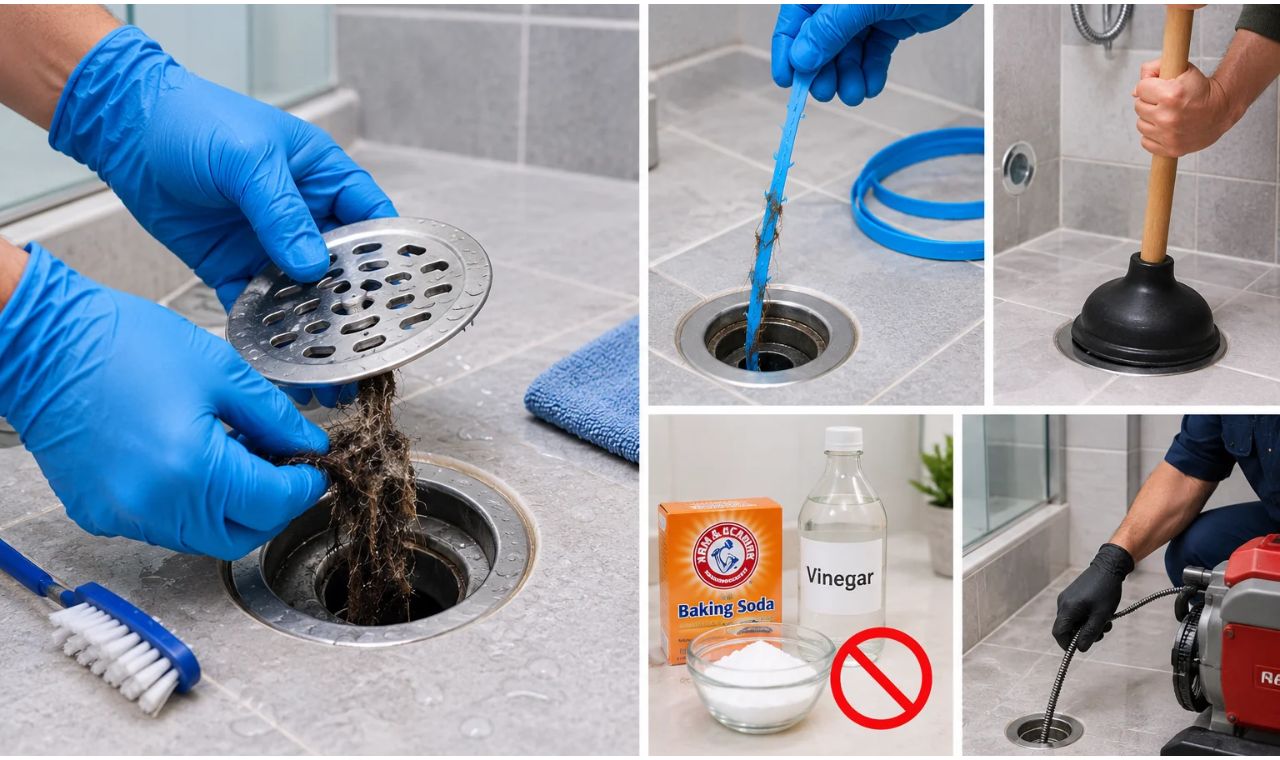
The safest first move is the simplest one. Remove what you can see, and work outward only if you need to.
Remove Visible Hair and Debris From the Shower Drain
Take off the drain cover or strainer. Some lift out, and others need a screwdriver. Wear gloves, shine a flashlight into the opening, and pull out the hair you can reach. Wipe soap scum off the cover and rinse it. Often this alone restores normal flow, because hair buildup in the shower drain sits right below the cover.
Use a Plastic Drain Cleaning Tool
A thin plastic strip with small barbs costs little and is gentle on pipes. Slide it in, twist slightly, and pull it out with the hair attached. Do not force it. A plastic tool reaches only the first stretch of pipe, and shoving hard can push a clog deeper.
Try a Plunger Where It Makes Sense
A plunger can move a loose blockage when it seals well over the shower drain. Plug a nearby overflow opening if your tub has one, and keep enough water over the cup to hold a seal. Use it only if no chemical cleaner has gone into that drain.
Know the Limits of Home Remedies
Natural drain cleaning methods such as baking soda and vinegar may freshen a drain, but they are not a guaranteed solution for a serious blockage and rarely move a packed hair mat. Never combine a home remedy with a commercial cleaner or any other product. Boiling water is not universally safe either. Very hot water can soften some plastic pipes and joints, and Drano’s own directions call for hot but not boiling water.
Professional Mechanical Drain Cleaning
If the simple steps fail, professional drain cleaning is the next safer step. A plumber feeds a cable or auger through the drain to break up or retrieve the blockage, which removes the clog instead of leaving a chemical sitting on top of it. Royal Penguin Plumbing lists drain cleaning and clog removal among its residential services.
Whatever method you choose, wear gloves, protect your eyes, and ventilate the room.
When Should You Avoid DIY Shower Drain Cleaning?
Stop and call a plumber when a clogged bathroom drain looks bigger than hair near the cover. Watch for these signs:
- Water backs up again and again after you clear it
- More than one drain runs slowly
- A persistent unpleasant odor stays after cleaning
- Gurgling sounds come from the shower, sink, or toilet
- The blockage returns within days or weeks
- Water backs up into another fixture, such as a tub or floor drain
Several of these signs together usually point away from the shower and toward a shared branch or the main line. Royal Penguin has written about how a sewer line problem shows up in several drains. Also stop if a cleaner has gone down the drain and the water has not cleared, or if a tool meets solid resistance.
When Should You Call a Professional Shower Plumber?
Call a shower plumber when simple cleaning does not hold, when symptoms spread, or when you are unsure what is in your shower drain. A shower plumber starts by finding the source of the blockage. That means inspecting accessible parts such as the strainer, drain body, and trap, and checking how other fixtures drain. The goal is to decide whether the problem is local or deeper in the plumbing system. From there, the plumber can choose a mechanical cleaning method that suits your pipe size and material, and can spot plumbing pipe damage or a recurring drainage issue that a bottle of cleaner would never reveal.
Not every slow drain is an emergency. A slow shower drain that still empties can usually wait for a scheduled visit. Emergency drain cleaning makes sense when wastewater comes up through a toilet, tub, or floor drain, when a sewage smell comes with a backup, when water threatens the floor or ceiling below, or when you cannot clear a drain that has chemical cleaner in it. In those cases, look for a drain cleaning service or plumber that offers 24 hour plumbing repair instead of waiting for the next business day. Royal Penguin’s site lists emergency plumbing repairs and describes help as available day or night.
These reviews are not about drain cleaning, but they show how the company handles bathroom plumbing. Eric Reed, Sr. had James replace a broken shower pipe and install a new shower head, and he praised the knowledge, courtesy, and fair pricing.
Michael Demarco appreciated how Jimmy explained a leaking tub faucet and the repair options available. Clear explanations like these matter before you try a risky DIY fix, because they help you choose with full information.
About Royal Penguin Plumbing
Royal Penguin Plumbing is a family owned residential plumbing company based in Souderton, Pennsylvania. It serves homeowners in Bucks County, Montgomery County, and nearby communities. The team is fully licensed and insured and handles work such as drain cleaning, leak detection, faucet and fixture installation, and emergency plumbing repairs. Diagnosis comes first, so the repair fits the real problem instead of the symptom. Options are explained in plain language before work begins, and the plumbers treat your home with respect. Communication stays clear and reliable from the first call to the finished job.
How Can Homeowners Prevent Future Shower Drain Blockages?
Prevention takes a few minutes a week and costs far less than repeated clogs. Use a hair catcher that fits your shower drain snugly and still lets water through. Remove accumulated hair every few days, and throw it in the trash instead of rinsing it down. Lift the drain cover and clean it monthly so soap scum does not harden. Keep razor caps, bottle tops, and small items away from the opening. Pay attention to recurring slow drainage, because it signals a problem. If the problem continues after you clean it, schedule a professional plumbing inspection. Steady shower drain maintenance and general plumbing system maintenance catch small problems before they become backups.
The Bottom Line on Chemical Cleaners and Your Shower Drain
Chemical cleaners are a gamble in a shower drain, because safety depends on the product, the pipe material, and the label. Pulling out hair and using a plastic tool solves many simple clogs without those risks, and costs almost nothing.
If the water keeps rising or other drains act up, Royal Penguin Plumbing can find the real cause and explain your repair options across Bucks and Montgomery Counties. Understanding the clog first is more sensible than pouring another bottle of harsh cleaner.
Frequently Asked Questions
Q. Is chemical drain cleaner safe for shower drains?
It can be, but only if the product is compatible with your pipes and used as directed. Harsh formulas may damage older pipes, seals, and fittings.
Q. What is the safest way to unclog a shower drain?
Remove visible hair and debris, then use a plastic drain tool or plunger if no chemicals are present. For stubborn clogs, professional mechanical cleaning is a safer option.
Q. Can chemical drain cleaners damage PVC shower drain pipes?
Some cleaners are labeled safe for PVC, but others may damage pipes, joints, or seals. Always check the product label and pipe compatibility before use.
Q. When should I call a professional shower plumber for a clogged drain?
Call a plumber if clogs keep returning, multiple drains run slowly, or you notice odors and backups. Serious backups may require emergency drain cleaning.
Q. Does Royal Penguin Plumbing provide residential bathroom plumbing services in Bucks and Montgomery Counties?
Yes, Royal Penguin Plumbing serves homeowners in Bucks and Montgomery Counties. Its plumbing services include drain cleaning, leak detection, fixture installation, and emergency plumbing repairs.