Picture a homeowner in Montgomery County who finishes a bathroom with new tile, a frameless shower, and a double vanity. Months later, a stain spreads across the ceiling below. The cause is a slow leak at a supply connection that was sealed inside the wall without a pressure test. Fixing it means removing tile, opening the wall, and paying for finishes twice. That is how a plumbing remodel turns expensive when essential work is overlooked, because finishes are only the visible layer of a renovation.
The costliest plumbing remodel mistakes usually share one cause: decisions made too late or hidden work left unchecked. This guide covers eight of them, from fixture relocation to skipped testing, with a practical fix for each. Early planning, an honest look at the existing pipes, and a qualified plumber involved before demolition can help reduce avoidable expenses. No checklist removes every surprise, but these steps help you catch problems while they are still inexpensive to correct.
Why Plumbing Remodel Mistakes Become Expensive
A plumbing error costs more during a remodel because the work is concealed. Pipes sit behind tile, drywall, cabinetry, and flooring. When one fails or is installed incorrectly, someone has to remove those finishes, repair the pipe, and rebuild everything disturbed. The pipe fix may be small. The demolition, replacement materials, labor, and delays around it are what add up.
- Concealed work is expensive to reach. Correcting a connection after the walls are closed means paying again for demolition and finishing.
- Planned upgrades cost less than unplanned repairs. Replacing a worn supply line while the wall is open is a scheduled task. Replacing it after a leak ruins new cabinets is an emergency with extra repairs attached.
- Trades depend on each other. The tile setter, cabinet installer, and electrician all work around the pipes, so a plumber who joins late may find the layout already conflicts with what others built.
- Existing conditions shape every decision. Pipe age and material, drain location, and floor structure all influence what a plumbing remodel can realistically include. Homes across Bucks and Montgomery Counties, it ranges from older farmhouses to newer construction, and what lies behind the walls varies just as widely.
The practical lesson is to bring in a plumber before the design is final, not after demolition starts.
8 Plumbing Remodel Mistakes That Can Cost Thousands

Changing Fixture Locations Without Planning the Plumbing
Moving a toilet, shower, sink, or tub changes more than where the fixture sits. Each one needs a water supply, a drain with proper slope, and a vent. If the new spot is far from existing connections, the plumber may need to open floors, reroute lines, or cut into framing.
- Why it gets costly: Relocation that was never assessed can force redesigns after demolition, plus extra labor and materials.
- The fix: Confirm the plumbing plan before demolition begins. Keeping fixtures near existing connections may reduce the work, although feasibility depends on the property.
- When to call a pro: Whenever a toilet, shower, or tub moves to a different wall or floor.
Ignoring Old or Deteriorating Pipes
Older plumbing can show corrosion, weakened connections, or small leaks nobody has noticed. Connecting a new vanity or shower to tired lines can expose those weaknesses soon after the work is finished.
- Why it gets costly: If a deteriorated pipe fails behind finished walls, you pay for the repair and the restoration.
- The fix: Have a qualified plumber evaluate accessible pipes and relevant parts of the system while walls are open. That does not mean every older pipe must be replaced, since many remain serviceable. The goal is an informed decision before the pipes are concealed.
- When to call a pro: If you see discolored water, mineral crust on fittings, or past repairs near the area being renovated.
Choosing Fixtures Before Checking Compatibility
A fixture can be beautiful and still be wrong for the space. Dimensions, supply connections, drain locations, shower valve compatibility, and water pressure all matter, and manufacturers publish installation requirements. A freestanding tub or wall mount faucet may need rough in measurements your existing plumbing cannot meet without changes.
- Why it gets costly: Buying first and checking later can mean extra fittings, installation changes, delays, or replacement purchases.
- The fix: Review the manufacturer’s specifications with your plumber before ordering. If water efficiency matters, the EPA’s WaterSense labeled products include toilets, bathroom faucets, and showerheads that are independently certified, which gives you a benchmark when comparing models.
- When to call a pro: Before you order. Professional faucet and fixture installation is easier when fit is confirmed ahead of time.
Overlooking Drainage Slope and Venting
Drain pipes rely on gravity, so they need an appropriate slope to carry wastewater away. Vent pipes let air into the system so water flows freely and the water seal in each trap, the curved section under a fixture that blocks sewer gas, stays in place.
Wrong slope or venting can show up as recurring clogs, slow drainage, gurgling, or sewer odors. These symptoms can also have other causes, such as a partial blockage, so they need proper diagnosis.
- Why it gets costly: Drain and vent lines sit inside walls and floors, so corrections mean opening finished surfaces.
- The fix: Have the drain and vent layout designed and checked before closing walls, especially when a fixture is added or moved.
- When to call a pro: Always for drain and vent changes. These systems are governed by code and are hard to correct afterward.
Skipping Permits, Inspections, or Applicable Plumbing Codes
Permit and inspection requirements vary by jurisdiction and project scope. The International Code Council publishes the International Plumbing Code as a model code, and local governments adopt it under their own procedures, sometimes with amendments.
- Why it gets costly: Work done without a required permit or inspection may need to be opened up, corrected, or documented later, which can also complicate a home sale or insurance claim.
- The fix: Before work starts, confirm what your project needs with the building or code office that serves your address. In Bucks and Montgomery Counties, requirements can differ between townships and boroughs, so do not assume a neighbor’s project followed the same rules. Schedule required inspections before pipes are covered.
- When to call a pro: When you are unsure whether your scope needs a permit. A licensed local plumber can explain the process, though the final answer comes from the local authority.
Using Unsuitable Materials or Incompatible Connections
Plumbing systems combine pipe materials, fittings, valves, and fixture supply lines, and not every combination works together. Joining different materials without proper transition fittings, or ignoring manufacturer instructions, can cause leaks or early failures.
The right material depends on the application, local requirements, water conditions, and what the existing system is made of. No single material is best everywhere.
- Why it gets costly: Incompatible connections often fail out of sight, so damage can spread before anyone notices.
- The fix: Ask your plumber which materials and connection methods they plan to use and why, and keep the product documentation.
- When to call a pro: Whenever new plumbing joins existing lines, especially in an older home.
Forgetting Shutoff Valves and Future Maintenance Access
Shutoff valves let you stop water to one fixture without shutting off the whole house. If they are missing or buried, a small repair becomes a larger job. Consider access panels near tub and shower valves, an isolation valve at each sink and toilet, and clear working space around the water heater.
That last point matters when upgrading equipment. Choosing a new water heater requires considering household hot water demand, installation requirements, and future maintenance. For more details, read this guide to tankless water heaters and their installation considerations.
- Why it gets costly: Permanently concealing a valve or connection means future repairs start with demolition.
- The fix: Decide where valves and access panels go before walls are finished, and never tile over components that need inspection.
- When to call a pro: When adding or replacing a water heater, such as through water heater installation and repair, or when changing a layout around existing valves.
Failing to Test the Plumbing Before Closing the Walls
Testing separates a plumbing remodel that looks finished from one that works. Supply lines, drain connections, and fixtures should be checked at the appropriate stages, before drywall, tile, and cabinets cover them. A concealed leak can soak drywall, flooring, and cabinetry for weeks before anyone sees it.
- Why it gets costly: Testing takes little time compared with removing finished walls to find a leak.
- The fix: Follow applicable inspection requirements and the testing procedures specified for the installed system. Ask your plumber to confirm pressure and leak checks are complete before walls close.
- When to call a pro: Always. Testing methods depend on the system, and a qualified plumber knows which to apply.
How to Prevent Costly Plumbing Remodel Mistakes
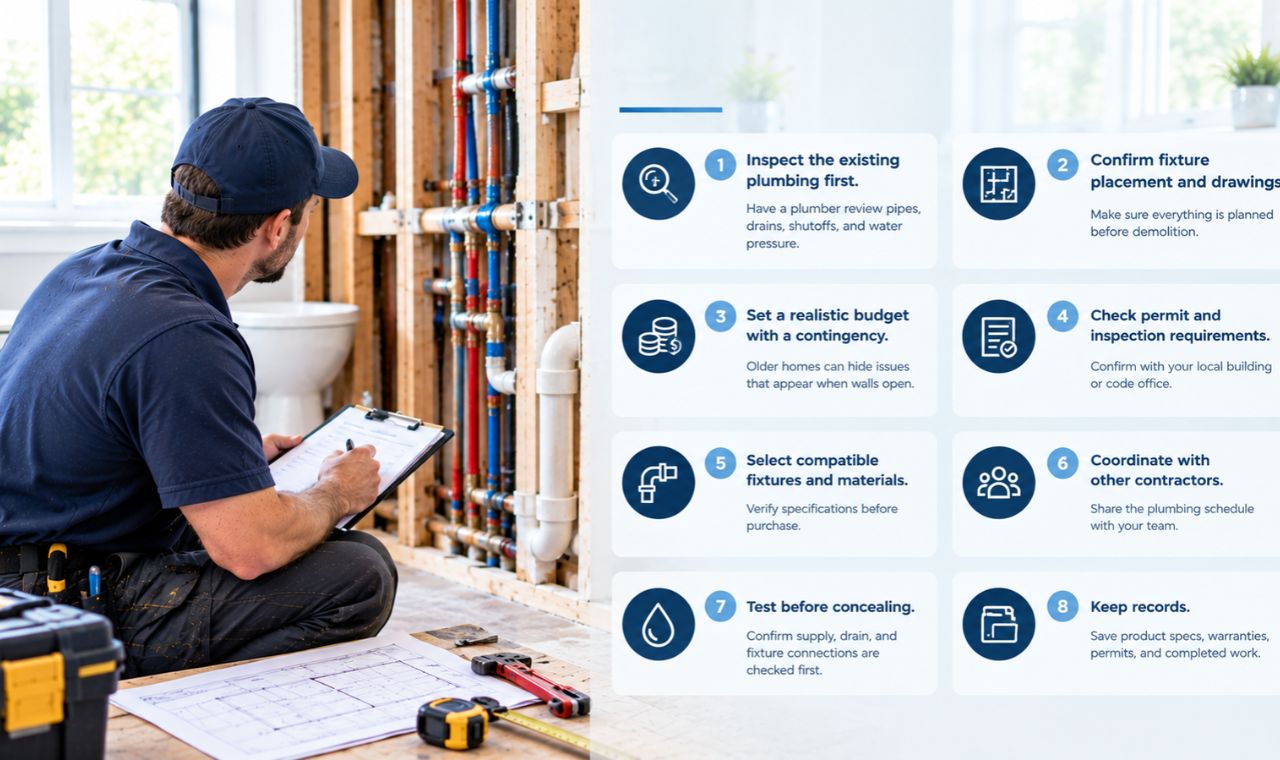 Use this checklist at the start of any plumbing remodel. It cannot guarantee a surprise free project, but it can lower the odds of an expensive one.
- Inspect the existing plumbing first. Have a plumber review pipes, drains, shutoffs, and water pressure before finalizing the design.
- Confirm fixture placement and drawings before demolition.
- Set a realistic plumbing budget with a contingency. Older homes can hide conditions that appear only when walls open.
- Check permit and inspection requirements with your local building or code office.
- Select compatible fixtures and materials and verify specifications before purchase.
- Coordinate with other contractors. Share the plumbing schedule with the designer, general contractor, and tile and cabinet installers.
- Test before concealing. Confirm supply, drain, and fixture connections are checked first.
- Keep records of product specifications, warranties, permits, and completed work.
What Affects Plumbing Remodel Costs?
Plumbing remodel costs depend on the home and scope, so any single number would mislead. These factors move the total:
- Fixture relocation and drainage changes, which often require new supply routes, drains, and venting.
- Replacing damaged or outdated pipes, including how much pipe and how easy it is to reach.
- Hidden water damage and hard to reach connections.
- Permit and inspection requirements, which vary by municipality.
- Fixture quality and compatibility, since some products need extra fittings.
- Labor, demolition, and restoration, often a major share of the work.
- Surprises found once walls or floors are opened, such as corroded lines or past repairs.
An itemized estimate shows where the money goes, and an assessment of the existing plumbing explains why. Ask for both before you commit, and remember that a planning conversation is not a final quote.
When Should You Hire a Professional Plumber for a Plumbing Remodel?
Hire a professional for changes to drain lines, venting, concealed pipes, water heater connections, significant fixture relocation, or suspected water damage. These tasks affect health, safety, and code compliance. Swapping a showerhead is usually manageable. Changing pipes inside a wall is a different category.
Commercial buildings add another layer, because commercial plumbing installation follows different design requirements than a house. This guide stays focused on residential renovations.
What to Do in a Plumbing Emergency
A remodel can reveal problems fast. If you find an active leak, burst pipe, sewage backup, or uncontrolled water flow:
- Shut off the water at the fixture valve or main shutoff if it is safe to reach.
- Stay away from electrical hazards if water is near outlets, panels, or appliances.
- Avoid using affected drains during a sewage backup.
- Contact a qualified plumber. Many people search for an emergency plumber in my area at this point, so save a plumber’s number before the project starts.
Royal Penguin Plumbing provides emergency plumbing assistance for homeowners in Bucks County and nearby areas. Pennsylvania winters add another reason to plan, since supply lines in exterior walls or unheated spaces need protection from freezing.
How Royal Penguin Plumbing Can Help With Your Plumbing Remodel
- Royal Penguin Plumbing is a fully licensed and insured, family-owned plumbing service based in Souderton, serving Bucks and Montgomery Counties. The team focuses on clear communication, precise estimates, quality materials, and careful workmanship.
- Homeowners can turn to us for faucet repair and fixture installation, toilet repair and replacement, water heater service, leak detection, drain cleaning, and emergency plumbing repairs.
- Those services can support a planned plumbing remodel as well as unexpected issues that surface mid project.
- If you are preparing a bathroom or kitchen renovation, we can help you review your existing plumbing before work begins.
- Call (215) 720-2721 or request an appointment through the website to talk through your project.
Plan the Plumbing Before You Finish the Walls
The most expensive plumbing remodel problems rarely come from the fixtures you can see. They come from hidden decisions: where pipes run, how drains slope, which connections get tested, and whether anyone can reach a valve later. Check the existing plumbing early, confirm local permit rules, and test before the walls close. Following that order keeps small issues small and gives your finished renovation a better chance of staying dry.
Frequently Asked Questions
Q. What Is the Most Expensive Plumbing Remodel Mistake?
Moving fixtures, replacing extensive piping, and fixing hidden leaks can be costly, especially when finished walls or floors need rebuilding.
Q. Should Plumbing Be Inspected Before a Bathroom Remodel?
Yes. Inspecting pipes, drainage, and water pressure helps identify problems early and avoid unexpected costs.
Q. Do I Need a Permit for a Plumbing Remodel?
It depends on local codes and the work involved. Check permit requirements with your local building department before starting.
Q. When Should I Call an Emergency Plumber During a Remodel?
Call immediately for burst pipes, major leaks, or sewage backups. Shut off the water if safe and avoid electrical hazards.
Q. How Can Royal Penguin Plumbing Help With Plumbing Remodel Problems?
Royal Penguin Plumbing serves Bucks and Montgomery Counties with fixture installation, leak detection, water heater services, and emergency repairs. Call (215) 720-2721 or request an appointment online.