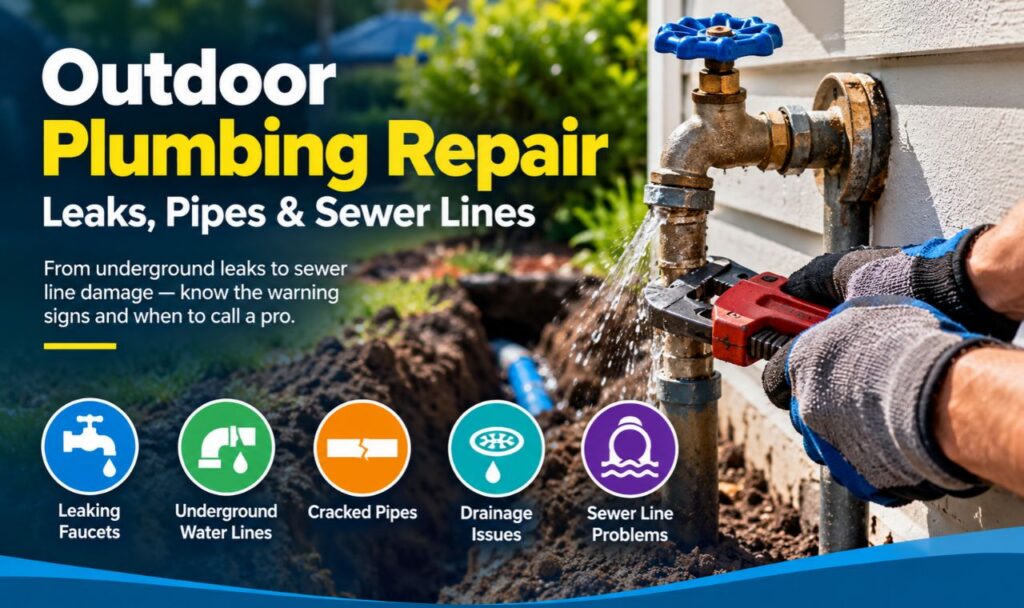
Outdoor plumbing repair is the diagnosis and fixing of problems in the faucets, water lines, drain pipes, and sewer connections that sit outside your home’s walls or run underground. Common examples include a leaking outdoor faucet, a damaged underground water line, a cracked exterior pipe, or a sewer line blockage. These problems often stay hidden until you notice a soggy yard, a jump in your water bill, or sewage backing up indoors.
A dripping hose bib may be a simple fix, but unexplained wet ground, falling water pressure, or wastewater in the yard usually means professional outdoor plumbing repair is needed. This guide explains the warning signs, causes, emergency steps, and repair options for homeowners and property managers.
What Does Outdoor Plumbing Repair Include?
Outdoor plumbing repair covers any work on plumbing that sits outside the building or runs underground between the property and the street, a well, or a septic system. The main components are:
- Outdoor faucets and hose bibs that supply water for hoses and washing.
- Underground water supply lines that carry water to the house.
- Exterior drainage pipes that move wastewater away from the structure.
- Sewer line connections that link the home’s drains to the municipal sewer or a septic system.
- Exposed outdoor pipes along foundation walls, garages, or crawl space entries.
- Irrigation-related connections, where a sprinkler system ties into the home’s water supply.
Supply and drain pipes work very differently. Supply pipes carry clean water under pressure, so a leak usually shows up as wet ground, a higher bill, or weak pressure. Drain and sewer pipes carry wastewater out of the home by gravity, so trouble usually appears as slow drains, odors, or backups. Knowing which system is involved speeds up outdoor plumbing repair.
Common Outdoor Plumbing Problems That Need Repair

Most calls for outdoor plumbing repair fall into five categories. Each has its own symptoms and its own risks.
Leaking Outdoor Faucets and Hose Bibs
A dripping spigot is the most visible reason for outdoor plumbing repair. Worn washers, loose fittings, corroded stems, and damaged connections commonly cause leaks at the spout or handle. Freeze damage is another frequent cause. If a hose stays attached in cold weather, trapped water can freeze and split the faucet or the pipe just behind the wall. If a faucet leaks only when the water is running, or if you see moisture inside near the spigot, have it checked before more water reaches the structure.
Underground Water Line Leaks
The water service line runs from the street or well to your home, and a leak can continue for a long time without notice. Bob Vila’s guide lists common signs of an underground water leak, including a sudden increase in water bills, decreased water pressure, and damp spots in the yard. Other clues include water surfacing on the lawn, unusually green or spongy patches in dry weather, and the sound of running water when every fixture is off.
A simple first check is to shut off all water use and see whether the water meter keeps moving. A moving meter points to a leak somewhere on the property, and a plumber offering leak detection and repair can pinpoint the source before anyone digs.
Cracked or Burst Exterior Pipes
Pipes crack for several reasons. Freezing temperatures are a major cause in Pennsylvania, where cold snaps and thaw cycles stress exposed and shallow lines. Soil movement can pull on joints and fittings. Aging or corroded materials can fail with little warning. Physical damage from digging, vehicles, or landscaping equipment can also puncture a line. A burst pipe may release a lot of water quickly, so shutting off the supply and arranging outdoor plumbing repair is the safest response.
Outdoor Drainage Problems
Not every wet yard needs outdoor plumbing repair. Water that pools after heavy rain usually comes from grading, downspouts, or stormwater runoff, and fixing it may involve landscaping or drainage work rather than plumbing. Plumbing drainage problems involve pipes that carry wastewater, such as a blocked exterior cleanout, a collapsed drain line, or a damaged connection near the foundation. Standing water during dry weather, a sewage smell, or slow drains inside the home suggest the problem may be plumbing-related. In that case, outdoor plumbing repair should start with a plumber inspecting the line before landscaping work begins.
Sewer Line Leaks and Blockages
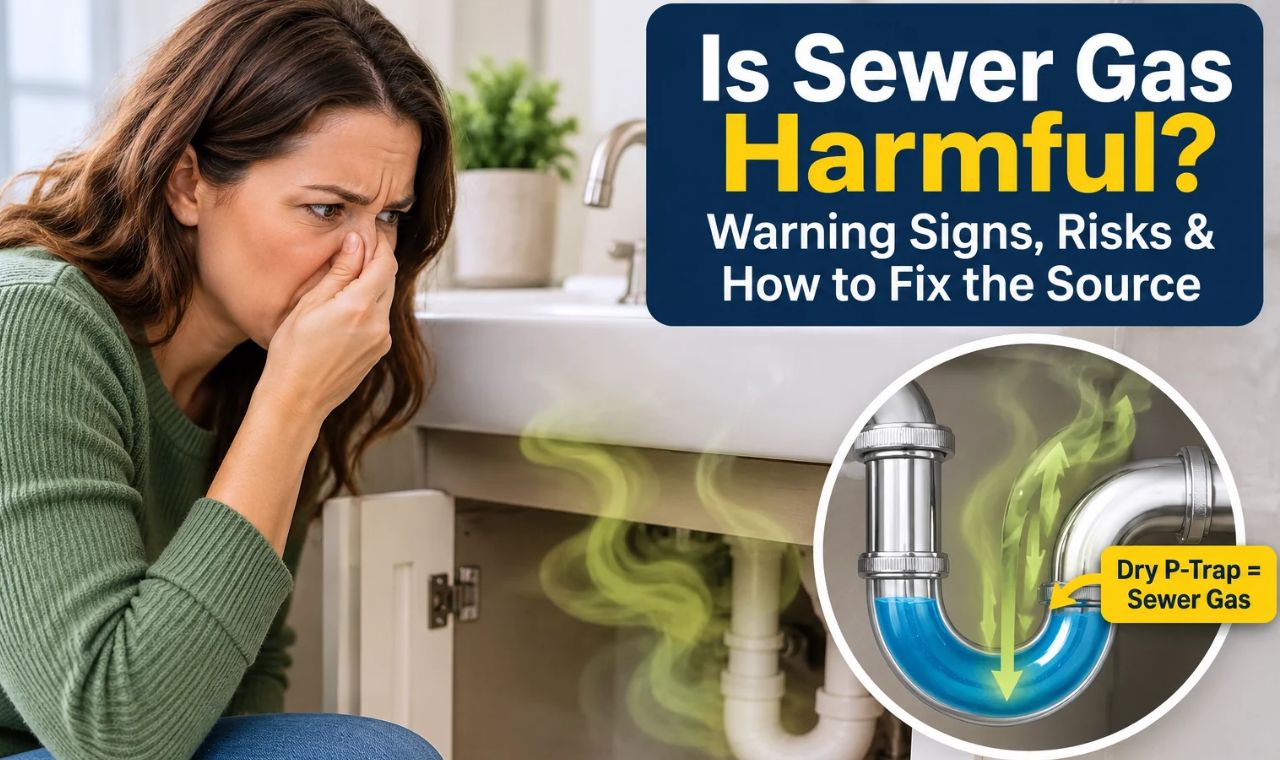
The sewer line carries all household wastewater to the municipal main or septic tank, so a problem here affects the entire home. Tree root intrusion is a common culprit because roots can enter cracked joints and keep growing inside the pipe. Pipe deterioration, shifted sections, and buildup of grease or debris can also cause sewer line blockages or leaks. The result may be slow drains, a sewer backup in a tub or floor drain, or wet, foul-smelling soil above the line. A blockage limited to one section may respond to professional drain cleaning, while a cracked or collapsed pipe needs a different kind of outdoor plumbing repair.
Warning Signs You May Need Outdoor Plumbing Repair
Watch for these signs around your property:
- Unexplained wet or muddy areas in the yard
- Water pooling without an obvious source
- Sudden increases in the water bill
- Reduced water pressure
- Persistent sewage odors outdoors
- Slow drains that affect multiple fixtures
- Gurgling sounds from drains or toilets
- Sewage or wastewater appearing in the yard
- Visible cracks, drips, or corrosion around exterior plumbing connections
One symptom does not always identify the cause. Low pressure can come from a supply leak, a failing pressure regulator, or a clogged fixture. A wet yard might be a broken water line, a sewer leak, or poor grading. A professional inspection can separate these possibilities so your outdoor plumbing repair targets the real problem.
What Causes Outdoor Plumbing Pipes to Leak or Break?
Seven causes account for most failures:
- Freezing and thawing. Water expands as it freezes, and Pennsylvania winters make this a real risk for exposed pipes and outdoor faucets.
- Aging or corroded materials. Older steel, cast iron, and clay pipes can degrade over decades.
- Tree root intrusion. Roots seek moisture and can enter existing cracks or loose joints in sewer lines.
- Shifting soil. Settling, erosion, and seasonal ground movement can stress pipes and joints.
- Poor connections or deteriorated fittings. Worn couplings, gaskets, and old repairs can start leaking over time.
- Accidental damage. Digging, fence post installation, and construction work can strike buried lines.
- Excessive pressure or mechanical stress. High water pressure, water hammer, or heavy loads above a pipe can strain it.
When Do You Need Emergency Sewer Line Repair?
A routine sewer issue, such as a slow drain that clears after cleaning, can usually be scheduled. A sewer emergency is different. Emergency sewer line repair becomes a concern when wastewater is backing up into the home or the line may be broken. Signs of urgency include:
- Wastewater backing up into toilets, tubs, or floor drains
- Sewage pooling in the yard
- Strong, persistent sewage odors
- Several fixtures draining poorly at once
- A suspected broken or collapsed sewer pipe
- Blockages that keep returning after cleaning
Sewage can carry bacteria and other contaminants, so a backup is both a property and a health concern. Contact a qualified plumber promptly when sewage is backing up, or the line appears damaged. Royal Penguin Plumbing lists emergency plumbing repairs among its services.
Not every blockage means a full replacement. Many are cleared with drain cleaning, and a camera inspection can show whether the pipe needs repair. While you wait for help:
- Stop using affected plumbing fixtures when wastewater is backing up.
- Keep children and pets away from contaminated areas.
- Avoid direct contact with wastewater.
- Do not try to excavate a suspected damaged sewer line.
- Contact a plumbing professional.
How Professionals Diagnose and Repair Outdoor Plumbing Problems
Every property is different, so outdoor plumbing repair varies. A typical process includes:
- Initial assessment. The plumber asks about symptoms and inspects the affected area.
- System identification. They determine whether the problem involves the water supply or the drainage system.
- Leak detection and pipe inspection. Where appropriate, they use detection methods to locate a supply leak.
- Camera inspection. For suspected sewer problems, a camera on a flexible cable can show roots, cracks, offsets, or blockages.
- Evaluation of options. The plumber reviews pipe condition, material, depth, and location.
- Targeted repair or replacement. A damaged section may be repaired, while a badly deteriorated pipe may need replacement.
- Testing. The plumber checks the system after the work to confirm it holds water and drains properly.
Outdoor plumbing repair may use conventional excavation, where a trench exposes the pipe, or trenchless methods that work through small access points. Pipe lining and pipe bursting are two examples. This Old House shows a lining process for a root-clogged pipe in which a resin-coated liner is inflated inside the line, and its plumbing expert recommends camera inspection before any major demolition.
Trenchless repair is not right for every pipe. A severely collapsed or misaligned section may still need digging. Pipe condition, material, location, and damage decide which outdoor plumbing repair options apply.
What Should You Do Before a Plumber Arrives?
Before outdoor plumbing repair begins, some steps are safe for homeowners to take:
- Locate the main water shutoff valve if you suspect a supply leak and can reach it safely.
- Stop using affected fixtures if a sewer backup is occurring.
- Keep people and pets away from standing wastewater.
- Document visible symptoms with photos, notes, and the times you noticed them.
- Avoid digging until underground utilities are located. Pennsylvania law requires an 811 call at least three working days before digging.
- Never use open flames or unsafe equipment to thaw frozen pipes.
- Avoid chemical drain cleaners on suspected sewer line problems.
Shutting off water, documenting symptoms, and keeping people safe are reasonable homeowner tasks. Locating a buried leak, running a camera through a sewer line, and repairing underground pipe require professional tools and training.
How to Prevent Outdoor Plumbing Problems

Routine attention lowers the risk of needing outdoor plumbing repair but cannot guarantee that a pipe will never fail. Useful habits include:
- Inspect outdoor faucets and visible pipe connections for drips or corrosion.
- Disconnect garden hoses before freezing weather.
- Shut off and drain exterior faucet supply lines where your plumbing setup allows.
- Protect exposed pipes with suitable insulation.
- Monitor changes in water pressure and your water bill.
- Watch for wet areas that keep returning in the same spot.
- Avoid planting large trees directly over known underground utility routes.
- Arrange a professional inspection when sewer or water line problems repeat.
Residential and Business Plumbing: Understanding Outdoor Plumbing Needs
Outdoor plumbing repair matters on every kind of property. At a house, the usual trouble spots are an underground supply line, an exterior hose bib, or the sewer lateral. Business plumbing adds its own pressure, since a commercial water line leak or a sewer drainage problem can interrupt operations, disrupt customers, and affect neighboring tenants.
In both settings, early outdoor plumbing repair limits water loss, soil erosion, and damage to paving or foundations. Property managers should also confirm that any plumber they call handles the type of property involved, because residential and commercial work can differ.
Why Choose Professional Outdoor Plumbing Repair?
Professional outdoor plumbing repair offers practical advantages over guesswork:
- Finding the actual source. Water can travel along a pipe or through soil before it surfaces, so the wet spot may not sit above the leak.
- Limiting unnecessary excavation. Accurate diagnosis helps avoid digging in the wrong place.
- Choosing suitable repair methods. A plumber can compare spot repair, replacement, and trenchless options based on pipe condition.
- Addressing underlying causes. Roots, soil movement, or failed joints may need attention to stop repeat problems.
- Reducing the risk of improper repairs. A patched fitting that is not sealed correctly can leak again.
- Testing afterward. Checking the system after the work confirms the repair is performing as expected.
Results depend on the pipe, soil, and extent of damage, so no honest provider can promise a permanent fix every time.
Outdoor Plumbing Repair from Royal Penguin Plumbing
Royal Penguin Plumbing is a family-owned plumbing company based in Souderton, Pennsylvania. The team serves homeowners in Bucks County and Montgomery County. Its services include general plumbing, leak detection and repair, drain cleaning, and emergency plumbing repairs. Those services overlap with many outdoor plumbing repair symptoms, from hidden leaks to stubborn drain blockages. The company’s website also describes 24/7 emergency plumbing help in Bucks County. If you are seeing wet spots, slow drains, or other warning signs, call (215) 720-2721 to talk through your concern.
The Bottom Line
Early outdoor plumbing repair limits water waste, property damage, and repair complexity. A leaking faucet, a wet patch in the yard, or a slow drain may seem minor, but each can point to a larger issue underground that grows more disruptive over time. Buried pipes and sewer lines cannot be judged by eye, so professional diagnosis is the safest way to learn what is wrong. If you notice warning signs, Royal Penguin Plumbing is available at (215) 720-2721 to discuss your concerns, answer questions about your situation, and explain the options that may fit your property.
Frequently Asked Questions
Q. What does outdoor plumbing repair include?
Outdoor plumbing repair covers work on outdoor faucets, underground water lines, exterior drain pipes, exposed pipes, and sewer connections. A plumber diagnoses the problem, then repairs or replaces the damaged part.
Q. How do I know if an underground water pipe is leaking?
Common signs include wet or spongy ground, a sudden rise in your water bill, and lower water pressure. If your meter keeps moving while all fixtures are off, call a plumber.
Q. When should I call for emergency sewer line repair?
Call promptly if wastewater backs up into toilets, tubs, or floor drains, or if sewage pools in the yard. Several slow fixtures at once can also signal a main line problem.
Q. Can underground sewer pipes be repaired without digging up the entire yard?
Sometimes. Trenchless methods like pipe lining work through small access points, and spot excavation can reach a single damaged section. A camera inspection shows which option fits the pipe.
Q. Does Royal Penguin Plumbing provide outdoor plumbing repair services?
Royal Penguin Plumbing lists general plumbing, leak detection and repair, drain cleaning, and emergency plumbing repairs. Call (215) 720-2721 to confirm whether your outdoor plumbing repair need can be handled.