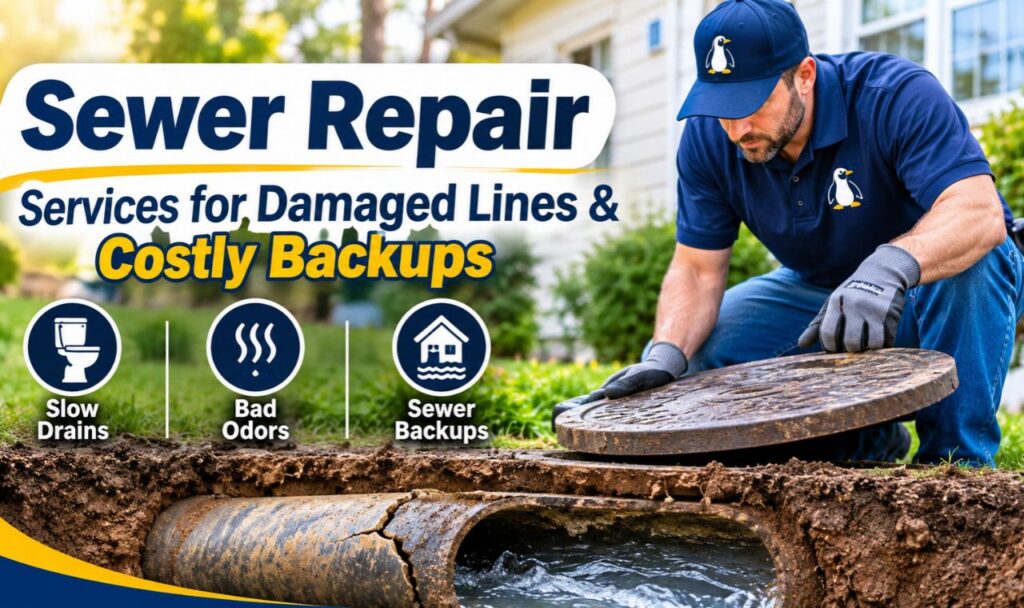
You run the washing machine and the shower starts to gurgle. Then a basement floor drain smells, and a toilet clears slowly after every flush. When symptoms appear in several places, the cause is often below the house, in the underground pipe that carries wastewater to the public sewer main or a septic system. Sewer repair is the work of restoring that pipe by fixing, lining, or replacing the damaged section so wastewater flows away from the home again. The right fix depends on what is actually wrong inside the line, so finding the source always comes before choosing a method. This guide covers warning signs, causes, repair options, costs, and prevention.
What Is Sewer Repair and When Is It Necessary?
Sewer repair means fixing or replacing the underground sewer pipe that carries wastewater from your home to the municipal main or a septic tank. It becomes necessary when the pipe is cracked, broken, shifted, collapsed, or so deteriorated that cleaning alone cannot restore normal drainage.
Three situations are easy to confuse:
- A minor drain blockage affects one fixture, such as a bathroom sink. It sits in a branch drain inside the house and usually clears with a drain snake.
- A sewer blockage sits in the main sewer line and affects several fixtures at once. Grease, wipes, or roots can cause it, and professional drain cleaning often restores flow, at least for a time.
- Sewer line damage means the pipe itself has failed through a crack, offset joint, sag, or collapse. Cleaning may open the pipe temporarily, but the defect remains and backups tend to return.
A clog that returns every few months suggests something structural may be catching debris. Clearing a blockage and completing a sewer repair are different jobs, and knowing which one you need prevents wasted money.
Common Signs Your Sewer Line Needs Professional Attention
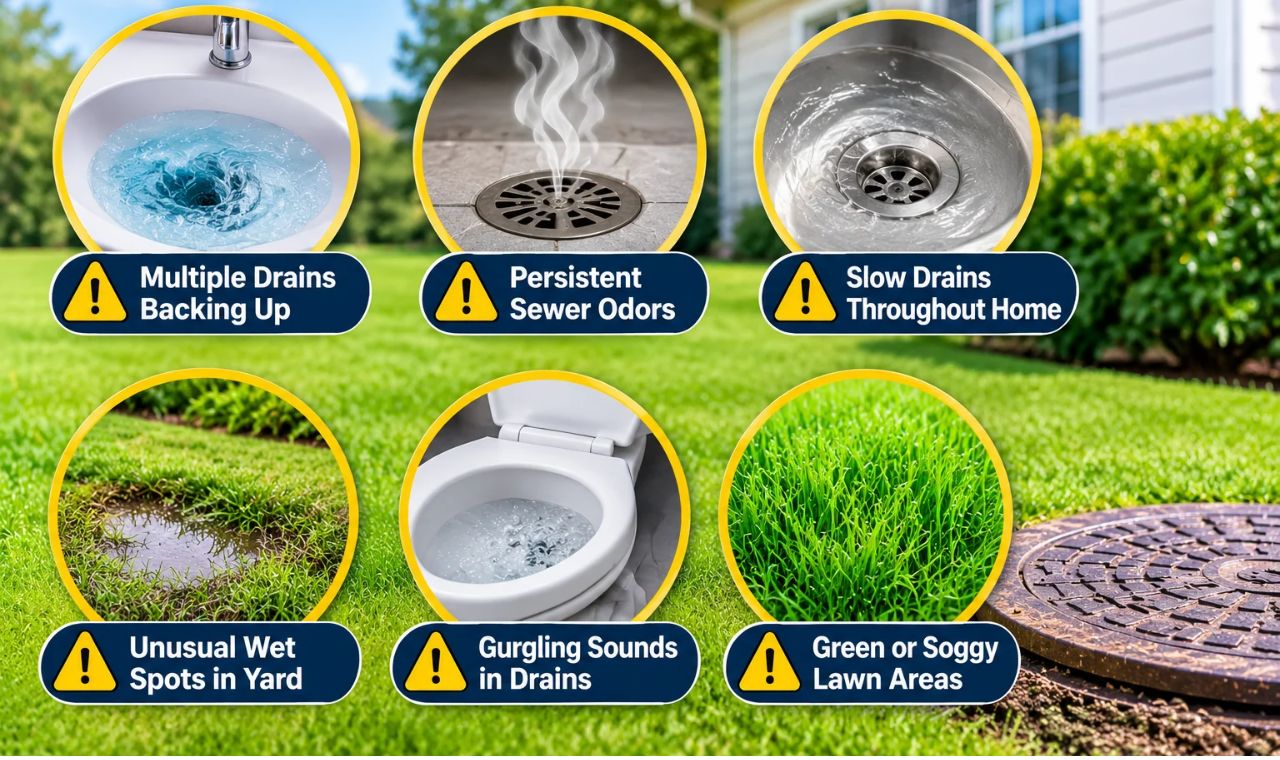
Multiple Drains Backing Up at Once
Every fixture drains into the same main sewer line, so a restriction downstream often shows up first in the lowest drains, such as a basement floor drain. If flushing a toilet makes the tub gurgle or rise, the main line may be restricted.
Persistent Sewer Odors Around the Property
A dry floor drain trap can cause an occasional smell, and adding water fixes it. An odor that lingers indoors or near one spot in the yard points toward a leak or failing connection. A vent problem can also cause odors.
Slow Drains Throughout the House
One slow sink is usually local. Slow drains in several rooms suggest the shared line is partly blocked, narrowed by roots, or deformed. Chemical cleaners do not repair structural damage.
Unusual Wet Spots in the Yard
Soggy ground along the sewer route, especially in dry weather, can mean wastewater is leaking from a crack. Wet areas can also come from a water supply leak or poor grading. Royal Penguin’s outdoor plumbing repair guide explains how supply leaks and sewer problems differ.
Gurgling Sounds in Toilets and Drains
Gurgling happens when air moves through water because wastewater is not flowing freely. It can accompany a main line restriction, though a blocked vent can sound similar.
Unexpectedly Green or Soggy Lawn Areas
A strip of unusually lush grass over the line can mean moisture and nutrients are seeping into the soil. It is a clue, not proof, because irrigation can produce the same effect.
Every sign above has more than one possible cause. Sewer repair should begin only after a plumber confirms what is happening inside the pipe.
What Causes Sewer Line Damage?
Sewer pipes fail for physical reasons, and most problems involve two or more at once:
- Tree root intrusion. A forester with NC Cooperative Extension at NC State University explains that roots cannot create cracks. They exploit gaps, loose joints, and cracks that already exist, then thicken and widen the opening.
- Aging or deteriorating pipes. The same article notes that older clay tile and cast iron pipes break down over time, while modern PVC is far more durable.
- Ground movement and shifting soil. Settling, erosion, and freeze and thaw cycles can pull joints apart or bend a pipe, creating offsets where debris collects.
- Corrosion and material breakdown. Cast iron can corrode from the inside, narrowing the pipe and weakening its walls.
- Improper installation. Poor bedding, weak joint sealing, or incorrect slope can cause sags where solids settle.
- Foreign objects and excessive waste buildup. Wipes and grease rarely crack a pipe, but they catch on defects and form stubborn blockages.
- Heavy external pressure. Vehicles, heavy equipment, or a large tree above a shallow line can crush or crack a pipe over time.
These causes often work as a chain. A joint opens, roots enter, debris snags, and a sewer backup follows. That is why a good sewer repair addresses both the defect and the damage it created.
What Are the Different Types of Sewer Repair Methods?
Four sewer repair approaches cover most residential cases: repairing one section, replacing the line by digging, trenchless repair, and lining or bursting the pipe. Sewer line services differ by pipe condition, material, depth, and what sits above the line. Homeowners who search for sewer line replacement near me are often really asking whether replacement is needed at all, and only an inspection can answer that.
| Method | Best suited for | Main limitation |
| Spot repair | One isolated defect in a sound pipe | Other weak sections may fail later |
| Traditional replacement | Collapsed or badly deteriorated lines | Digging disrupts the yard |
| Trenchless repair | Lines reachable through small access points | Not suitable for every pipe |
| Lining or bursting | Cracked joints, or pipe too damaged to line | Needs cleaning or entry pits |
Spot Sewer Line Repair
A spot repair, also called a point repair, exposes one damaged section, cuts it out, and installs new pipe with proper couplings. It makes sense when an inspection shows a single defect and the rest of the line is sound. The limitation is that an old pipe may have several weak points, so other failures can appear nearby.
Traditional Sewer Line Replacement
This type of sewer repair opens a trench along the old route, removes the failed pipe, and installs new pipe at the correct slope on proper bedding. It suits collapsed, badly misaligned, or heavily deteriorated lines. The tradeoff is disruption to lawns and driveways, plus restoration afterward.
Trenchless Sewer Repair
Trenchless sewer repair works through small access points, such as a cleanout or short excavation, instead of a trench along the whole line. Industry professionals on the NASSCO Lateral Committee wrote an overview of trenchless lateral rehabilitation that stresses trenchless does not always mean zero digging, since some systems still need an access pit. They also note that plumbing codes in many places do not specifically recognize these methods as alternatives to excavation, so local rules and permits matter. A collapsed or severely offset section may still require digging.
Pipe Lining and Pipe Bursting
Pipe lining is a trenchless sewer repair that places a resin soaked tube inside the cleaned existing pipe. The resin hardens, using heat, ambient temperature, or ultraviolet light, to form a new pipe within the old one. Lining can seal cracks and leaking joints when the pipe still holds its shape. It slightly reduces pipe diameter and cannot correct a collapse.
Pipe bursting pulls a bursting head through the old pipe, fracturing it outward while new pipe follows behind. The same NASSCO overview describes bursting as a common choice when collapses or severe offset joints rule out lining. It typically needs entry and exit pits.
How Does a Professional Sewer Line Inspection Work?
A professional plumbing inspection identifies what is wrong, where, and how severe it is before any sewer repair is priced. Procedures vary by company, so ask what an inspection includes. A typical process looks like this:
- Initial plumbing assessment. The plumber asks about symptoms, timing, past backups, the age of the home, pipe material, and nearby trees.
- Review of affected fixtures. Which drains are slow and where the cleanout sits help narrow the search.
- Sewer camera inspection when appropriate. A small camera on a flexible cable travels through the line, usually from a cleanout, and can show roots, cracks, offset joints, sags, buildup, or a collapse. The line often needs cleaning first so the picture is clear.
- Identification of defects. NASSCO members explain in Underground Construction magazine that a closed crack, an open fracture, and a broken section are graded as increasingly serious, and soil visible behind a break is the most severe.
- Evaluation of repair versus replacement. The same article cautions that a condition grade alone cannot decide whether to rehabilitate or replace a pipe. Professional judgment still matters.
- Explanation of findings and proposed work. You should hear what was found, where, how much pipe is affected, and why one option is recommended.
How Much Does Sewer Repair Cost?
No honest universal price exists for sewer repair, because cost depends on the pipe, the damage, and the site. A small point repair and a full replacement can differ enormously, so a property specific estimate from an inspection is the only dependable number. These factors drive the price of sewer repair:
- Type and severity of damage. A cracked joint costs less to address than a collapsed section.
- Location and accessibility. A line under a driveway, slab, or mature trees is harder to reach than one under open lawn.
- Pipe material and diameter. Both affect parts and labor.
- Length of pipe requiring repair. A short section costs less than a full run.
- Excavation requirements. Depth, soil, and utilities affect digging time.
- Trenchless repair suitability. Lining or bursting may reduce restoration but only fits certain pipe conditions.
- Labor, permits, and restoration. Landscaping, concrete, and asphalt repair can add up.
- Local plumbing requirements. Township rules and permit fees vary by location.
Generic online figures ignore these details, which is why an inspection based sewer repair estimate is more useful. When you receive one, check that it names the repair method, the length of pipe affected, what restoration is included, and who handles permits.
What Happens If You Ignore Sewer Line Problems?
Small symptoms rarely stay small. Delaying sewer repair can lead to:
- Repeated wastewater backups in the lowest drains of the house.
- Property and landscaping damage.
- Unpleasant indoor and outdoor odors.
- Potential exposure to contaminated wastewater.
- More extensive plumbing damage, such as a collapsed pipe section.
- Rising repair complexity, because a defect that could have been lined may later need excavation.
Sewage can carry bacteria and other contaminants. If wastewater is backing up, stop using water, keep children and pets away, avoid direct contact, and do not clean up a large backup or dig up the line yourself. Wastewater coming up through toilets, tubs, or floor drains is an emergency sewer problem that calls for prompt help. Royal Penguin lists emergency plumbing repairs among its services.
How to Prevent Future Sewer Line Problems
Prevention cannot guarantee a pipe will never fail, but these habits lower the risk of needing sewer repair:
- Flush only toilet paper and human waste. Wipes, even those labeled flushable, belong in the trash.
- Dispose of cooking grease correctly. Let it cool, then put it in a container in the trash instead of the sink.
- Pay attention to recurring drainage problems. A drain that clogs again and again is a signal, not a nuisance to keep treating.
- Monitor unusual yard conditions. Note wet patches, sinking ground, or odors.
- Consider a professional inspection when symptoms appear. Older homes with clay or cast iron lines benefit most.
- Learn where your underground sewer pipes run before landscaping or excavation. Plant small trees away from the line, and call Pennsylvania 811 before any digging.
- Address early warning signs. Finding the cause costs less than treating one symptom repeatedly.
Why Choose Royal Penguin Plumbing for Your Plumbing Needs?
Royal Penguin Plumbing is a family owned residential plumbing company based in Souderton, Pennsylvania, serving homeowners in Bucks County and Montgomery County. The company describes itself as fully licensed and insured, with a focus on honesty, reliability, and transparent communication. Its website lists general plumbing, drain cleaning, leak detection and repair, and emergency plumbing repairs, which overlap with many symptoms described here.
The drain cleaning page mentions clearing backed up drains, including main sewer line blockages. Sewer repair and sewer line replacement are not listed as separate services, so it is sensible to confirm whether your situation falls within what the team handles. If you notice slow drains, odors, or backups, contact Royal Penguin through the website or by phone to describe your symptoms.
Final Thoughts on Sewer Repair
A damaged sewer line rarely fixes itself, and the symptoms usually become more disruptive over time. The best first step is a proper inspection that shows what is happening inside the pipe, because the right sewer repair depends on the defect, the pipe material, and the site. Watch for patterns across the house, act early, and ask for a clear explanation of any recommended work.
Frequently Asked Questions
Q. What are the most common signs of a damaged sewer line?
Common signs include multiple drain backups, sewer odors, gurgling toilets, slow drains, and soggy or unusually green lawn areas. A professional camera inspection can confirm the cause.
Q. How much does sewer repair typically cost?
Costs depend on pipe damage, length, depth, accessibility, and the repair method. An inspection followed by a written estimate provides the most accurate pricing.
Q. Can a sewer line be repaired without digging?
Yes, trenchless methods such as pipe lining and pipe bursting can repair some damaged lines with minimal excavation. However, severely collapsed pipes may require traditional digging.
Q. How long does sewer line repair usually take?
The timeline depends on the damage, repair method, pipe accessibility, and required restoration. A professional inspection helps establish a realistic schedule.
Q. Does Royal Penguin Plumbing provide sewer repair services?
Royal Penguin lists drain cleaning, leak detection, and general plumbing services. Contact the company to confirm whether it can handle your specific sewer line repair needs.