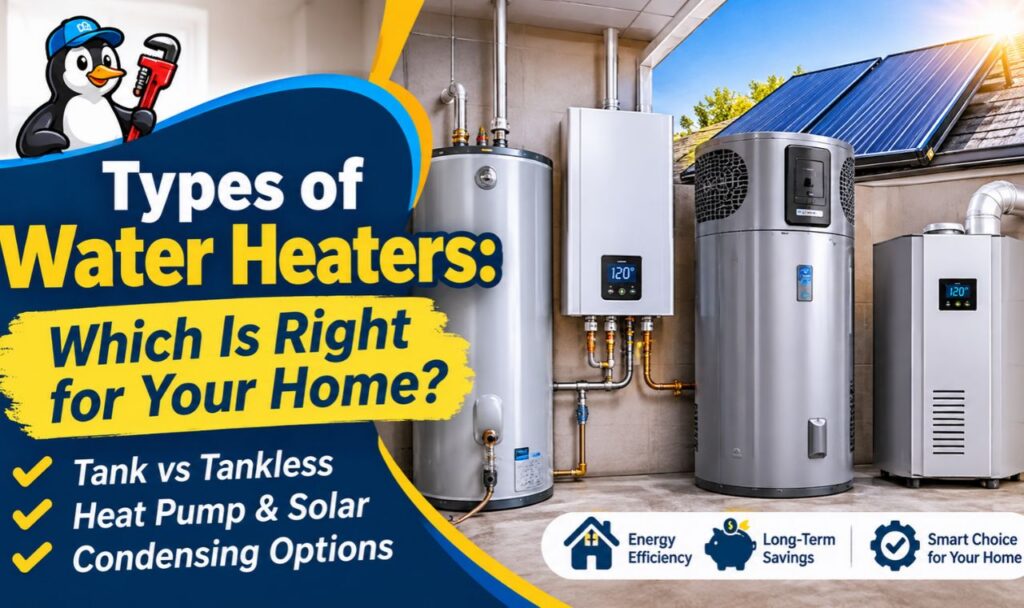
Choosing a new water heater is about more than replacing an old appliance. The right system should provide enough hot water for your household, fit your available space, and work with your home’s existing fuel supply and plumbing. With several types of water heaters available, it can be difficult to know which one makes the most sense.
Some homeowners prefer a traditional storage tank because of its lower upfront cost. Others consider tankless models for their compact design and on-demand heating. Heat pump and solar systems offer different energy-saving opportunities, while condensing technology can improve the efficiency of certain gas models.
The best choice depends on how much hot water you use, your budget, and the conditions in your home. This guide explains how each system works, where it performs well, and what to consider before making a decision.
What Are the Different Types of Water Heaters?
Most residential water heaters fall into a few main categories. Each uses a different method to heat and supply water, which affects its installation requirements, energy use, maintenance, and overall cost.
Conventional Storage Tank Water Heaters
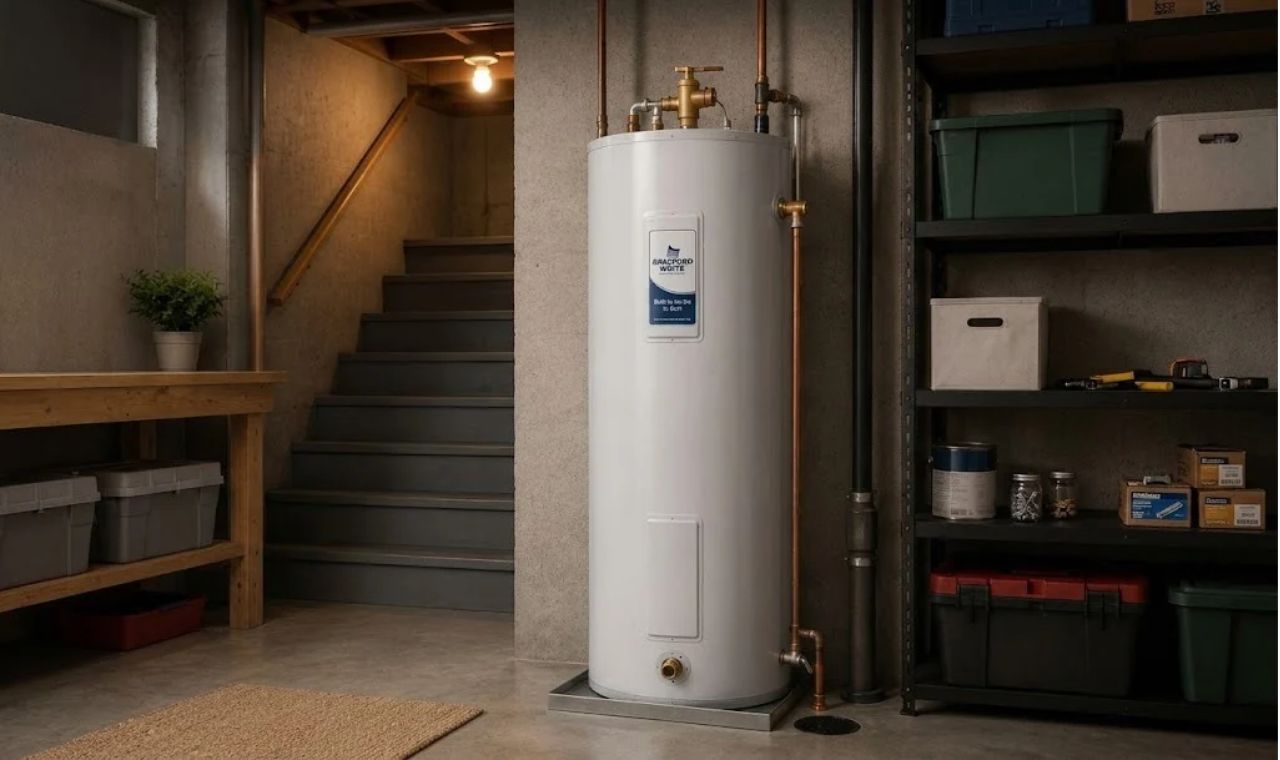
A conventional storage tank water heater heats water and stores it in an insulated tank until someone needs it. When you turn on a hot water tap, heated water leaves the tank and cold water enters to replace it. The unit then heats the incoming water to maintain the set temperature.
Most residential models hold between 30 and 80 gallons, although the right capacity depends on household demand.
Benefits:
- Usually costs less upfront than other water heater options.
- Straightforward to install when replacing a similar existing unit.
- Available in gas and electric models.
- Provides stored hot water for everyday household use.
Drawbacks:
- The supply is limited by the tank’s capacity.
- Stored water loses heat over time, even when no one is using it.
- The unit takes up floor space.
- A failing or corroded tank may need complete replacement.
A storage tank can be a sensible choice for homeowners who want a familiar system without a major change to their existing setup. However, choosing the right tank size matters. A tank that is too small may run out of hot water during busy mornings, while an oversized unit can increase unnecessary energy use.
Tankless Water Heaters
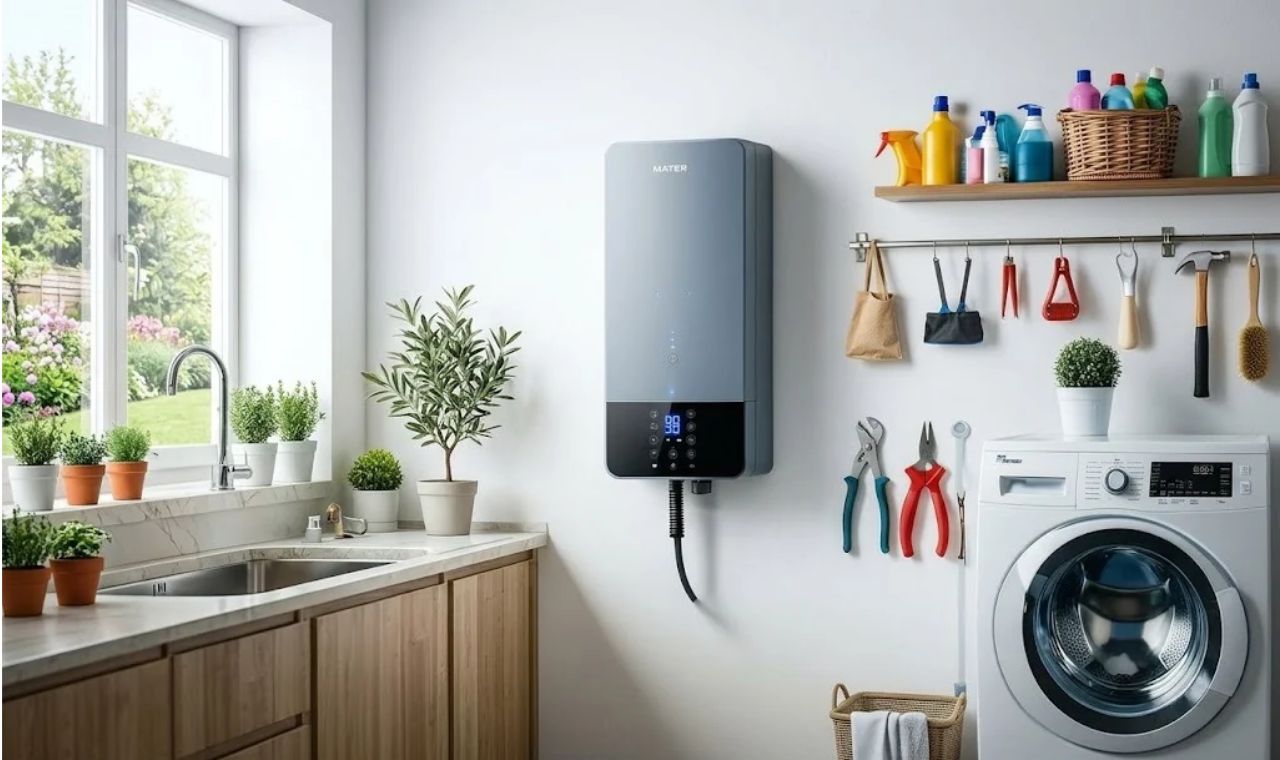
Tankless water heaters heat water as it passes through the unit instead of storing it in a large tank. When someone opens a hot water tap, the system activates and heats the water on demand.
Because there is no large tank of stored water to keep hot throughout the day, these systems avoid the standby heat loss associated with conventional storage models.
Benefits:
- Compact design saves floor space.
- No large tank of stored hot water to run out.
- Can reduce standby energy losses.
- Often has a longer service life than a conventional tank when properly maintained.
Drawbacks:
- Higher initial equipment and installation costs.
- Output is limited by the unit’s flow rate.
- Some homes may need gas line, venting, or electrical upgrades.
- Mineral buildup can affect performance if maintenance is neglected.
One common misunderstanding is that a tankless system provides unlimited hot water under every condition. It can continue heating water while demand remains within its rated capacity. However, if several showers and appliances operate at the same time, the system may struggle to supply enough hot water.
For a closer comparison of both systems, read Royal Penguin Plumbing’s guide to tank and tankless water heaters.
Heat Pump (Hybrid) Water Heaters
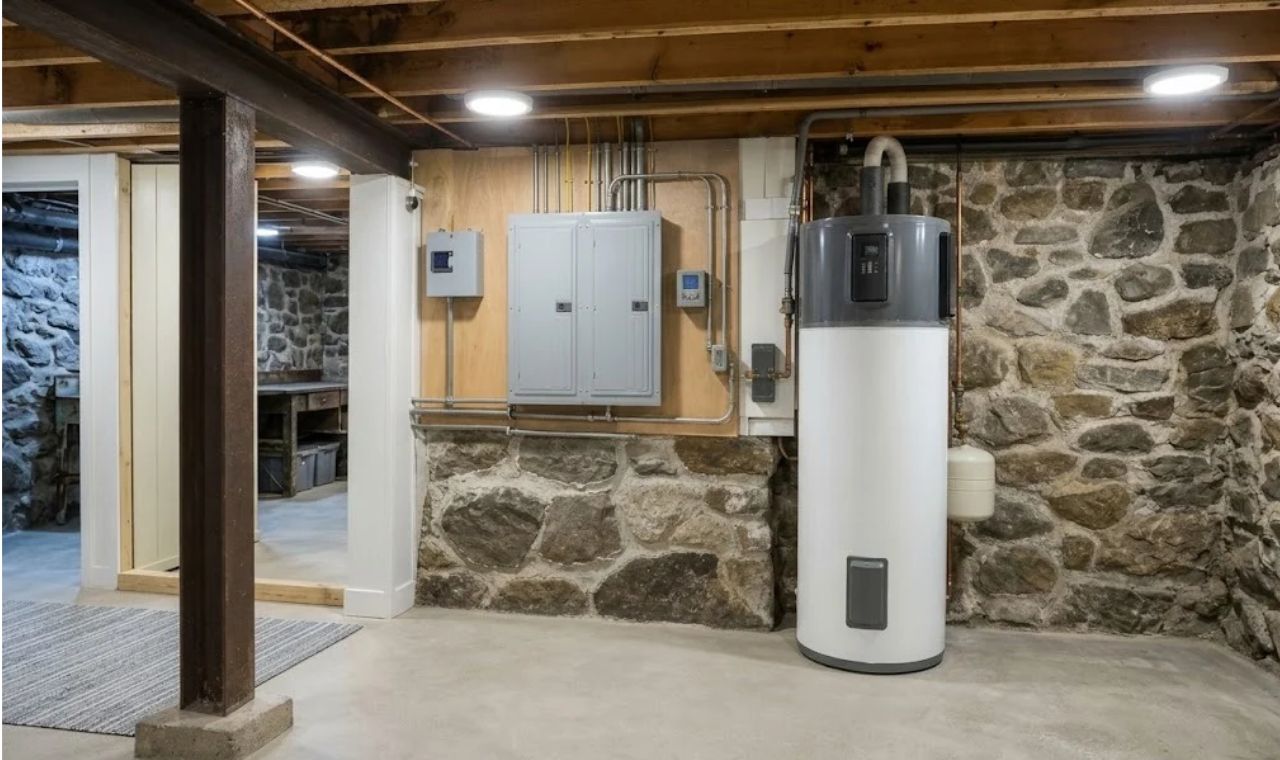
Heat pump water heaters use heat from the surrounding air to warm the water in a storage tank. Rather than generating all the heat through electric resistance elements, they move existing heat from the air into the water. This process is similar to how a refrigerator works in reverse.
Many models include backup electric heating elements, which is why they are often called hybrid water heaters.
Benefits:
- Can use considerably less electricity than standard electric resistance water heaters.
- May lower long-term water heating costs.
- Uses heat from the surrounding air instead of relying only on electric heating elements.
- Suitable for households with enough installation space and appropriate ambient conditions.
Drawbacks:
- Higher purchase price than a standard electric tank.
- Needs sufficient space and airflow around the unit.
- Can release cooler air into the surrounding room.
- Heating performance and efficiency depend partly on the temperature of the surrounding air.
Heat pump systems can be worth considering in Pennsylvania, but the installation location matters. A basement or utility room may provide suitable conditions, depending on its size, temperature, and ventilation. A professional should check the manufacturer’s clearance and operating-temperature requirements before recommending one.
Solar Water Heaters

Solar water heaters use collectors, usually installed on a roof or another suitable outdoor location, to capture energy from sunlight. The collected heat is transferred to water stored in a tank.
Many systems include a backup heating source for periods when sunlight is insufficient. This allows the household to continue receiving hot water during cloudy weather or periods of higher demand.
Benefits:
- Uses renewable solar energy to heat water.
- Can reduce the amount of conventional energy needed.
- May lower long-term operating costs in suitable locations.
- Can work with a backup heating system.
Drawbacks:
- Higher initial installation cost.
- Requires suitable space and sunlight exposure for collectors.
- Performance changes with weather and seasonal sunlight.
- Backup heating may still be needed.
Solar water heating is not automatically unsuitable for Pennsylvania homes. However, homeowners need to consider roof orientation, shading, winter conditions, available space, and the cost of adding backup heating. The system should be evaluated based on the property’s actual conditions rather than assumptions about the local climate.
Condensing Water Heaters

Condensing technology is commonly used in high-efficiency gas water heaters. These systems recover some of the heat that would otherwise leave through the exhaust. The recovered heat helps warm incoming water, reducing wasted energy.
Condensing technology can be used in different water heater designs, including storage and tankless models. It is therefore better understood as an efficiency feature rather than a completely separate storage format.
Benefits:
- Recovers heat from exhaust gases that would otherwise be wasted.
- Can offer higher efficiency than conventional gas models.
- May reduce fuel consumption under suitable operating conditions.
- Available in different system configurations.
Drawbacks:
- Usually costs more upfront.
- Requires suitable venting and condensate drainage.
- Installation may involve additional plumbing changes.
- Needs to be compatible with the home’s fuel supply and existing setup.
For homeowners who already use natural gas, a condensing model may be worth comparing with a standard gas water heater. The potential savings should be weighed against equipment price, installation requirements, and expected household use.
Water Heater Types Compared
The following table gives a quick overview of the main differences.
| Water heater type | Main advantage | Main drawback | Often suits |
| Storage tank | Lower upfront cost | Standby heat loss | Homeowners wanting a familiar system |
| Tankless | On-demand heating and compact size | Higher installation cost | Homes with suitable fuel supply and demand |
| Heat pump | High energy efficiency | Needs suitable space and airflow | Homes with an appropriate utility area |
| Solar | Uses renewable energy | Weather-dependent performance | Properties with suitable sunlight exposure |
| Condensing | Recovers exhaust heat | More complex installation | Homes with compatible gas systems |
No single option is best for every household. A system that performs well in one home may be expensive or impractical in another because of differences in water use, available space, fuel supply, and installation conditions.
How to Choose the Right Water Heater for Your Home
Understanding the different types of water heaters is only the first step. You also need to match the equipment to your household’s daily routine and the conditions inside your home.
Consider Household Size and Water Usage
The number of people living in your home gives you a starting point, but their habits matter just as much. A family of four that takes showers at different times may have different needs from a family of four that runs multiple showers, laundry, and a dishwasher during the same hour.
For storage tank systems, consider both tank capacity and the first-hour rating. Tank capacity tells you how much hot water the unit stores. The first-hour rating estimates how much hot water it can deliver during a busy hour, including the water it reheats.
For tankless systems, pay attention to the flow rate, measured in gallons per minute (GPM). Add the flow rates of the fixtures likely to run simultaneously. For example, two showers using about 2 GPM each and a kitchen faucet using 1.5 GPM would create a combined demand of approximately 5.5 GPM.
The unit must also be able to raise incoming water to the required temperature. Since incoming water can be colder during Pennsylvania winters, tankless sizing should account for winter conditions rather than relying only on a model’s advertised maximum flow rate.
Rheem’s water heater sizing guide explains why household habits, storage capacity, flow rate, and incoming water temperature all matter when selecting a system.
Compare Energy Efficiency and Operating Costs
A lower purchase price does not always mean a lower overall cost. A water heater runs regularly, so its energy consumption can make a noticeable difference to household utility bills over time.
When comparing models, look at the Uniform Energy Factor (UEF). A higher UEF generally indicates better efficiency, but compare units within the same usage category. A rating should not be judged in isolation because water heaters are tested in different usage bins.
The A. O. Smith explanation of UEF provides more detail on how the rating works and why the usage category matters.
Also consider the fuel source available at your property. Natural gas, electricity, and solar energy have different equipment and operating costs. The most economical option depends on local energy rates, the unit’s efficiency, and how much hot water your household uses.
The U.S. Department of Energy’s guidance on purchasing energy-efficient residential water heaters is another useful reference when comparing efficiency and long-term operating costs.
Check Installation Requirements
The existing setup can influence which replacement is practical. A conventional tank may be easier to replace when the home already has compatible connections, venting, and enough room for the new unit.
A tankless system may need a larger gas line, different venting, or an electrical upgrade. A heat pump model needs enough clearance and airflow. Solar water heating requires suitable collector placement, piping, and backup heating.
Before choosing a model, have the installation area assessed. A unit that looks suitable on paper may require costly changes once a plumber checks the actual connections and space.
Think About Maintenance and Lifespan
Every water heater needs maintenance, but the work differs by system. Storage tank models may need periodic flushing and anode rod inspections. Tankless units may need descaling to remove mineral buildup. Heat pump systems have filters and airflow requirements, while solar systems need their collectors and related components checked.
Hard water can make maintenance especially important. Mineral deposits may collect inside a tank or heat exchanger and affect heating performance. Royal Penguin Plumbing has helped homeowners understand how hard water can affect household plumbing and what steps they can take to manage potential problems. That kind of guidance can help when planning a maintenance routine for a new water heater.
Follow the manufacturer’s instructions for maintenance intervals. Water quality, usage, and model design can all affect how often service is needed.
Account for Pennsylvania’s Climate
Local weather can affect water heater performance, particularly for systems that rely on outdoor sunlight or surrounding air.
For a heat pump water heater, the installation space needs to stay within the manufacturer’s recommended operating range. A cold or unsuitable area may affect efficiency or cause the backup heating elements to run more often.
Solar water heating can also work in Pennsylvania, but the system needs to be designed around seasonal sunlight and winter conditions. A backup heater is an important consideration.
For tankless systems, colder incoming water during winter means the unit may need to work harder to reach the desired temperature. Proper sizing is especially important if several fixtures may operate at once.
Which Type of Water Heater Is Best for Different Homes?
Your household’s priorities can help narrow down the options.
- For a lower upfront budget: A conventional storage tank is often a practical starting point, especially when replacing an existing tank system.
- For limited floor space: A tankless model may be worth considering because it is wall-mounted and does not need a large storage tank.
- For lower electricity use: A heat pump water heater may be a strong option if the home has a suitable installation area.
- For homes with good solar exposure: A solar water heater may reduce conventional energy use, provided the installation and backup system are properly planned.
- For compatible natural gas setups: A condensing water heater may offer improved efficiency by recovering heat from exhaust gases.
These are starting points, not fixed rules. The right choice still depends on the unit’s capacity, installation cost, maintenance needs, and the amount of hot water your household uses.
What Does Water Heater Installation and Maintenance Involve?
A proper installation involves more than connecting a new appliance. The plumber needs to check the location, water and fuel connections, venting, drainage, electrical requirements, and local code requirements.
Before installation, confirm the unit’s capacity and specifications. The plumber should also explain whether the existing connections can be reused or whether upgrades are needed.
Clear communication matters during this process. When Royal Penguin Plumbing installed a new water heater for a homeowner, Jimmy and his team explained the work, provided a customer-friendly quote, and guided the customer through the installation. The process went smoothly, and the homeowner understood what was being installed and what to expect.
After installation, regular maintenance helps keep the system working as intended. Depending on the model, this may include:
- Flushing a storage tank as recommended by the manufacturer.
- Checking the anode rod for visible signs of corrosion.
- Descaling a tankless heat exchanger when required.
- Cleaning heat pump filters and maintaining airflow.
- Inspecting solar collectors, connections, and backup components.
- Checking for leaks, unusual noises, or changes in water temperature.
Do not assume every system needs the same maintenance schedule. Follow the manufacturer’s manual and ask a qualified plumber what is appropriate for your model and water conditions.
When Should You Repair or Replace Your Water Heater?
A water heater does not always need replacement when it stops working properly. Some problems involve individual components that can be repaired. Others point to internal damage or a unit that is nearing the end of its useful life.
Common warning signs include:
- Water that does not get hot enough or takes longer to heat.
- Hot water that runs out sooner than usual.
- Leaks around the tank, valves, or pipe connections.
- Rust-colored or discolored hot water.
- Rumbling, popping, or unusual operating noises.
- Repeated breakdowns or rising energy bills.
The location of a leak matters. A loose connection or faulty valve may be repairable, while water leaking from the tank body can indicate internal corrosion and usually calls for replacement.
Why Is My Water Yellow?
Yellow, brown, or rusty-looking water can have several causes. If discoloration appears only when you use hot water, corrosion or sediment inside the water heater may be involved. If both hot and cold water look discolored, the cause may be elsewhere in the home’s plumbing or the public water supply.
Do not assume the water heater is responsible based on color alone. A plumber can check whether the issue is coming from the tank, a valve, household piping, or another part of the supply.
A professional diagnosis is also useful when temperature problems and plumbing faults appear together. Royal Penguin Plumbing has helped a homeowner by diagnosing a hot water heater problem and identifying a faulty water valve that also needed attention. Finding both issues gave the homeowner a clearer understanding of what was wrong and what needed to be fixed.
If your system is leaking, repeatedly losing hot water, or showing signs of significant corrosion, arrange an inspection. You can also read about emergency water heater repair and replacement to understand when a problem needs more urgent attention.
Water Heater Services from Royal Penguin Plumbing
Royal Penguin Plumbing is based in Souderton, Pennsylvania, and serves homeowners in Bucks County, Montgomery County, and nearby communities. The team provides water heater repair, replacement, installation, and maintenance to help homeowners choose and care for a suitable system.
Whether you have a traditional tank or a tankless unit, the right recommendation starts with understanding the home’s hot water needs and existing setup. The team also takes time to explain plumbing problems and available solutions, so homeowners can make informed decisions.
If your water heater is leaking, producing inconsistent hot water, or nearing the end of its service life, arrange a professional assessment before deciding whether to repair or replace it. Visit Royal Penguin Plumbing’s water heater repair and replacement services to learn more or contact the team to discuss your home’s needs.
Bottom Line
The best water heater is the one that matches your household’s hot water demand, budget, available space, and energy source. A storage tank may suit homeowners who want a familiar, lower-cost option, while tankless, heat pump, solar, and condensing systems offer different advantages.
Before choosing, compare capacity, efficiency, installation requirements, and maintenance needs. A professional assessment can help you avoid buying a system that is poorly sized or unsuitable for your home’s setup. If you need urgent plumbing assistance, learn how to hire an emergency plumber fast.
Frequently Asked Questions
Q. What type of water heater is best for a home?
It depends on your budget, household size, and energy source. Storage tanks are often less expensive upfront, while tankless and heat pump models may offer energy-saving advantages in suitable homes.
Q. What are the three main types of water heaters?
The three common residential categories are storage tank, tankless, and heat pump water heaters. Solar systems and condensing technology are also available, each with different installation and operating requirements.
Q. Is a tankless water heater better than a traditional tank?
A tankless system saves space and heats water on demand, but it usually costs more to install and has a maximum flow rate. A storage tank may be more affordable upfront and can suit homes with predictable hot water needs.
Q. How often should a water heater be maintained?
Maintenance depends on the model, manufacturer, and water quality. Tank systems may need flushing and anode rod checks, while tankless systems may need descaling. Follow the manufacturer’s recommendations and arrange professional service when needed.
Q. Does Royal Penguin Plumbing install and repair different types of water heaters?
Royal Penguin Plumbing provides water heater installation, repair, replacement, and maintenance in Souderton, Bucks County, Montgomery County, and nearby areas. Contact the team to discuss your system and available service options.