You walk into the basement and find a puddle spreading around the water heater. Is the tank finished? Can a part be fixed? Do you need emergency water heater repair tonight? Here’s the short answer. A hot water heater leaking from bottom doesn’t always mean the tank has failed. Water often starts at a drain valve, a relief valve, or a pipe fitting and runs down to the floor. Those problems are usually repairable. Water seeping through the tank body is different, and that usually means replacement. For now, keep everyone clear, shut off the cold water supply if you can reach it safely, and call a plumber.
What Should You Do Immediately If Your Water Heater Is Leaking?
Start with safety, then slow the water down. Work through these steps in order and stop at any step that doesn’t feel safe.
- Keep children and pets away. The floor is slippery, and the water may be hot.
- Stay out of standing water. Don’t step into a puddle that reaches the heater, a cord, or the electrical panel.
- Shut off the cold water supply. Close the shutoff valve on the cold inlet pipe above the heater, but only if you can reach it without wading through water. If you can’t, close the main water shutoff for the house.
- If it’s an electric heater, turn off its breaker only when the panel is dry, and you can reach it without standing in water. Never touch a breaker panel while standing in water, and don’t touch wet wiring or electrical parts on the heater.
- If it’s a gas heater and you smell gas, leave the building right away. Don’t flip switches or use flames. Call the gas utility or 911 from outside. If there’s no gas odor, follow the manufacturer’s instructions for shutting off the gas control, but skip this step if the area around the heater isn’t safe.
- If the leak is heavy or can’t be controlled, treat it as an emergency. Get everyone out of the area and call a plumber right away.
- Call a qualified plumber for inspection and repair, even if the leak seems to stop.
Some things are off limits during an emergency. Never cap, block, or plug the T&P relief valve or its discharge pipe. Don’t try to remove valves, drain the tank, or repair gas connections. And follow the instructions in your heater’s manual, because models differ.
Why Is My Hot Water Heater Leaking From Bottom?
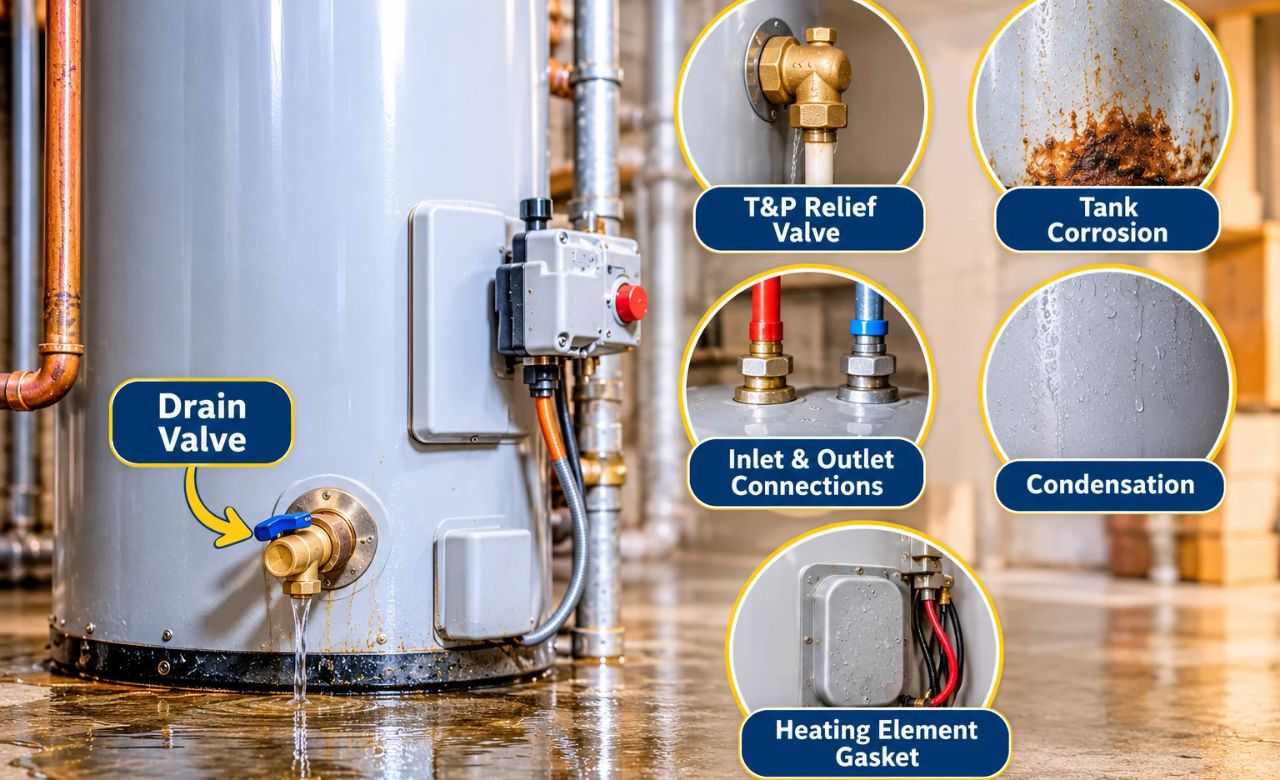
Water on the floor tells you where the water ended up, not where it started. It runs down pipes, slides over the tank jacket, and pools at the base. A. O. Smith’s technical bulletin on puddles lists condensation, the drain valve, the relief valve, piping near the inlet and outlet, gas valve threads, electric element gaskets, and the tank itself as the usual sources. Here’s how each one behaves.
A Damaged or Loose Drain Valve
The drain valve sits low on the tank, a few inches off the floor. It’s what a plumber uses to flush the tank. Worn seals, damaged threads, or sediment that keeps the valve from closing fully can let it drip. A. O. Smith says that if the leak can’t be stopped at the handwheel, the valve should be replaced. That’s often a modest repair.
It’s still a job for a plumber. Working on a drain valve while the tank is hot and under pressure can release scalding water.
A Leaking Temperature and Pressure Relief Valve
The temperature and pressure relief valve, usually called the T&P valve, is a safety device. If heat or pressure inside the tank climbs too high, it opens and sends water down a discharge pipe. So water at the end of that pipe may mean the valve is doing its job.
Thermal expansion is a common trigger. Heated water takes up more space, and in a closed plumbing system it has nowhere to go, so pressure rises. Excessive household water pressure can cause the same thing. This Old House describes a home where a relief valve kept dripping even after being replaced three times, until an expansion tank addressed the pressure itself.
A relief valve that keeps leaking needs professional diagnosis. And please never plug it. Without that valve, the tank has no way to release dangerous pressure.
Internal Water Heater Tank Corrosion
Most tank heaters are steel with a thin glass lining baked on the inside. It isn’t like a thermos. Once the lining cracks or wears thin, water reaches the steel and rust begins. Age and sediment buildup often go along with it.
When water escapes through the tank body, there’s no patch that lasts. A. O. Smith’s guidance is that a confirmed tank leak means the tank should be replaced. Still, have a plumber confirm the source first. You don’t want to replace a heater because of a loose fitting that only looked like a tank leak.
Loose or Leaking Inlet and Outlet Connections
The cold water inlet and hot water outlet connect at the top of the tank. A loose fitting or a deteriorated connection can drip, and that water often follows the pipe or runs down the outside of the tank to the floor. In warm, humid spaces, condensation can also form on those pipes and trickle down, as A. O. Smith points out.
The good news is that a connection leak can often be repaired without touching the tank.
Condensation Around the Water Heater
A cold tank heating up in a humid basement can sweat. A. O. Smith says condensation should only be noticeable after a long draw of hot water, and it should stop once the tank is above 110°F. That makes it easy to mistake for a leak.
The difference is persistence. Sweat shows up after heavy hot water use and fades. A leak keeps coming back. If you see moisture again without a long draw of hot water, treat it as a leak and schedule an inspection.
Leaking Heating Element Gasket in Electric Water Heaters
Electric tanks have heating elements mounted through the tank wall, sealed by a gasket. Gaskets age, and water can seep out near the lower part of the tank. A. O. Smith notes these gaskets can be replaced, though the element threads may need resealing.
Because the element sits behind a cover with live wiring, this is as much an electrical concern as a plumbing one. Don’t remove the cover. Let a qualified professional handle it.
How Can You Tell Where the Water Is Coming From?
When you have a hot water heater leaking from bottom, the clues are in where the moisture shows up. Use this table as a rough guide.
| What You Notice | Possible Cause | Recommended Action |
| Water around the drain valve | Damaged or loose drain valve | Professional inspection |
| Water from the T&P discharge pipe | Pressure or temperature issue | Immediate professional assessment |
| Moisture around upper connections | Loose or leaking fittings | Arrange repair |
| Water appearing directly from the tank body | Internal corrosion or tank failure | Replacement assessment |
| Moisture after heavy heating activity | Possible condensation | Monitor safely and seek inspection if it persists |
| Water around an electric element cover | Possible element gasket leak | Professional electrical and plumbing inspection |
These are possible indicators, not diagnoses. Don’t remove covers, touch components, or test anything yourself. Looking and taking photos is enough.
Can a Water Heater Leaking From Bottom Be Repaired?
Sometimes, yes. It depends entirely on where the water is coming from. A plumber has to find the exact source before anyone can say whether the unit can be saved.
Repairable problems include a worn drain valve, a leaking plumbing connection, a T&P valve that has actually failed, and a heating element gasket. A relief valve that discharges because of thermal expansion or high water pressure is a different kind of fix. The correction is usually on the plumbing side, such as an expansion tank or a pressure reducing valve, rather than a new heater.
Internal tank corrosion is the exception. Once water is passing through the tank wall, replacement is the normal path. In fact, if you have recently been wondering why is my tap water yellow when running hot water, that same internal rust and sediment buildup is often an early warning sign that the tank lining is deteriorating.
When Do You Need Emergency Water Heater Repair?
A water heater leaking from bottom becomes an emergency when safety or major water damage is on the line. Call right away for any of these:
- Water spreading quickly across the floor
- A leak you can’t stop safely
- Water reaching electrical components
- A significant leak from the tank itself
- A gas odor
- Burning smells or visible electrical damage
- Signs of excessive temperature or pressure
Gas odors and electrical hazards call for emergency procedures, not plumbing troubleshooting. Leave the building for gas, and keep clear of wet electrical equipment.
A slow drip at a fitting is different. It deserves a prompt visit, but it doesn’t need a middle of the night call. Shut off the water, set out a pan, take photos, and schedule service. If you’re unsure which category you’re in, Royal Penguin Plumbing’s guide to emergency water heater service walks through the warning signs in more detail.
When Is Emergency Water Heater Replacement Necessary?

Emergency water heater replacement makes sense when the tank itself has failed. That includes internal leakage, severe corrosion, damage too extensive to repair sensibly, repeated leaks, or equipment that can’t be restored safely. Flood exposure is another case. Follow the manufacturer’s guidance, because corroded controls can look fine from the outside.
A plumber weighs several things before recommending a new unit:
- Age and overall condition of the tank
- Repair history
- Availability of replacement parts
- Warranty coverage
- Household hot water demand
- Installation requirements
A leaking drain valve or fitting doesn’t automatically mean you need a new heater. If replacement is the answer, it’s also the time to look at the different types of water heaters and decide whether a like for like swap or something else fits your home.
One Royal Penguin Plumbing customer described having an outdated water heater replaced on a Sunday morning, with the system running and up to code before the day ended. Every situation is different, so call to discuss timing for yours.
What Happens During a Professional Water Heater Leak Inspection?
A good inspection follows the water back to its source instead of guessing. A plumber typically:
- Checks the floor and drain pan around the heater
- Traces the water to where it starts
- Inspects the drain valve and plumbing connections
- Looks at the T&P valve and its discharge pipe
- Examines visible corrosion
- Considers whether condensation is involved
- Assesses electrical or gas safety
- Explains the repair and replacement options
- Tests the system after any approved repair
Diagnosis matters as much as the fix. One Royal Penguin Plumbing customer, Rene Gonzalez, wrote that a plumber repaired a faulty water valve and diagnosed a hot water heater issue, and he appreciated the clear explanations and the cleanup. A valve repair isn’t proof of any particular leak, but it shows what to expect. You should hear what’s wrong before anyone suggests replacing equipment.
You can speed things up before the visit. Rheem suggests photographing visible leaks, rust, or condensation and having the model number and any warranty paperwork on hand. Also note when you first saw the water, where it appears, and whether the heater is gas or electric.
How Much Does Emergency Water Heater Repair or Replacement Cost?
There’s no honest single number, because the price depends on what’s actually wrong. The main factors are:
- The type of water heater
- The source and severity of the leak
- Parts required
- Labor
- Emergency or after hours service charges
- How accessible the equipment is
- Whether replacement is necessary
- Plumbing, electrical, venting, or installation changes
Ask for a clear estimate that explains the work before you approve anything. A good plumber will tell you what failed, what the options are, and what each one involves.
How Can You Prevent Future Water Heater Leaks?
Most cases of a hot water heater leaking from bottom give some warning first. These habits help you catch trouble early:
- Look over visible connections now and then for moisture or mineral crust.
- Follow the manufacturer’s flushing recommendations.
- Check the tank for rust and corrosion.
- Pay attention to new noises, like rumbling or popping.
- Have a professional inspect the T&P valve.
- Check household water pressure when appropriate.
- Note whether condensation shows up regularly, especially in humid summer basements.
- Schedule professional maintenance.
Please don’t operate the relief valve or drain a hot tank on your own without understanding the risks and your manufacturer’s instructions.
Why Choose Royal Penguin Plumbing for Water Heater Services?
Royal Penguin Plumbing is a residential plumbing service provider based in Souderton, Pennsylvania. The team handles water heater repair, replacement, installation, and maintenance for tank and tankless units, along with emergency plumbing assistance. Homeowners in Bucks County, Montgomery County, and nearby communities call when they’re dealing with a hot water heater leaking from bottom and need to know whether it’s a fixable part or a failed tank. The focus is on explaining what’s wrong and laying out your options plainly. You can read more about the company’s professional water heater repair and replacement services before you call.
Conclusion
The key is finding the real source of the leak. A bad valve or loose fitting can often be repaired, while a leaking tank body usually means replacement. Either way, acting quickly limits water damage and keeps your home safe.
If you’re dealing with a hot water heater leaking from bottom or an electric heater not working properly, contact Royal Penguin Plumbing at (215) 720-2721. The team can diagnose the problem and explain whether repair or replacement makes sense.
Frequently Asked Questions
Q. Why is my hot water heater leaking from bottom?
Common causes include a leaking drain valve, T&P valve discharge, loose inlet or outlet connections, condensation, and internal tank corrosion. Water from upper fittings can also run down and collect at the base. A plumber should confirm the source.
Q. Should I turn off my water heater if it is leaking?
Yes, when it’s safe. Close the cold water supply, then shut off power or gas following the manufacturer’s instructions. Don’t touch an electrical panel while standing in water. If you smell gas, leave the building and call the gas utility or 911.
Q. Can a water heater leaking from bottom be repaired?
It depends on the source. Drain valves, fittings, and element gaskets can often be repaired. Water leaking through the tank body usually means the heater needs to be replaced.
Q. When should I consider emergency water heater replacement?
Consider it when the tank itself is leaking, corrosion is severe, or the unit can’t be restored safely. Repeated leaks and flood exposure are other reasons to ask about replacement.
Q. Does Royal Penguin Plumbing offer emergency water heater repair and replacement?
Royal Penguin Plumbing provides water heater repair, replacement, installation, and maintenance for tank and tankless systems. Contact the team to confirm availability and discuss your situation.