
You turn on the kitchen faucet in the morning, fill a glass, and notice the water has a yellow or rusty tint. It might clear after a few seconds, or it might keep coming out discolored. Either way, it is natural to wonder whether something is wrong with your plumbing or drinking water.
If you are asking, why is my tap water yellow, the cause could be anything from rust inside older pipes to sediment in the municipal supply. A water heater problem, naturally occurring minerals, or a damaged incoming water line could also be responsible.
The first step is figuring out where the discoloration starts. This guide explains five common causes, simple checks you can perform, and when to contact your water supplier, arrange testing, or call a plumber.
Why Is My Tap Water Yellow? Understanding What the Color Means
Yellow, orange, or brown tap water often indicates iron, rust, manganese, or suspended sediment. It can enter your water through corroding household pipes, groundwater, a water heater, or disturbances in the public supply.
A temporary change may follow nearby water main maintenance. Discoloration that keeps returning, however, could point to a problem inside your plumbing or incoming water line.
Here is what different appearances may suggest:
| What You Notice | Possible Explanation | What to Check |
| Pale yellow water | Dissolved iron or minerals | Water quality testing |
| Yellow-orange water | Rust or iron deposits | Household pipes and supply |
| Brownish water | Sediment or corrosion | Water main and plumbing |
| Yellow water from hot taps only | Water heater or hot-water piping | Water heater |
| Yellow water from every faucet | Incoming supply or whole-house plumbing | Neighbors and water line |
These signs can help narrow down the possibilities, but appearance alone cannot confirm the cause.
5 Common Reasons Your Tap Water Turns Yellow
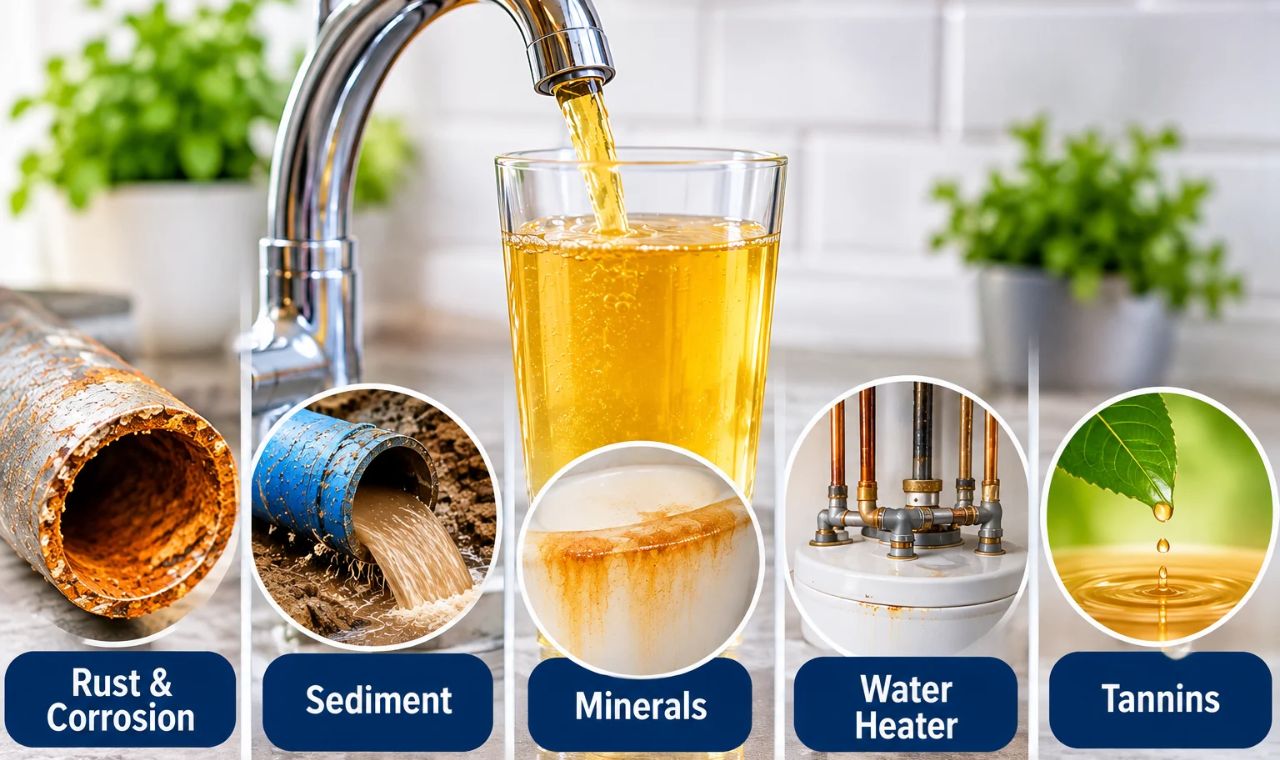
Iron and Rust From Corroding Pipes
Older metal pipes can gradually corrode as they remain exposed to water and minerals. Galvanized steel and iron plumbing are particularly susceptible to deterioration over time.
As corrosion develops, small rust particles can enter the water flowing through the pipes. Depending on the amount of iron and how it reacts with oxygen, the water may look pale yellow, orange, or reddish-brown.
You might also notice:
- Metallic-tasting water.
- Orange or reddish stains around sinks and toilets.
- Rust-colored marks on laundry.
- Discoloration after water has been sitting in the pipes.
An older home with galvanized plumbing may experience these problems more frequently. If the discoloration keeps returning, a plumber can inspect the affected pipes and determine whether a localized repair or more extensive replacement is appropriate.
Sediment From a Water Main Break or Nearby Plumbing Work
Sometimes the problem does not start inside your home. A water main break, municipal repair, or hydrant flushing can disturb deposits that have collected inside public water pipes.
Changes in water pressure can move sediment and rust particles through the distribution system. As a result, several homes in the same area may suddenly notice yellow, orange, or brown water.
For example, imagine a homeowner notices discolored water shortly after a nearby water line break is repaired. Their neighbors report the same issue, suggesting that the disturbance may be related to public water system work rather than individual household plumbing.
In this situation, contact the municipal water provider to ask whether maintenance or flushing has taken place. Follow its instructions about water use and flushing. If the discoloration continues after the utility says the issue has been resolved, arrange further investigation.
Naturally Occurring Iron and Manganese in Water
Groundwater can pick up iron and manganese as it moves through rocks and soil. This is particularly relevant to homes that rely on private wells.
Iron can produce yellow, orange, or reddish-brown discoloration. Manganese is more commonly associated with dark brown or black deposits, although both minerals can occur together.
Other signs include:
- Stains around sinks, tubs, and toilets.
- Discolored laundry.
- Metallic or unpleasant tastes.
- Mineral deposits inside plumbing fixtures.
Nebraska Extension explains how naturally occurring iron and manganese in drinking water can cause discoloration, unpleasant tastes, and staining, along with the importance of proper water testing and treatment.
A laboratory water test can identify iron and manganese concentrations. This is especially useful for private well owners because the appearance of water cannot tell you how much of either mineral is present.
Sediment or Corrosion Inside the Water Heater
If yellow water appears only when you use hot water, your water heater deserves attention.
Storage water heaters can collect sediment over time. Minerals and other particles may settle inside the tank, while corrosion of internal components can also affect water appearance.
However, hot-water discoloration does not automatically mean the tank has failed. The issue could also involve hot-water piping or another component.
A plumber can inspect the heater, check its condition, and identify whether sediment or corrosion is contributing to the problem.
For more information, read this guide to water heater problems and warning signs.
Tannins and Organic Matter in Well Water
Private well water can sometimes develop a yellow or tea-like appearance because of tannins. These naturally occurring organic compounds can enter groundwater as leaves and other vegetation break down.
Unlike typical rust discoloration, tannin-related water may look like weak tea without producing the same orange staining associated with iron.
The problem can become more noticeable after heavy rainfall or changes in groundwater conditions, although the appearance alone cannot confirm tannins as the cause.
A suitable water test can help distinguish tannins from iron, manganese, and other possible contaminants. Treatment should be selected only after the source has been identified.
Is Yellow Tap Water Safe to Drink?
Yellow water is not automatically dangerous, but its color cannot establish whether it is safe to drink.
Some cases involve iron or manganese, which commonly cause staining, unpleasant taste, and other aesthetic problems. However, discoloration can also occur alongside other water quality issues that cannot be identified by sight.
Pay attention to sudden changes, unusual odors, visible particles, or discoloration that does not clear. If you are already dealing with sluggish fixtures or buildup while troubleshooting discolored water, be cautious about what goes into your plumbing for instance, check whether a chemical drain cleaner safe for shower drains is actually appropriate before using harsh products on aging pipes.
Until the source is understood, avoid using visibly discolored water for drinking, cooking, or preparing beverages. If you receive municipal water, contact your supplier and check for any drinking water advisories. Follow its guidance before returning to normal use.
Private well owners should arrange appropriate testing through a qualified laboratory. Depending on the circumstances, testing may need to include bacteria, metals, and other relevant contaminants.
Do not assume that clear water is necessarily safe either. Some contaminants cannot be detected by sight, taste, or smell.
How to Find Out Where the Yellow Water Is Coming From

A few simple observations can help narrow down the problem before you arrange a plumbing inspection.
Check Whether One Faucet or Every Faucet Is Affected
Turn on several faucets around your home and compare the water.
If only one fixture produces yellow water, the problem may involve its aerator, faucet components, or nearby supply piping. If every faucet is affected, the source may be farther upstream in your household plumbing or incoming supply.
Compare Hot and Cold Water
Fill separate clear glasses using hot and cold water.
If only the hot water looks yellow, the water heater or hot-water piping may be involved. If both look discolored, investigate the cold-water supply, household pipes, and municipal system.
Ask Your Neighbors About Their Water
Check whether nearby homes have noticed the same issue.
Widespread discoloration may indicate water main maintenance, hydrant flushing, or another distribution system disturbance. If your neighbors have clear water while yours remains yellow, the issue may be limited to your property.
Observe How Long the Discoloration Lasts
Notice whether the water looks yellow immediately or changes after standing in a clear glass.
Some dissolved minerals react with oxygen and form visible particles after exposure to air. Discoloration that repeatedly returns or remains present deserves further investigation.
Do not assume that running the tap will solve every problem.
Look for Other Warning Signs
Pay attention to:
- Reduced water pressure.
- Visible plumbing leaks.
- Rust stains around fixtures.
- Sediment collecting in glasses.
- Metallic or unusual tastes.
- Strange odors.
- Discoloration that keeps returning.
These details can help a plumber distinguish a localized fixture issue from a larger plumbing or supply problem. You can also read about other signs of water discoloration and particles.
What Should You Do When Yellow Water Comes Out of Your Tap?
If you notice yellow water, follow these steps before deciding whether you need plumbing repairs.
- Stop drinking visibly discolored water: Use an alternative known-safe water source for drinking, cooking, and food preparation until the issue is understood.
- Check local water notices: Look for municipal maintenance updates or drinking water advisories.
- Contact your water supplier: If several properties are affected, ask whether there has been a water main repair, break, or flushing operation.
- Compare different faucets: Check hot and cold water in more than one location.
- Arrange water testing: Testing can identify mineral concentrations and other water quality concerns.
- Contact a plumber: If the evidence points toward internal plumbing, the water heater, or your incoming water line, arrange a professional inspection.
Avoid doing laundry while the water is discolored. Iron and rust particles can leave difficult stains on clothing.
Do not open pressurized water lines or attempt extensive water heater repairs yourself.
When Should You Consider Water Line Repair or Replacement?
Your incoming water line connects your property to the water supply. If this line becomes damaged or deteriorates, it may contribute to sediment, rust, leaks, or changes in water pressure.
However, yellow water alone does not prove that your water line needs replacement.
A professional water line inspection may be worth considering if you notice:
- Repeated yellow or rusty water.
- Older corroded metal supply pipes.
- Recurring leaks near the incoming line.
- Unexpected changes in water pressure.
- Visible corrosion around accessible connections.
- Sediment that repeatedly enters your household plumbing.
The appropriate repair depends on the condition and location of the problem.
- Localized pipe repair: Suitable when damage is limited to one accessible section.
- Water line repair: Addresses a specific leak or damaged portion of the incoming supply.
- Partial replacement: May be considered when one section has deteriorated but the remaining line is serviceable.
- Full water line replacement: May be appropriate when the line has widespread corrosion, repeated failures, or extensive damage.
Homeowners searching for water line replacement near me should look for a qualified plumber who can explain the inspection findings before recommending major work.
The plumber should consider pipe material, age, condition, leak history, and the source of discoloration. A repair may be enough in some situations, while replacement may make more sense in others.
Can Water Filtration Fix Yellow Tap Water?
Water filtration can help with certain causes of discoloration, but the right equipment depends on what is actually in the water.
Common treatment options include:
- Sediment filters: Capture suspended particles such as sand, rust flakes, and other debris.
- Iron and manganese filters: Use suitable treatment media to remove these minerals at concentrations the system is designed to handle.
- Activated carbon: Helps reduce certain organic compounds, tastes, and odors. It is not a universal iron or manganese treatment.
- Reverse osmosis: Can reduce many dissolved contaminants in drinking water, depending on the system and its certification.
- Whole-house treatment: Treats water entering the property when testing shows that treatment is needed throughout the home.
A water softener may reduce certain levels of iron or manganese under suitable conditions, but it is primarily designed to address hardness. It should not be treated as a universal solution.
The Water Quality Association’s information on water staining and discoloration explains how minerals such as iron and manganese contribute to staining and why treatment selection matters.
Royal Penguin Plumbing also has experience installing water treatment equipment. For example, Kate Swartley praised the company’s reverse osmosis installation in her older farmhouse, particularly how the plumber worked around the existing plumbing. Tony Forliano also praised the installation of a whole-home water treatment system.
These reviews demonstrate experience with treatment installations, but they do not establish that either customer had a yellow-water problem.
For additional guidance, see the company’s article on choosing the right water filtration system.
How Royal Penguin Plumbing Helps With Water Problems
- Royal Penguin Plumbing provides residential plumbing services throughout Bucks and Montgomery Counties, Pennsylvania.
- The company offers water treatment services and helps homeowners understand their plumbing concerns.
- Its approach focuses on identifying the problem before recommending a repair or installation.
- The team also has experience working with water softeners, reverse osmosis systems, and whole-home treatment equipment.
- Customer feedback highlights clear explanations, careful workmanship, and attention to existing plumbing conditions.
- If persistent discoloration appears to be related to your household plumbing or water treatment setup, contact Royal Penguin Plumbing at (215) 720-2721 to discuss the next step.
Find the Cause Before Choosing a Fix
Yellow tap water can come from several different sources, and replacing pipes or purchasing a filtration system without identifying the cause can lead to unnecessary expenses.
Start by comparing faucets, checking hot and cold water, and asking whether neighbors have noticed the same problem. Contact your water supplier when a public supply disturbance is possible, and arrange testing when water quality is uncertain.
If the signs point toward corroded pipes, a damaged water line, or a water heater issue, have a qualified plumber inspect the system before deciding on repairs.
Frequently Asked Questions
Q. Why Is My Tap Water Yellow All of a Sudden?
Sudden yellow water may result from a water main repair, hydrant flushing, pressure changes, or disturbed sediment. If the discoloration affects several nearby homes, contact your water supplier to check for maintenance or supply issues.
Q. Is Yellow Tap Water Safe to Drink?
You cannot determine drinking water safety from color alone. Avoid drinking visibly discolored water until the cause is understood, and contact your water supplier or arrange appropriate testing.
Q. Can a Water Line Break Cause Yellow Water?
Yes. A water line break or repair can disturb rust and sediment inside the distribution system, temporarily affecting nearby properties. Contact your water supplier if multiple homes experience the same problem.
Q. Why Does Yellow Water Come Out of My Hot Water Faucet Only?
Discoloration limited to hot water may indicate sediment or corrosion inside the water heater or hot-water piping. A plumber can inspect the system and identify the source.
Q. When Should I Call a Plumber About Yellow Tap Water?
Call a plumber if discoloration keeps returning, affects multiple fixtures, or appears alongside leaks, corrosion, or pressure changes. Homeowners in Bucks and Montgomery Counties can contact Royal Penguin Plumbing to discuss plumbing-related water concerns.