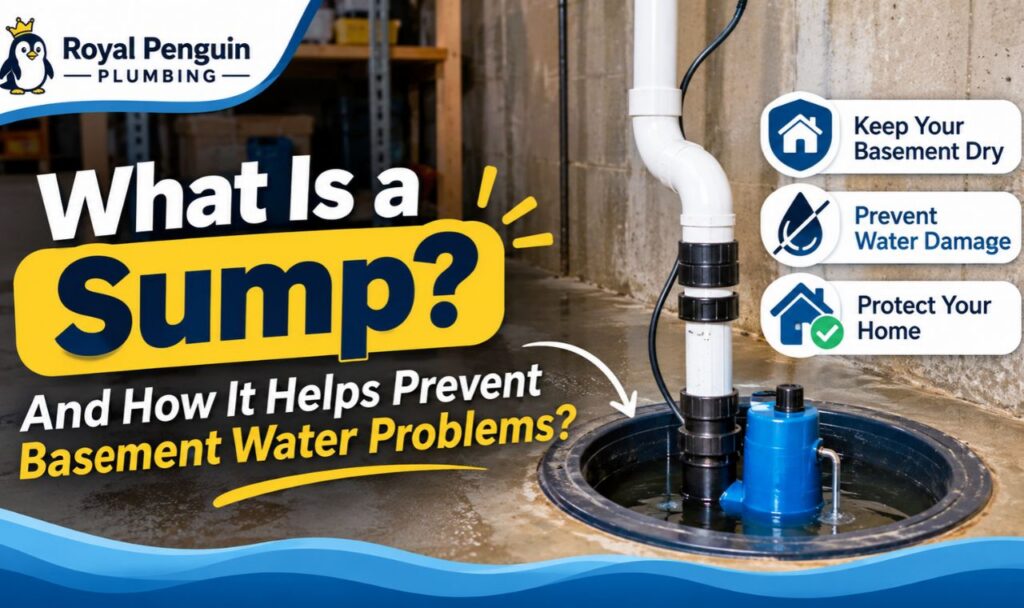
What is a sump? A sump is a low collection point in a basement or crawl space, usually a lined pit, where groundwater and drainage water gather so they can be removed before they spread across the floor. The sump pump is the separate device that moves that collected water out of the house.
Homeowners often use the two terms as if they mean the same thing, but the difference matters when you are diagnosing a wet basement or deciding what to repair. This article explains what is a sump, how the system works, what each part does, and where a sump pump stops being the answer.
What Is a Sump? Understanding the Difference Between a Sump and a Sump Pump
In plumbing, a sump is a designated low spot built to collect water. In most homes, it is a hole cut into the slab floor at the lowest point of the basement or crawl space. Water follows the lowest path, and the sump gives it somewhere to go other than your floor.
The related terms are easy to confuse, so here is how they differ:
- Sump: the low collection point where water is meant to gather.
- Sump pit: the excavated hole in the floor or ground that forms the sump.
- Sump basin: the container, often plastic, fiberglass, or concrete, that lines the pit and holds the water.
- Sump pump: the mechanical pump that removes water from the basin.
- Sump pump system: the complete assembly, including the basin, pump, float switch, check valve, discharge pipe, and any backup equipment.
The important distinction is that a sump collects water and a pump removes it. A basin without a working pump will eventually overflow. A pump without a properly built basin has no controlled place to draw water from. So when people ask what a sump pump is, the accurate answer is that it is one part of a larger water removal system.
How Does a Sump System Work?
A sump system moves water through a predictable sequence. In many homes it looks like this:
- Water saturates the soil around the foundation. Rain, snowmelt, and a high water table raise moisture levels near the footings and slab.
- Water reaches a drainage path. Where a perimeter drain or drain tile runs around or beneath the foundation, water enters the pipe and flows toward the sump basin. In homes without that drainage, water may seep into the pit through the slab or surrounding soil.
- The basin fills. Water collects in the pit instead of pooling across the basement floor.
- The float switch rises. A float rides on the water surface and lifts as the level increases, signaling the pump to start.
- The pump discharges the water. It pushes water up and out through the discharge pipe.
- The check valve holds the water out. It keeps the water in the pipe from draining back into the basin when the pump stops.
- The pump shuts off. As the level drops, the float lowers and the cycle ends.
Not every home has perimeter drains. Some basements and crawl spaces rely on a single pit, and older homes may have drainage that was installed differently. A professional assessment can help determine how water actually reaches your sump.
What Are the Main Components of a Sump System?
Each part has a specific job, and a failure in any one of them can compromise the whole system.
Sump Pit or Basin
The basin gives water a defined place to collect and keeps soil and debris away from the pump. Many basins have a lid to limit humidity, odors, and the chance of something falling in. Depth and diameter vary with the pump and the site, so there is no single correct size.
Sump Pump
The pump contains a motor and impeller that create the pressure needed to push water out. Pump capacity, the height the water must be lifted, and the length of the discharge run all affect performance. For manufacturer background on how pumps are applied, Pentair publishes sump pump information and technical FAQs that homeowners can review.
Float Switch
The float switch tells the pump when to run. Some designs use a tethered float, some use a vertical float, and others use electronic sensors. If a float gets stuck against the basin wall or tangled with the cord, the pump may never start, or it may never shut off. That is a frequent cause of sump trouble and one worth checking first.
Check Valve and Discharge Pipe
The discharge pipe carries water out of the house to an approved drainage location away from the foundation. The check valve, installed in that pipe, stops water from falling back into the basin after each cycle. Without a working check valve, the pump may cycle more often because the same water keeps returning to the pit. A blocked, frozen, or poorly routed discharge line forces the pump to work harder and can cause the basin to overfill.
Discharge routing must follow local requirements. A groundwater sump should not be connected to a sewer line, and sewage or laundry wastewater should never be directed into it. Those are different systems with different equipment.
Backup Power and Alarm Systems
A standard pump runs on household electricity. If a storm knocks out power, the pump stops, often when it is needed most. A battery backup sump pump, which is usually a second pump with its own battery, can keep removing water during an outage. A high water alarm adds another layer by signaling when the level rises above its normal range. Electrical work near wet areas should be handled by qualified professionals, and homeowners should never reach into a pit or touch equipment while standing in water.
How Does a Sump Help Prevent Basement Water Problems?
A sump supports groundwater management. By giving water a low place to collect and a path out, it reduces the chance that rising groundwater will pool on a basement floor. When it is tied into foundation drainage, it can relieve water buildup around the slab and limit basement water intrusion. For basement flood prevention, that is its primary role.
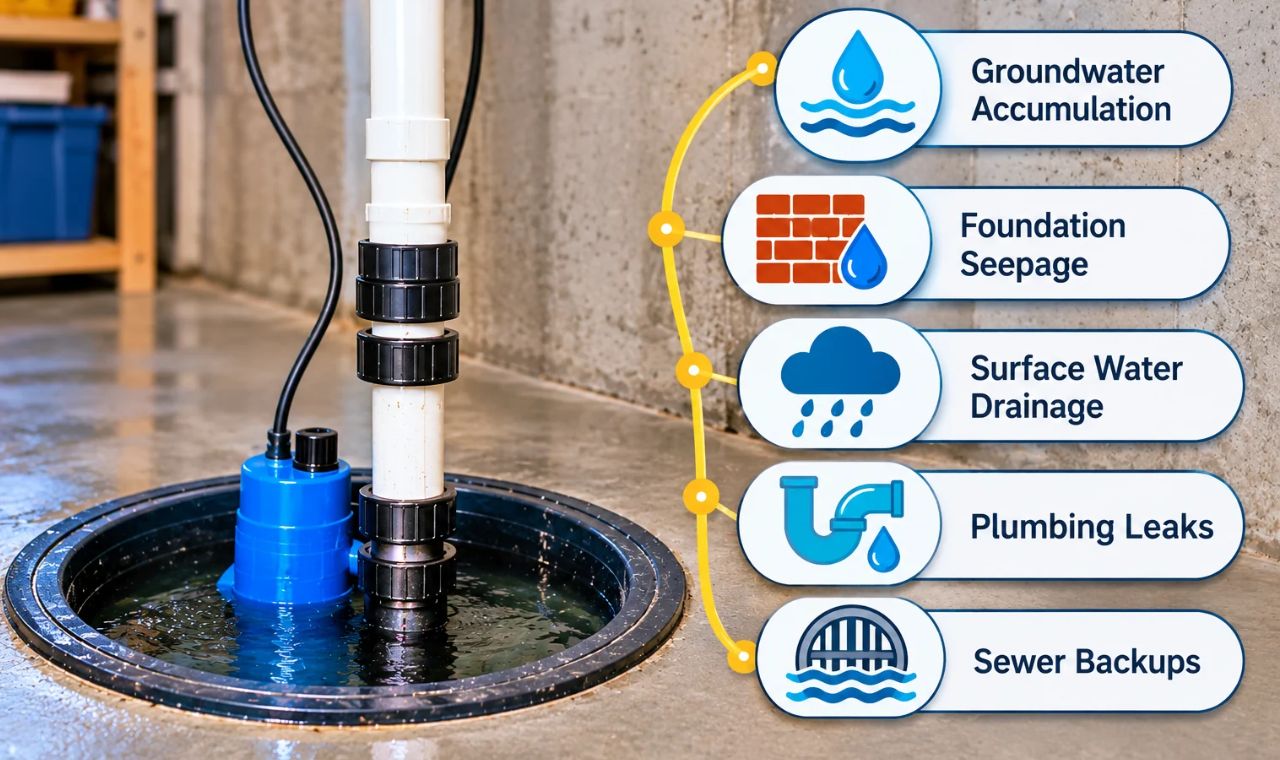
A sump has limits, though, and being clear about them keeps homeowners from spending money in the wrong place. Basement moisture can come from several different sources:
- Groundwater accumulation: water rising in the soil beneath and around the home. This is what a sump system is designed to handle.
- Foundation seepage: moisture working through cracks, joints, or porous walls. A sump may help, but sealing or exterior drainage repairs might also be needed.
- Surface water drainage: rain from gutters, downspouts, or poorly graded soil. Fixing grading and downspout discharge often matters more than adding a pump.
- Plumbing leaks: supply or drain lines that leak inside walls or under slabs. A sump will not stop these, and a plumber needs to locate the source. Royal Penguin Plumbing offers general plumbing services for leak diagnosis and repair.
- Sewer backups: wastewater rising through floor drains or fixtures. A groundwater sump does not prevent sewer backups. Backwater protection or sewer line work may be needed instead.
That is why diagnosis comes before equipment. The right fix depends on where the water is coming from.
What Are the Different Types of Sump Pumps?
Most residential systems use one of three approaches. The table below summarizes general differences, though specific models vary.
| Type | Motor Location | General Strengths | General Limitations |
| Submersible | Inside the basin, underwater | Quieter operation, cooled by surrounding water, suited to covered basins | Harder to reach for service, since it sits in the pit |
| Pedestal | Above the basin, on a column | Easier visual access, works in narrow basins | Louder, and the motor and float are exposed |
| Battery backup | Usually inside the basin beside the primary pump | Keeps working during a power outage | Limited run time, and the battery needs periodic testing and replacement |
Submersible Sump Pumps
A submersible sump pump sits entirely inside the basin. Because it is underwater, it runs quietly and works well in a basin with a lid. The tradeoff is access. Inspecting or replacing it means lifting it out of the pit.
Pedestal Sump Pumps
A pedestal sump pump keeps the motor above the water line on a vertical column, with only the intake in the basin. Pedestal models fit narrow basins and are easy to see, which some homeowners like. They tend to be louder and leave the motor exposed to moisture and household activity.
Battery Backup Sump Pumps
A battery backup unit is a secondary system, not a replacement for the primary pump. It can take over if the primary pump fails or power is lost. Its run time depends on battery capacity and how much water is coming in, so it should be tested regularly and chosen with a professional.
Does Every Home Need a Sump System?
No. Many homes stay dry without one. Understanding what is a sump for your specific property starts with the site, the soil, and the history of the building.
A sump system may be justified when:
- The home sits on a high water table or in an area where groundwater rises after storms.
- The basement or crawl space has a history of water intrusion.
- The lot is low or slopes toward the foundation.
- Perimeter drainage or drain tile exists and needs a place to discharge.
- The soil holds water because of heavy clay.
Crawl space drainage can also depend on a sump when water collects beneath the home. A professional inspection can confirm whether a sump is warranted or whether grading, gutters, or sealing would solve the problem.
What Are the Signs That Your Home May Need a Sump Pump?
Homeowners who are still asking what is a sump pump good for usually have a reason. Watch for these warning signs:
- Standing water or damp spots on the basement floor after rain.
- A musty smell that does not go away.
- White, chalky mineral deposits on masonry walls.
- Peeling paint or bubbling wall finishes.
- Rusted appliance bases, furnace legs, or stored metal items.
- Mold or mildew growth on walls, boxes, or carpet.
- Dampness in the crawl space or near the base of walls.
- Water that appears in the same corner each time it storms.
These signs point to foundation moisture, but they do not identify the cause. Slow drain backups and sewage odors, for example, may indicate a drain line problem. Royal Penguin Plumbing provides drain cleaning and clog removal for those issues, which a sump will not fix.
How Is a Sump Pump Installed?
Installation varies by home, so the steps below describe a typical professional process and not a universal specification.
- Site assessment. The plumber evaluates where water collects, how it enters, existing drainage, and the condition of the slab.
- Basin placement. A location is chosen at or near the lowest point, often where perimeter drainage can connect. The slab is cut and the pit excavated.
- Pump selection. The pump type and capacity are matched to the expected water volume, the lift height, and the discharge distance.
- Plumbing connections. The pump is connected to a discharge pipe with a check valve, installed so the water cannot return to the basin.
- Discharge routing. The line is directed to an approved outdoor location, away from the foundation, and protected from freezing where practical.
- Electrical considerations. Power is supplied according to local code and manufacturer instructions, with attention to safe placement of outlets and cords.
- Testing. The installer fills the basin with water to confirm that the float activates the pump, water discharges properly, and the pump shuts off.
Skipping any of these steps can leave a system that looks complete but does not perform when heavy rain arrives.
How Do You Maintain a Sump System?
Regular checks catch small problems before a storm exposes them. Homeowners who search for sump pump maintenance near me are usually looking for a trusted person to handle this, but several checks are simple to do yourself. For an overview of how inspectors evaluate these systems, InterNACHI offers a sump pump operation and inspection guide.
A practical maintenance checklist:
- Pour water slowly into the basin and confirm the float rises and the pump starts, then shuts off.
- Make sure the float moves freely and is not touching the basin wall or cord.
- Remove visible debris, gravel, or silt from the basin only when the pump is unplugged and the area is dry.
- Check the outdoor discharge outlet for clogs, ice, or buried sections.
- Listen for grinding, rattling, or humming that suggests wear.
- Confirm the check valve is holding and the pump is not cycling repeatedly after it stops.
- Test the alarm and battery backup according to the manufacturer’s instructions.
- Keep the lid secure and the power cord clear of the water.
- Schedule a professional inspection periodically or before the wet season.
Never work in standing water or handle electrical equipment in a flooded area. If the basement is flooded, shut off power only if it can be done safely and call a qualified professional.
What Problems Can Affect a Sump System?
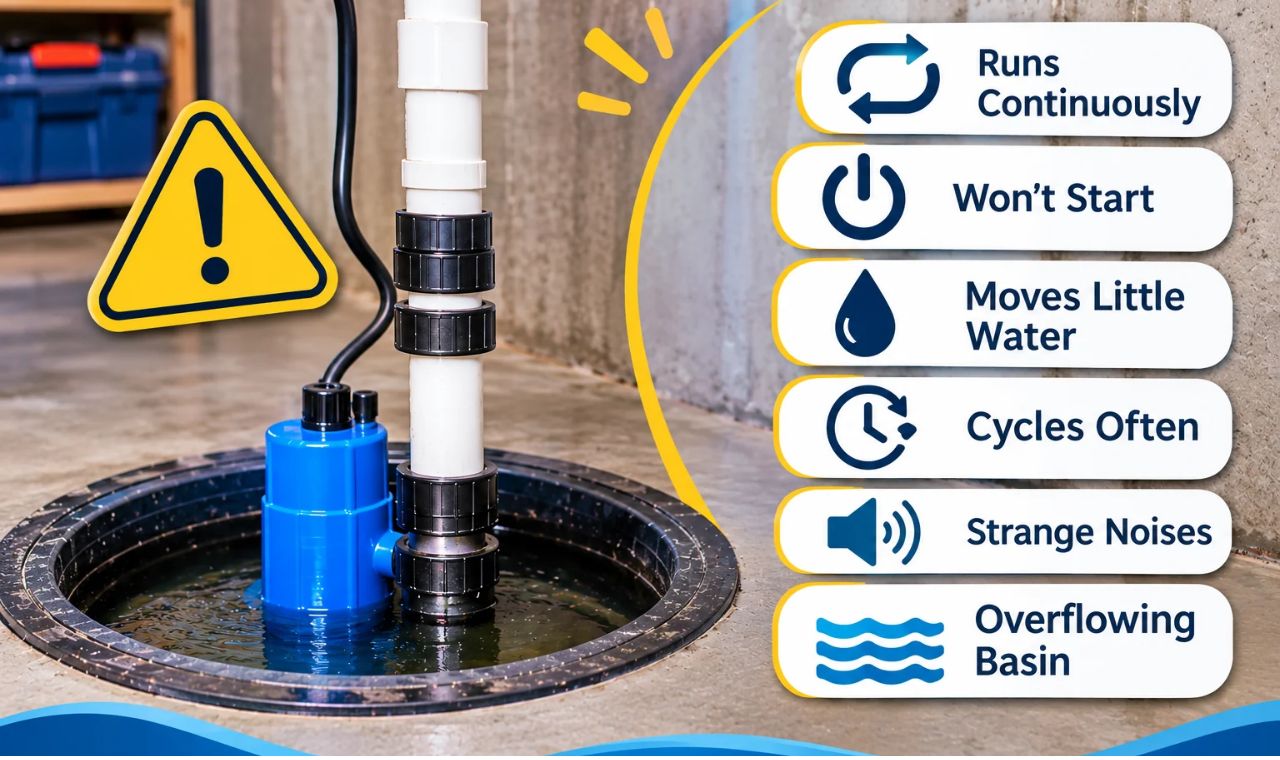
Most problems come from a handful of causes. Zoeller Pumps maintains product support and technical FAQs that reflect many of these common issues.
- Pump runs continuously: a stuck float, failed check valve, blocked discharge line, undersized pump, or very high groundwater.
- Pump will not start: no power, a tripped outlet, a stuck float, or a failed motor.
- Pump runs but moves little water: a clogged intake, a frozen or blocked discharge, a worn impeller, or trapped air in the pump.
- Pump cycles too often: a float set too low, a leaking check valve, or a basin too small for the inflow.
- Strange noises: debris in the impeller, worn bearings, or a pump vibrating against the basin.
- Overflowing basin: pump failure, power loss, or more incoming water than the system can handle.
A Royal Penguin Plumbing customer testimonial described a sump pump failure that followed extensive exterior power washing. The details of that case belong to the customer, but the general lesson applies. Heavy outdoor water use can add to the water near a foundation, and a pump that is worn or neglected may struggle. If a pump behaves differently after heavy water use or storms, it should be checked before the next heavy rain. Persistent pump failure usually calls for sump pump repair or replacement, not repeated resetting.
When Should You Call a Professional Plumber for Sump Pump Installation?
Call a professional when you are installing a system for the first time, replacing a failed pump, or dealing with repeated flooding. A plumber for sump pump installation can evaluate the water source, size the pump correctly, and make sure the system is built for the conditions in your home.
Once you know what is a sump and what it needs to do, the details matter most:
- Correct sizing: a pump that is too small cannot keep up, and one that is too large may cycle too often for the basin.
- Basin placement: the pit must sit where water actually collects and where drainage can connect.
- Discharge routing: water must leave the house without returning, freezing, or creating a problem for a neighbor.
- Testing: a proper test confirms the whole system works before storm season does the testing for you.
Homeowners comparing sump pump installers near me should ask about licensing, insurance, estimates, and how the installer verifies the work. For professional sump pump repair and installation, a licensed plumber can also advise whether a backup system or additional drainage work makes sense.
How Royal Penguin Plumbing Helps Protect Your Home
Royal Penguin Plumbing is a family owned residential plumbing company serving homeowners in Bucks County and Montgomery County, Pennsylvania. We are fully licensed and insured, and we provide sump pump repair and installation alongside broader residential plumbing services. While we do not handle septic tank pumping or inspections, our focus is on reliable communication and transparent estimates, so you understand the work before it begins. We help homeowners understand what is a sump, whether their home needs one, and how to keep it working. If you need a sump pump inspection, repair, or installation, contact Royal Penguin Plumbing to schedule a visit.
The Bottom Line
A sump helps protect your basement by collecting excess groundwater and allowing a sump pump to discharge it safely. Just like dealing with a clogged garbage disposal in the kitchen, keeping up with household plumbing components and maintaining the system can help prevent major home water problems. If you need professional assistance, Royal Penguin Plumbing provides sump pump repair and installation services to homeowners in Bucks and Montgomery Counties.
Frequently Asked Questions
Q. What is the difference between a sump and a sump pump?
A sump is the pit or basin where water collects. A sump pump is the device that removes the collected water and directs it away from your home.
Q. Does every basement need a sump pump?
No. A sump pump is mainly needed in homes with recurring groundwater issues, poor drainage, or previous basement flooding.
Q. How often should a sump pump be maintained?
Test your sump pump several times a year and before wet seasons. Follow the manufacturer’s maintenance instructions and arrange professional inspections when needed.
Q. What happens when a sump pump stops working?
Water can accumulate and overflow into your basement, causing flooding and moisture damage. Common causes include power failures, stuck float switches, and clogged discharge pipes.
Q. Does Royal Penguin Plumbing provide sump pump installation and repair services?
Yes. Royal Penguin Plumbing offers sump pump installation and repair services in Bucks and Montgomery Counties, Pennsylvania. Contact the team to request an estimate.