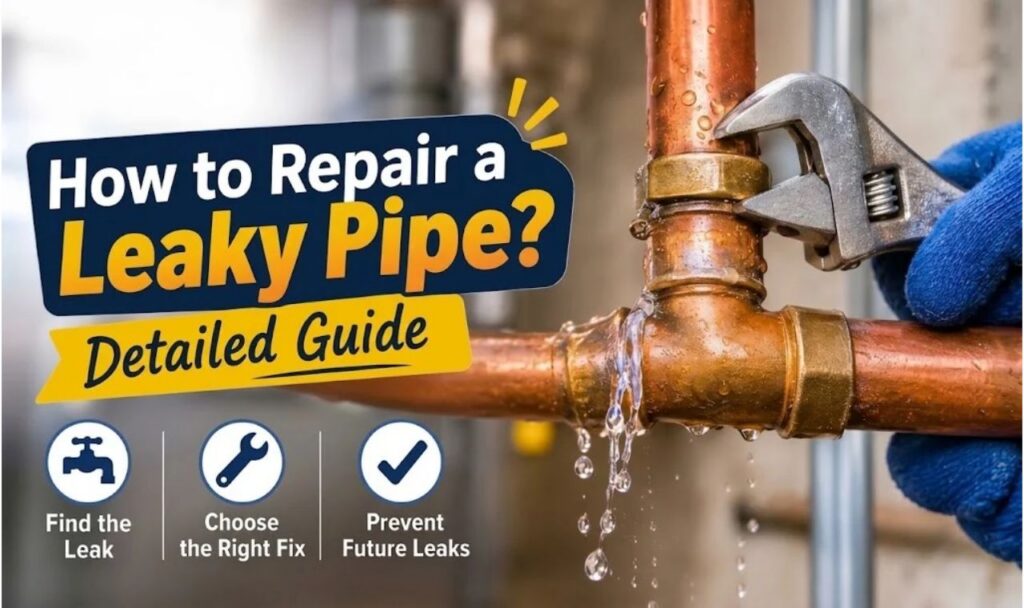
You walk into the kitchen and find a puddle spreading under the sink, or a brown ceiling stain that was not there yesterday. A leaking water pipe can release gallons an hour and soak drywall, insulation, and flooring before you finish your coffee. The short answer: shut off the water, find the true source of the leak, use a temporary fix only if the pipe material allows it, and then arrange a lasting repair.
Reaching for a repair product before you know where the water is coming from is the most common mistake homeowners make. This guide explains how to repair leaky pipe, how to tell pipe materials apart, what to check when a water heater leaks, and when searching for water leak repairs nearby is smarter than another DIY attempt.
What Should You Do Immediately When a Pipe Starts Leaking?
Stop the water first and diagnose second. Every minute of flow adds to the damage, so these steps come before any repair product.
- Find the nearest shutoff valve. A leak at a sink or toilet can usually be isolated with the small stop valve under the fixture. If the leaking pipe has no nearby valve, close the main water shutoff, typically where the water line enters the home near the meter.
- Close the main if you are unsure. When you cannot tell which line is leaking, shutting off the main is the safer choice.
- Relieve pressure. Open a faucet on the lowest level and one upstairs to drain the remaining water so less escapes through the damaged spot.
- Contain the water. Set a bucket under drips, soak up pooling water with towels, and use a wet vacuum for larger spills.
- Protect belongings. Move furniture, rugs, and boxes away from the wet area and lift items off damp floors.
- Watch for electrical hazards. If water is near outlets, a panel, or appliances, do not touch them or stand in standing water. Switch off power at the breaker only if the panel is dry and you can reach it safely. Otherwise, call emergency services or an electrician.
If water will not stop, a ceiling is bulging, or the leak is near electrical equipment, treat it as an emergency and look for emergency water leak repairs nearby right away. Even a slow drip deserves attention the same day, since arranging water leak repairs nearby early keeps damage to drywall and flooring smaller.
How to Identify the Type and Source of a Pipe Leak
Look for the highest wet spot, then identify the pipe material before choosing a repair. Water follows pipes and framing, so the place where it drips is often not where the pipe is damaged. Common causes include:
- Corrosion and pinhole leaks. A pinhole leak is a tiny hole, usually from corrosion, that seeps or sprays a fine stream of water.
- Loose joints and fittings. Threaded and compression connections can start to weep over time.
- Cracked pipes. Impact, stress, or settling can split a pipe.
- Freezing damage. Water expands as it freezes and can split a pipe, often revealed only after a thaw. Learning how to protect pipes from freezing helps prevent a repeat.
- Excessive water pressure. Constant high pressure strains fittings and fixtures.
- Aging materials. Older pipes and fittings eventually reach the end of their service life.
Material determines which repair products will hold and what water leak repairs nearby will involve:
| Pipe Material | How to Recognize It | Common Leak Issues |
| Copper | Rigid metal, reddish-brown or green-tinged | Pinholes from corrosion, failed soldered joints, freeze splits |
| PVC | Rigid white or gray plastic, common on drains and vents | Cracks, failed solvent-welded joints |
| CPVC | Rigid cream or light yellow plastic, used for hot and cold supply | Brittleness with age, cracks at fittings |
| PEX | Flexible tubing, often red, blue, or white | Leaks at crimp or clamp fittings, freeze damage |
| Galvanized steel | Gray threaded metal, found in older homes | Internal rust, reduced pressure, leaks at threads |
The Home Depot’s guide to fixing a leaky pipe explains temporary repair methods, including epoxy putty, plumber’s tape, and pipe clamps. A plumber can confirm which method is suitable for your pipe material and leak location when you request professional water leak repairs.
How to Repair Leaky Pipe: Temporary Fixes

Temporary fixes can slow or stop a leak for a short time, but they do not repair the damaged pipe. Treat them as a bridge while you arrange water leak repairs nearby, not a substitute for them. Shut off and drain the line first, and follow the instructions on the specific product, since directions differ by manufacturer.
Using Pipe Repair Tape
Self-fusing silicone repair tape suits small leaks on straight, dry pipe.
- Shut off the water, drain the line, and dry the pipe.
- Clean the area and wipe away residue.
- Stretch the tape as directed and wrap tightly, overlapping each turn and extending past the leak on both sides.
- Let it bond for the time listed on the label before restoring water.
Tape is not designed for fittings, wide cracks, or heavily corroded pipe, and some products have temperature and pressure limits, so check the label before using it on a hot water line. Plan on water leak repairs nearby for a lasting fix.
Applying Epoxy Putty
Epoxy putty is a two-part compound that hardens into a solid patch. Sand or brush the area clean and dry it completely, then knead the putty until the color is uniform. Press it over the leak, extend it past the damage, and smooth the edges. Allow the full cure time on the label before restoring water. Confirm the product is rated for your pipe material, drinking water use, and hot water if that applies. Putty works best on pinholes and small cracks, not moving joints, and while it won’t fix issues like toilet clogging, it buys time for water leak repairs nearby without restoring the pipe.
Installing a Pipe Repair Clamp
A repair clamp wraps a rubber gasket around the damaged area, and a metal band compresses the gasket against the pipe. Choose a clamp sized to the pipe’s outside diameter, center the gasket over the leak, and tighten evenly until the leak stops. Snug is enough. Overtightening can deform thin pipe or crack plastic. Clamps suit straight pipe sections, not elbows, fittings, or badly split pipe. They are a stronger stopgap than tape, yet they only hold until permanent water leak repairs nearby can be completed. Do not rely on any temporary product on a hot line, near electrical equipment, or on a heavy leak.
How to Permanently Repair a Leaking Pipe
A permanent repair replaces the damaged pipe or fitting instead of covering it. A repair coupling, also called a slip coupling, is a fitting that rejoins two pipe ends after a damaged section is cut out.
- Removing a damaged section. After shutting off and draining the line, cut out the damaged length with a tubing cutter or saw suited to the material, leaving clean, square ends.
- Replacing a damaged fitting. Leaks at elbows, tees, and joints are fixed by replacing the fitting, not patching around it.
- Choosing compatible materials. Join like materials when possible. Different materials need approved transition fittings.
- Push-to-connect slip fittings. These can join cut pipe ends without soldering when the product is rated for that pipe. SharkBite’s guide to emergency repairs with slip fittings explains the preparation and insertion requirements for that product line.
- Joining PVC and CPVC. Cut square, remove burrs, use the correct primer and cement, push the joint fully together, and allow cure time before pressure. Charlotte Pipe’s tips for cutting and joining plastic pipe cover the technique.
- Testing the repair. Restore water slowly, inspect every joint, and check again after several hours.
These are not universal DIY jobs. Requirements depend on pipe type, product specifications, plumbing codes, and the nature of the damage. A crooked cut, dirty pipe end, or wrong cement can produce a connection that weeps again. Homeowners who look for water leak repairs nearby after a failed DIY connection often find the original joint was the problem. A licensed plumber handling water leak repairs nearby will also consider applicable codes and whether the surrounding pipe is sound enough to keep.
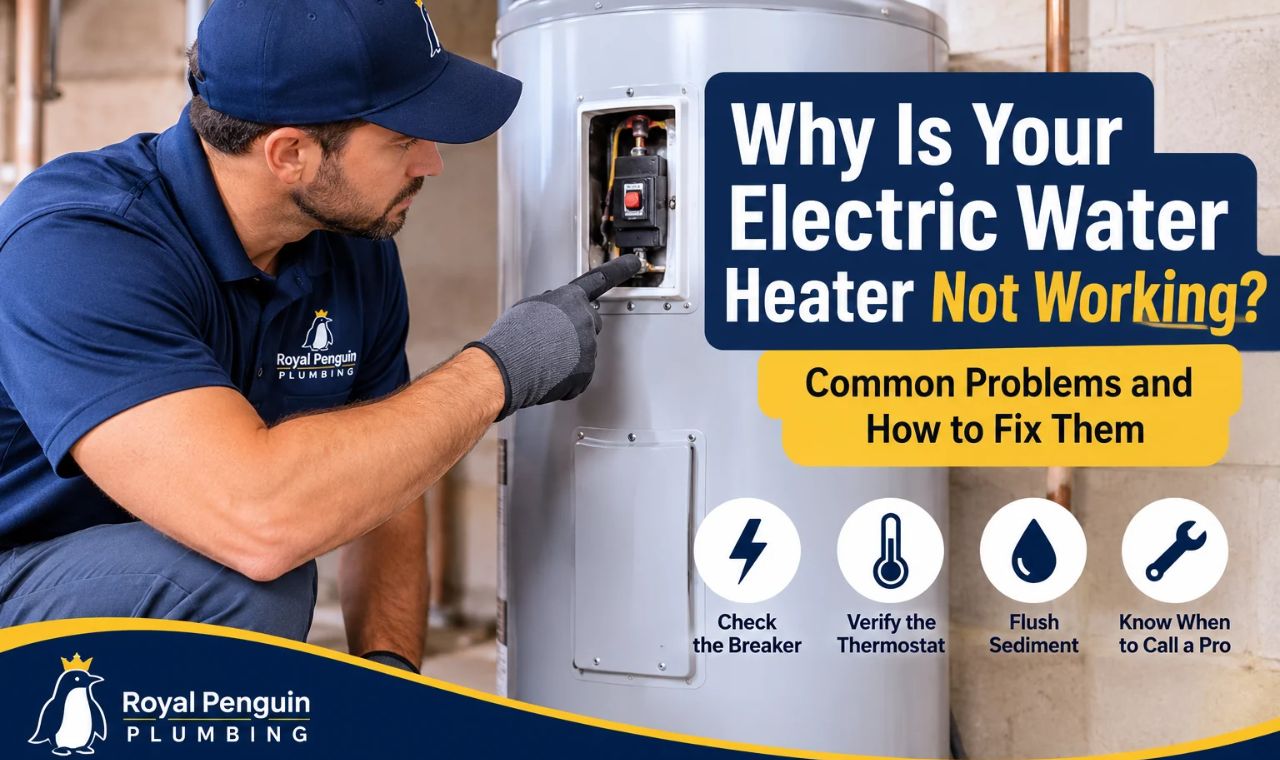
What If Your Hot Water Heater Is Leaking From the Bottom?
Water at the base of a heater does not always mean the tank has failed. Before you search for water leak repairs nearby, work out whether the water is coming from the heater itself.
Safety comes first. The water can be scalding, the unit runs on electricity or gas, and the tank is pressurized. Do not remove covers, operate gas controls unnecessarily, or try to repair the tank. If you smell gas, leave the house and call your gas utility or 911 from outside.
Possible sources include:
- Drain valve. A slow drip at the spigot near the bottom points to a loose or worn drain valve.
- Loose connections. Hot and cold lines at the top can leak and run down the tank, showing up as water at the base.
- Temperature and pressure (T&P) relief valve or its discharge pipe. This safety valve has a pipe running toward the floor. Water here can signal excess pressure or temperature. Never cap it.
- Condensation or nearby plumbing. A cold tank can sweat, and drips from pipes above can land on the heater.
- Corroded or failing tank. Water seeping from the tank body after other sources are ruled out usually means the inner tank has corroded, and replacement is typically needed.
To narrow it down, dry the heater and nearby pipes, then place dry paper towels at each suspect point and watch for the first fresh drop. If you notice a hot water heater leaking from bottom seams or pooling beneath the unit that you cannot trace or any leak involving the relief valve call for water leak repairs nearby from a licensed plumber who handles water heater services. A failing tank can release a large amount of water, so do not wait on it.
How to Find a Hidden Water Leak Inside Your Home
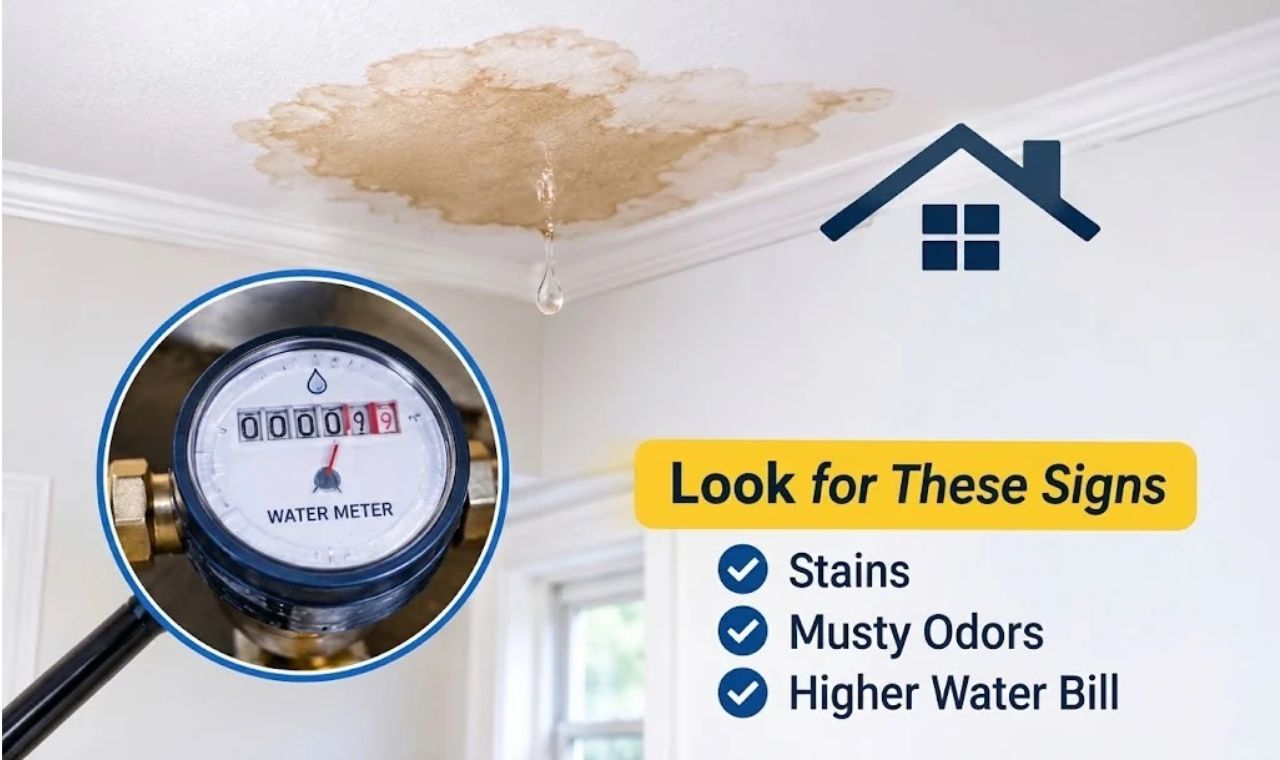
Hidden leaks reveal themselves through indirect signs, and they are among the harder cases for water leak repairs nearby because the damage builds out of sight. Watch for:
- Damp drywall or ceiling stains
- Bubbling or peeling paint
- Unexplained increases in your water bill
- Musty odors
- Wet, warped, or stained flooring
- Reduced water pressure
- The sound of running water when fixtures are off
To test, turn off all fixtures and appliances and watch the water meter. Movement suggests a leak somewhere in the system. This guide to identifying hidden water leaks explains more warning signs.
Opening walls or floors without knowing the leak location creates extra repair work and may miss the problem. Professional leak detection is often the better route to water leak repairs nearby because it narrows the location before anyone cuts into finished surfaces.
When Should You Call a Professional for Water Leak Repairs Nearby?
Call a licensed plumber when a leak is hidden, recurring, or beyond a simple patch. Situations that need professional attention include:
- Burst pipes
- Leaks behind walls or under floors
- Slab leaks, meaning leaks in pipes beneath a concrete floor slab
- Multiple or recurring pinhole leaks
- Extensive pipe corrosion
- Water from an unidentified source
- Water near electrical equipment
- A leaking water heater
- Repairs involving complex pipe connections
Temporary products should not be treated as permanent solutions for deteriorating plumbing. A single pinhole in aging pipe may be one of several developing weak spots, so a plumber can judge whether a section repair is enough or a larger replacement should be considered. When DIY steps have not stopped the water, searching for water leak repairs nearby is the right next move.
How to Prevent Future Pipe Leaks
Prevention reduces how often you need water leak repairs nearby. It comes down to protecting pipes from stress and catching small problems early.
- Insulate vulnerable pipes in unheated areas. Winters in Bucks and Montgomery Counties make this worth doing before cold weather arrives.
- Check water pressure with a gauge, and ask a plumber about a regulator if readings run high.
- Inspect exposed plumbing under sinks, in basements, and near the water heater for moisture, stains, and corrosion.
- Address corrosion early before it becomes a pinhole leak.
- Monitor water bills for unexplained increases.
- Check water heater connections for dampness or mineral buildup.
- Use leak detection devices. Smart water leak detectors can alert you to moisture in places you rarely check.
- Schedule professional inspections when plumbing is aging. A professional inspection can catch small problems before they become emergency water leak repairs nearby.
Why Choose Royal Penguin Plumbing for Professional Leak Repairs?
Royal Penguin Plumbing is a family-owned, licensed, and insured plumbing company serving homeowners in Bucks County and Montgomery County, Pennsylvania. The team handles residential plumbing, including general plumbing repairs, water heater services, and emergency plumbing. Leak detection helps locate hidden leaks before walls or floors are opened. A professional assessment identifies the pipe material, leak location, and cause, so the repair fits the problem instead of masking it. That diagnosis-first approach matters for homeowners comparing options for water leak repairs nearby. It also helps separate a minor fitting issue from deteriorating pipe that needs more than a patch. If you are dealing with a persistent or hidden leak, contact Royal Penguin Plumbing to schedule water leak repairs nearby.
The Bottom Line
A leaking pipe may seem like a minor problem, but even a small leak can cause serious water damage if left untreated. Temporary solutions such as repair clamps, epoxy putty, and repair tape can help control minor leaks, but they do not replace proper pipe repairs.
Identifying the source early helps prevent moisture damage, mold growth, and costly repairs. If you notice persistent leaks, contact Royal Penguin Plumbing for professional leak detection and water leak repair services.
Frequently Asked Questions
Q. How do you repair a leaking pipe without replacing it?
Small leaks can sometimes be controlled with repair clamps, epoxy putty, or self-fusing tape. These are temporary fixes, and damaged or corroded pipes may need replacement.
Q. Can you use epoxy putty or repair tape on a leaking water pipe?
Yes, both can temporarily seal small leaks on compatible pipes. They are not suitable for large cracks, damaged fittings, or severely corroded pipes.
Q. How do you fix a leaking pipe inside a wall?
Shut off the water supply and contact a plumber to locate the leak. The damaged pipe or fitting may need repair or replacement before restoring the wall.
Q. What does it mean when a hot water heater is leaking from the bottom?
It could indicate a faulty drain valve, leaking connection, or corroded tank. A professional inspection can identify the source and determine whether replacement is necessary.
Q. Does Royal Penguin Plumbing provide professional water leak repair and detection services?
Yes. Royal Penguin Plumbing provides leak detection, water leak repairs, and plumbing services in Bucks and Montgomery Counties, Pennsylvania.